
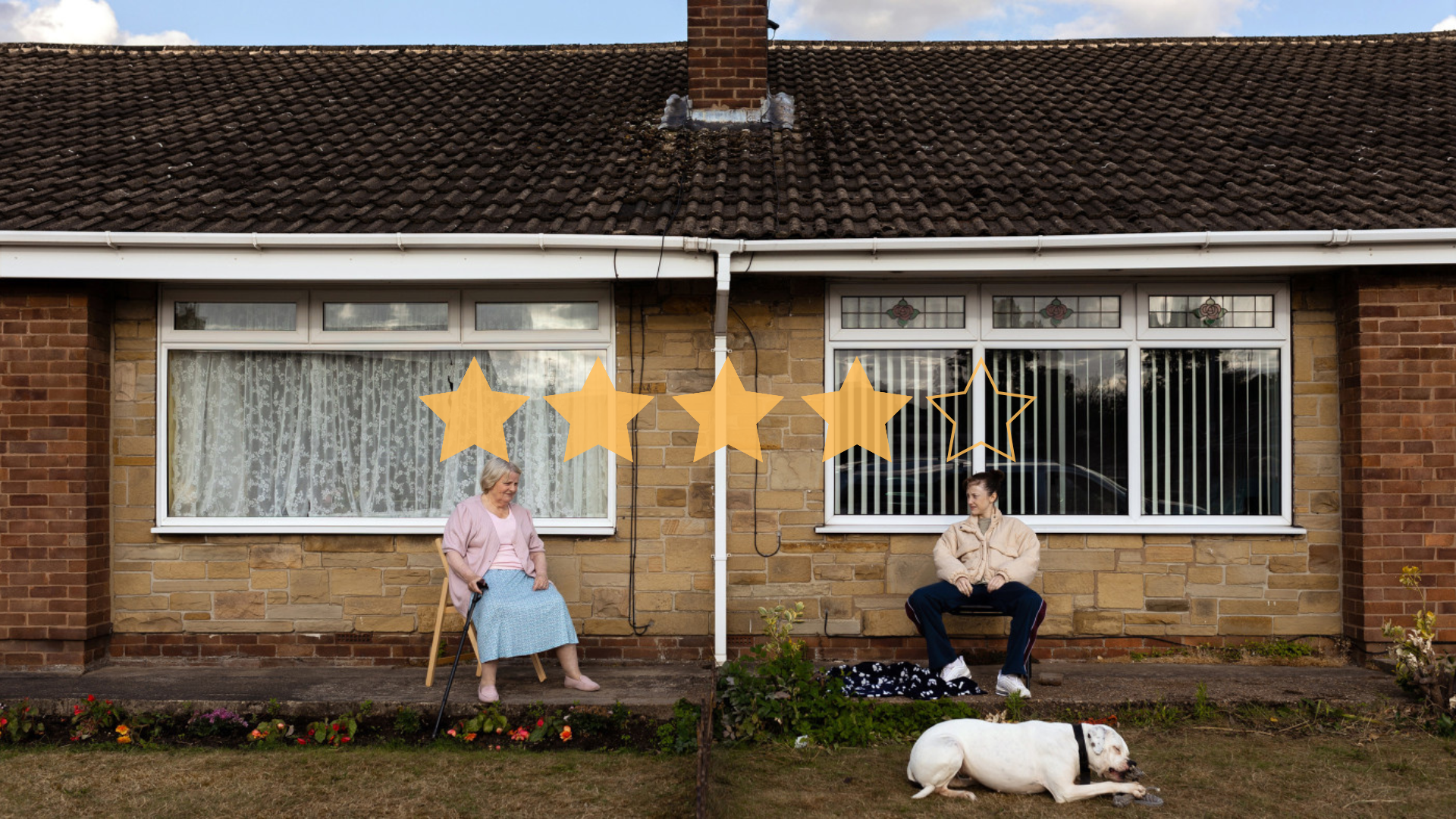
Paul Andrew Thomas delivers a tightly scripted, Mike Leigh-esque drama, capped by a brilliant third-act twist that transforms it into a gut-wrenchingly bleak piece of independent British cinema.
★★★★☆
Dragonfly is a brilliant film that plays with your expectations for a social realist drama, morphing from something you might see on Channel 4 into a film with much more sinister intentions. With powerhouse performances from the two leads and a deep sense of inevitable dread underlying the narrative, filmmaker Paul Andrew Thomas crafts a tale that will leave you feeling empty inside.
Elsie (Brenda Blethyn) is an eighty-six-year-old pensioner who requires a carer to visit a few times a week to assist with her daily needs. Colleen (Andrea Riseborough), who lives next door, survives on disability benefits and has only her dog for company. Both neighbours struggle with loneliness, and when Colleen notices how little care Elsie’s assigned carers provide, she begins helping with small tasks. Over time, these tasks grow until Elsie no longer needs outside carers. Elsie’s son, John (Jason Watkins), visits infrequently, but when he learns about Colleen’s increasing presence in his mother’s life, he becomes suspicious and decides to intervene before she can take advantage of her.
The first two acts of Dragonfly will make you dread old age. Elsie is isolated in her house, with poor mobility and hardly any money; her lack of independence and freedom is terrifying. She suffers from arthritis in her wrist, relies on a walking stick, and spends much of her time either in pain or vomiting from painkillers. Her carer, who visits for only an hour three times a week, forces her to shower even when unnecessary and barely knows her name. It’s a miserable situation for both the pensioner and the carer. The film captures the crushing loneliness of living far from her son through emotional phone calls, the camera lingering on Elsie long after the call ends. This leaves the door open for someone like Colleen—someone who may exploit her vulnerability, even while providing companionship and care.
The two leads are phenomenal. Blethyn crafts a frail, ailing character with such precise physical mannerisms that her performance becomes one of the most authentic depictions of a lonely pensioner on screen. Known for her Oscar-nominated performance in Mike Leigh’s Secrets and Lies, her presence in this hammers home the Leigh influences during the first act.
Riseborough, known for her striking work in low-budget films, has never been better. Her portrayal of a woman grappling with mental health struggles and lifelong poverty is extraordinary. Her character is often desperate, quick to spot opportunities to exert power under the guise of kindness. One of her best scenes is when her dog is taken away—the anguish and despair she feels after this is incredibly believable. This layered performance is masterful, confirming her as one of the most underrated actresses working today.
The script is sharp and brimming with authenticity. Awkward silences punctuate dialogue scenes, making the conversations that follow feel spontaneous and unscripted. When the film shifts from social realism into something far more sinister, the transition is seamless, culminating in one of the bleakest endings you’ll see this year.
Rafferti’s score (he also composed last year’s horror hit The Substance) enhances this tonal shift with precision, carefully moving the score from drama to horror with ease. The two central locations feel lived-in: Elsie’s house cluttered with the trinkets you’d expect from an older woman, Colleen’s scarred by scratches along the walls and doors from her restless dog.
The Verdict
Dragonfly is a superbly crafted British drama that begins in one genre and ends in another. Anchored by a fantastic script and two powerhouse performances, it balances authenticity with a devastating emotional punch.
Support The Indiependent
We’re trying to raise £200 a month to help cover our operational costs. This includes our ‘Writer of the Month’ awards, where we recognise the amazing work produced by our contributor team. If you’ve enjoyed reading our site, we’d really appreciate it if you could donate to The Indiependent. Whether you can give £1 or £10, you’d be making a huge difference to our small team.