
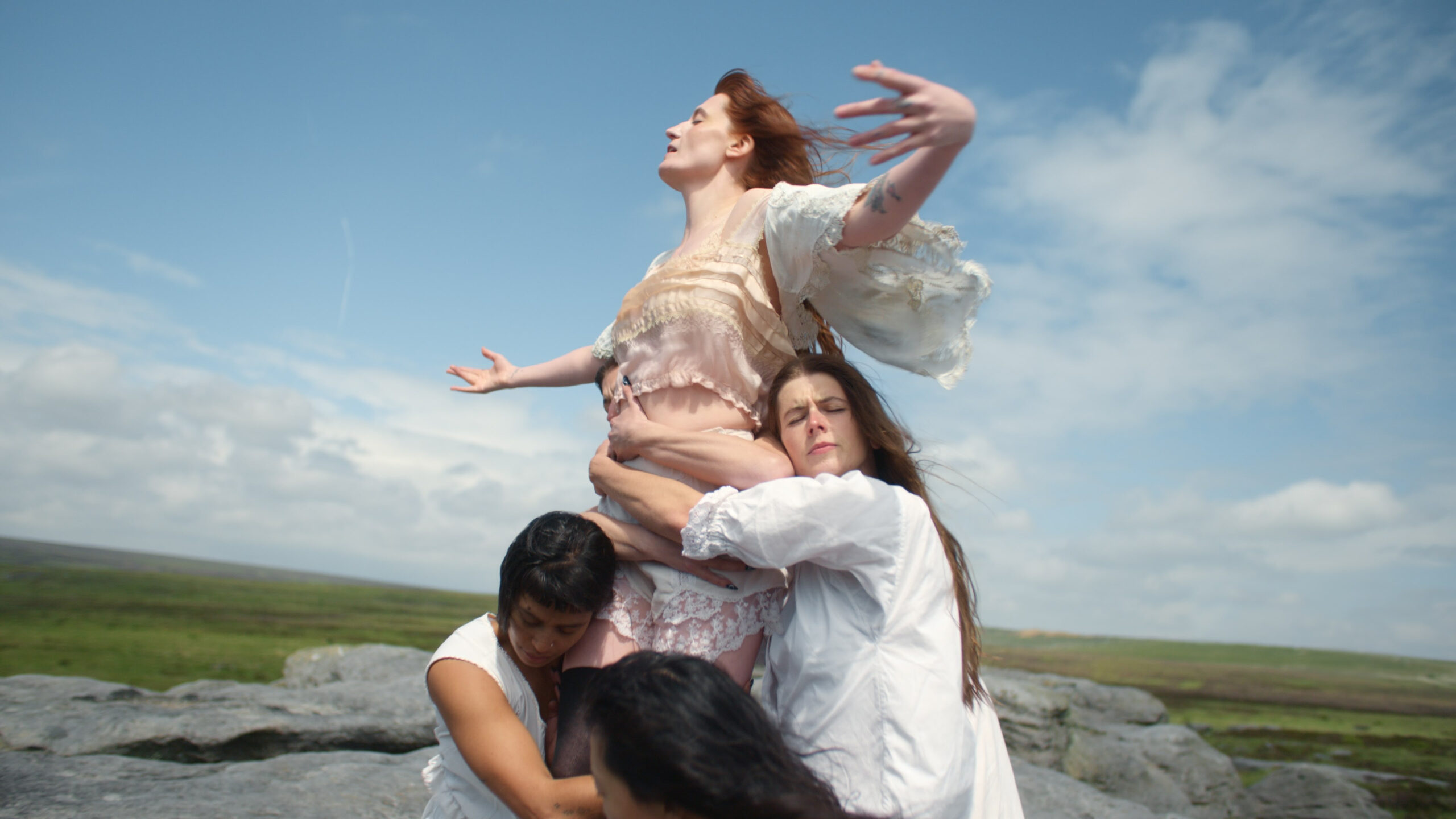
When Florence + The Machine announced a 31 October release date for their sixth studio album it seemed fitting. Here was an artist with a fascination for the occult, mythology and witches releasing an album on Halloween. But Everybody Scream is not a seance for the supernatural—it’s a reckoning with the ghosts of the self. This is a record about grief, about the quiet kind of loneliness that can even exist within the most intimate of relationships, an emotional observation of womanhood and the music industry’s double standards.
Florence Welch has never shied away from big emotions or myth-making, but here she turns the mythology inward. As she told The Guardian, after her near-fatal ectopic pregnancy during her 2023 tour, “The closest I came to making life was the closest I came to death”. That experience, unsurprisingly, sits at the bloody, tender and defiant core of Everybody Scream. The words ‘raw’, ‘personal’ and ‘introspective’ are often overused adjectives in music, but not here. The lyrics are so powerful that they are both triggering and cathartic.
2022’s Jack Antonoff-produced Dance Fever was Florence’s most accessible album, its post-pandemic hope now tinged with painful irony, particularly the exploration of motherhood on ‘King’. Working this time with Aaron Dessner of The National, the glossy textures become grittier. The alt-rock confidence of her early work returns—storm-laden choruses, crashing drums—but Dessner’s layered acoustics add richness. His woodsy textures, familiar from Taylor Swift’s folklore, let Welch’s flamboyance feel raw.
The title track opens the album like a wound. Like the introduction to a Hammer Horror production, a ghostly organ and a choir of female voices builds to a scream; a heavy rock beat drives the stomping rhythm. It’s a sonic whirlwind of powerful rhythms, Welch’s soaring vocals and falsetto choral cries give it the atmosphere of a pagan ritual.
The lyrics tease themes which permeate the entire record. “Here, I don’t have to be quiet” contrasts her stage persona with the challenges within her personal relationship. “Blood on the stage” references cutting her feet on stage (Welch usually performs barefoot) but has the added poignancy following her ectopic pregnancy. And there is the killer line where she blurs the line between performer and person, art and injury: “How can I leave you when you’re screaming my name?” In typical Welch style it’s theatrical but you can feel the ache behind every cry.
The cleverness lies in how the themes of the album entwine so organically. On ‘One of The Greats’ Welch sings “I crawled up from under the earth, broken nails and coughing dirt, spitting out my songs so you could sing along.” The lyrics describe her survival instincts after 2023’s horrific events but become a stinging indictment of the complacency still granted to male artists in a way that women can never afford.
The song is driven by a heavily strummed distorted guitar and crashing drums that bring a Velvet Underground-esque edge to Welch’s music thanks to the involvement of Idles’ frontman, Mark Bowen. Yet, it’s the cutting lyrics and Welch’s weariness with the patriarchy that make this one of the singer’s best-ever tracks, “It must be nice to be a man and make boring music just because you can.”
That same bite runs through ‘Music by Men’ which describes the car journey home from a therapy session with her partner. Once again, the singer manages to blend the deeply personal (“You have a bigger ego than you think you do / I slide down in my seat so as not to threaten you”) with critique of the music industry, “Listening to a song by The 1975 I thought ‘f**k it’ / “I might as well give music by men a try.” Beautifully simple acoustic guitar and gentle piano recall Dance Fever’s ‘The Bomb’, but ‘Music by Men’ is both funny and deeply sad in its portrayal of disconnection. Across these tracks, Welch’s writing folds the political into the personal. The pain isn’t isolated—it ripples outward, touching love, her art, and womanhood itself.
That pain and disconnection is explored more literally on ‘Buckle’, the most upbeat acoustically pop number on the record and one that seems to borrow from Dessner’s folklore sessions with Swift. It says everything about pain and loneliness after grief with just one line “A crowd of thousands came to see me / And you couldn’t reply for three days”. The relationship issues are made all the more painful in the lyrics that explore grief. ‘You Can Have It All’ delivers the heartbreaking line, “I sit in the salt water, caught in a vision of my daughter / Light a candle, place my grief upon the altar.” The haunting ethereal backing and Welch’s breaking voice as she questions “Am I a woman now?” is a hard listen, it must have been even harder to sing.
Despite the exploration of tough subjects, it would be wrong to call Everybody Scream a bleak album. Yes, there is darkness—but it is packed full of movement, witchy images and confident soundscapes that feel like they are stolen from a faraway time and place. However, the witch here isn’t a figure of fantasy but of agency—a woman using ritual to reclaim her own power after trauma.
And that power is still very evident on ‘Witch Dance’ and ‘Sympathy Magic’. The former is all Welch, soaring falsetto vocals and deep sensual musings above a spectral witches’ choir of backing singers and a beautiful orchestral soundscape. ‘Sympathy Magic’ is pure old school Florence + The Machine, with tinkling piano keys and tribal drum beats building with the singer’s voice to an otherworldly crescendo highlighting her vocal range. The song is a magical cacophony of raw, wild sound.
The quieter tracks—like ‘The Old Religion’ and ‘Perfume and Milk’—provide moments of reflection that let the emotion breathe. There’s an intimacy in the arrangement: both based around the gentle strumming of an electric guitar and allowing Welch’s vocals to take centre stage. Musically, ‘The Old Religion’ is the more striking with the crashing drums and vocals that rise and fall to give the song a ritualistic feel. ‘Drink Deep’ explores the mythical sound further, the mournful projection and steady beats conjure imagery of ancient times and the power of womanhood.
Welch’s art has always danced between spirituality and sensuality, but on Everybody Scream, the magic she conjures comes from something far more personal. While there is potent mythical imagery throughout the record, the message is not about the supernatural; it’s about surviving grief and daring to make beauty from it. Dessner and Bowen’s production is lush but restrained, letting the tidal beauty of her voice swell and recede, the layers of instrumentation and anthemic percussion that defined her earlier work shine.
This is an album that bleeds. And yet, as we listen to the final gentle piano chords of ‘And Love’ fade, it feels strangely hopeful—not in a way that denies pain, but in a way that honours it as proof of being alive, as she murmurs “Peace is coming”. Everybody Scream might sound like a command, but it’s really an invitation— that it’s okay to feel, to grieve and to resist. If Dance Fever was about moving through chaos, this album is about surviving pain. It’s womanhood laid bare—defiant, exhausted, radiant, but unbroken. And in that magnificent noise—every scream, every whisper—you hear not only Welch’s voice but the echo of every woman ever told to be silent.
Words by Andrew Butcher
Support The Indiependent
We’re trying to raise £200 a month to help cover our operational costs. This includes our ‘Writer of the Month’ awards, where we recognise the amazing work produced by our contributor team. If you’ve enjoyed reading our site, we’d really appreciate it if you could donate to The Indiependent. Whether you can give £1 or £10, you’d be making a huge difference to our small team.