
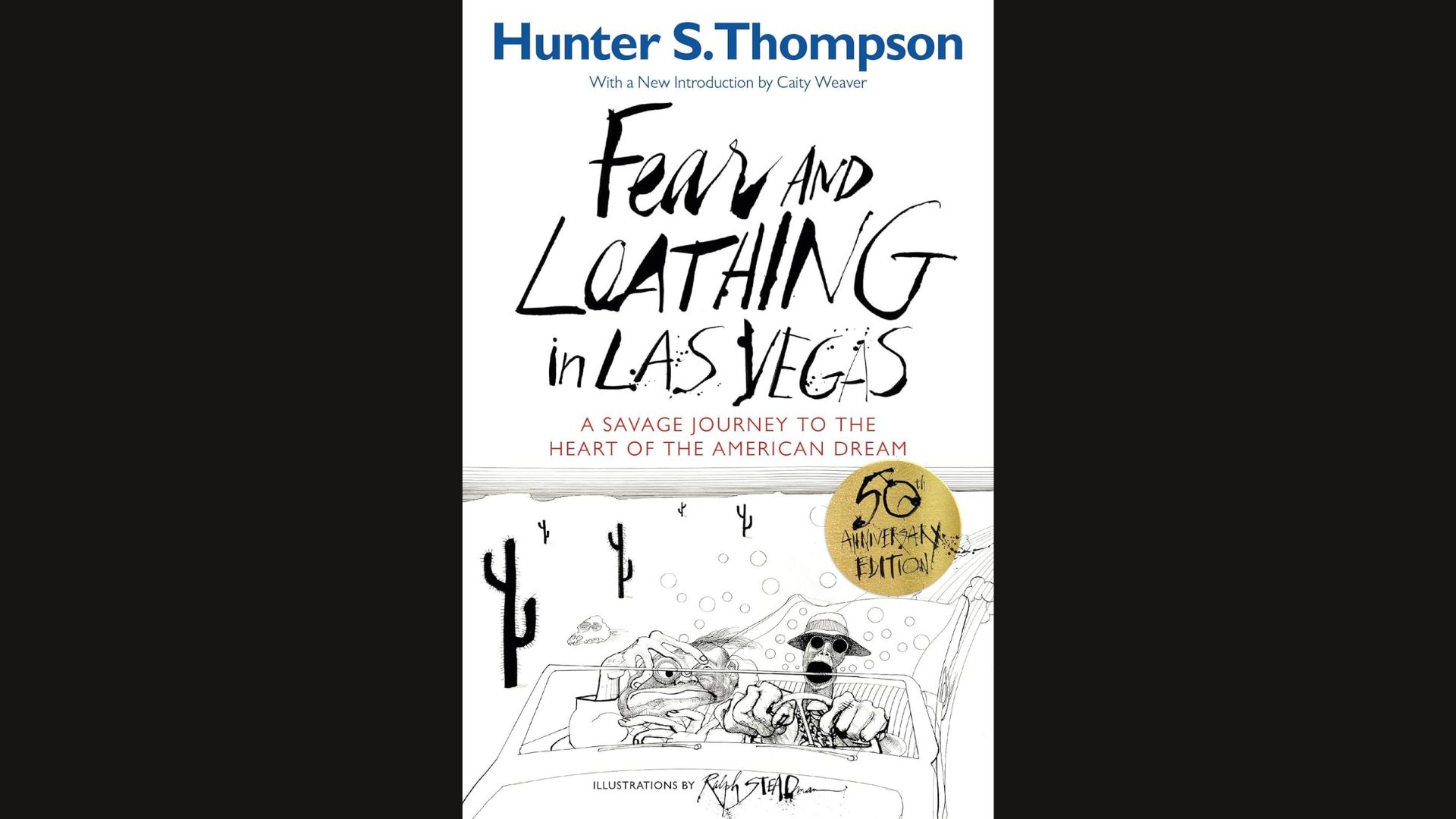
When the Weird Turn Pro: Fear and Loathing in the Twenty-first Century
It has become a common refrain that we live in a post-truth era. We are accelerating into a topsy-turvy culture of complete and utter confusion; a society where the ‘rules of engagement,’ have been (and will continue to be) totally inverted. A warped society where some of the most powerful men on Earth play at being third-rate comedians, sharing crude and bigoted deepfakes designed to mock their political opponents, whilst infotainers, comedians and late-night talk show hosts are left to fight the good fight against the forces of tyranny and deceit. When they aren’t busy taking blood money from theocratic trillionaires, anyway.
Who else do we have to rely on, after all? All the virtues that can be mustered by traditional journalism: a commitment to objectivity, a removal of personal biases, a desire to provide the public with clarity and balance, have been gutted by the rise of naked propagandists that now dominate the New Media. If we do indeed live in what James Ball describes as an “ecosystem of misinformation,” where the international press dances to the cruel braying of clowns and pseudo-intellectuals, perhaps we need to turn to a very different breed of journalist. Maybe it is time to stop clinging to the false idol of impersonal objectivism and dive gleefully into the subjective, personal (even unreliable) world of Gonzo Journalism.
If that is our only recourse, then perhaps it is time to revisit the mad writings of Gonzo Journalism’s pioneer: Hunter S. Thompson. If we do indeed live in a post-truth age, then what better place to start than: Fear and Loathing in Las Vegas; a book so deranged that it is difficult to work out how much of it is true, at least in the literal sense. Although the author later referred to the work as “failed experiment in Gonzo Journalism,” his drug-fueled magnum opus, in many ways, rings truer than much of the non-fiction that has been penned in the 54 years since the novel’s publication. Especially in its darkly satirical depiction of the absurd excesses of Las Vegas in the early seventies, and in Thompson’s musings on failure of the sixties hippie revolution.
Fear and Loathing in Las Vegas can best be understood as a surrealist and deeply satirical roman à clef, masquerading as a sprawling collection of reports detailing the misadventures of Hunter S. Thompson’s alter-ego: the drug-chasing, drink-driving, law-breaking rebel journalist, Raoul Duke. Accompanied by a volatile Samoan drug-fiend called Dr Gonzo, usually referred to by the narrator as “my attorney,” Duke takes a rather eventful trip to Las Vegas.
The purpose of this voyage is ostensibly work-related; Duke is under assignment from his publication to cover the Mint 400: “the richest off-the-road race for motorcycles and dune buggies in the history of organised sport,” and later to report on the National District Attorney’s conference on Narcotics and Dangerous Drugs, however, under the influence of “two bags of grass, seventy-five pellets of mescaline, five sheets of high-powered blotter acid, a salt-shaker half full of cocaine, and a whole galaxy of multi-coloured uppers, downers, screamers, laughers…” the book quickly devolves into a frenzied and drug-fueled search for the American Dream; a quixotic saga of criminality and carnage. Under the influence of this wide assortment of drugs, Duke spends huge swathes of the novel tilting at drug induced windmills, lurching from one disaster to the next, from hallucinating that his hotel has been taken over by giant cannibalistic lizards, traumatising hitchhikers, and fighting off his own attorney with a can of mace.
The novel is a strange, but captivating experiment in New Journalism, as popularised by writers such as Tom Wolfe, George Plimpton and Gay Talese; designed to abandon the pretence of objectivity in order to present the reader with a compelling portrayal of the writer’s experiences. Thompson himself stated that he based the concept of this stream-of-conscious, subjective style of Gonzo Journalism on William Faulkner’s idea that “the best fiction is more true than any kind of journalism.” This is Thompson’s greatest skill as a writer, being able to weave complex deconstructions of American culture between absurd drug-induced visions and wild displays of suicidal hedonism.
The most poignant example of this can be found in chapter eight of Fear and Loathing, during which Thompson, using Duke as his mouthpiece, muses on the shortcomings of the Sixties Revolution and the subsequent death of the hippie dream, the “fantastic universal sense that whatever we were doing was right…that sense of inevitable victory over the forces of Old and Evil…We had all the momentum; we were riding the crest of a high and beautiful wave…” It would be difficult to describe Thompson as a sentimentalist, but there is an unmistakable combination of affection and sadness during his reflections on the dissipation of the hippie dream; affection for the innocence and optimism that characterised the movement, and sadness for its decline, for the moment when the wave “finally broke and rolled back.”
Thompson himself described Fear and Loathing as a “vile epitaph for drug culture and the sixties.” Raoul Duke never does find The American Dream; the novel seems to suggest that it, much like the hippie dream, is now dead. The two dreams are little more than cold bedfellows crammed into the same coffin, buried beneath endless layers of violence, cynicism and excess, lost in the blurred and glittering haze of Las Vegas…
Words by Rhys Clarke
Want more Books content from The Indiependent? Click here
Support The Indiependent
We’re trying to raise £200 a month to help cover our operational costs. This includes our ‘Writer of the Month’ awards, where we recognise the amazing work produced by our contributor team. If you’ve enjoyed reading our site, we’d really appreciate it if you could donate to The Indiependent. Whether you can give £1 or £10, you’d be making a huge difference to our small team.