
An unsubtle undercurrent of derision runs through the 1998 BBC series Louis Theroux’s Weird Weekends. The now synonymous host would venture off to corners of America in search of niche subcultures and curious individuals who have adopted a way of life or set of beliefs at odds with the mainstream. Still now, nearly 30 years later, the show is enjoyed by generations who were not born at the time of recording. Highlighting his contemporary cultural cache, in the late 2010s, Louis Theroux developed a meme persona across social media, which culminated in the song ‘Jiggle Jiggle’, performed with host of Chicken Shop Date Amelia Dimoldenberg and first written during a series two episode of Weird Weekends focused on rap broadcast in 2000.
Theroux has only accumulated cultural relevance decades on, hosting a podcast with a huge listener base and continuing to have documentaries commissioned by the BBC and, more recently, Netflix. Many of the subjects from the episodes of Weird Weekends have also become more relevant. When the series was shot, these subjects were peripheral figures in society. The purpose of the show was to examine their beliefs and to expose their views to a broader audience who would otherwise be unaware of their existence: right-wing survivalists in Idaho, self-fulfilment gurus in Las Vegas, or born-again Christians preaching to arena sized Churches in America’s deep south. During these episodes, there is a striking severity and sureness of thought from the subjects who act in contradistinction to Theroux’s almost perpetual alacrity. The viewer is invited to take his side, see these worlds through his eyes and therefore view them as such with a level of suspicion and derision. How could these individuals believe and participate in a world so obviously in opposition to accepted reality?
But the world has shifted to a greater extent than perhaps could’ve been imagined in the late 1990s. It was a time of Western hegemony. America was the global power in a unipolar world order. Pre 9/11, the 2008 Financial Crash, the rise of MAGA, the COVID-19 pandemic and subsequent conspiracies, there was an assumed solidity and thus a confidence in American and, therefore, western culture. This confidence meant that shows like Weird Weekends could examine the fringes whilst keeping a level of distance from them. It meant the viewer didn’t have to take them too seriously. After all, who were these niche subcultures against the strength of the institutions of Western society? Theroux has reflected on this himself in a 2020 article for The Guardian: “Without realising it or intending it, it turns out the films I’ve been involved in making have captured a portrait of a changing culture, an oblique cultural history seen through the eyes of the people I have documented.”
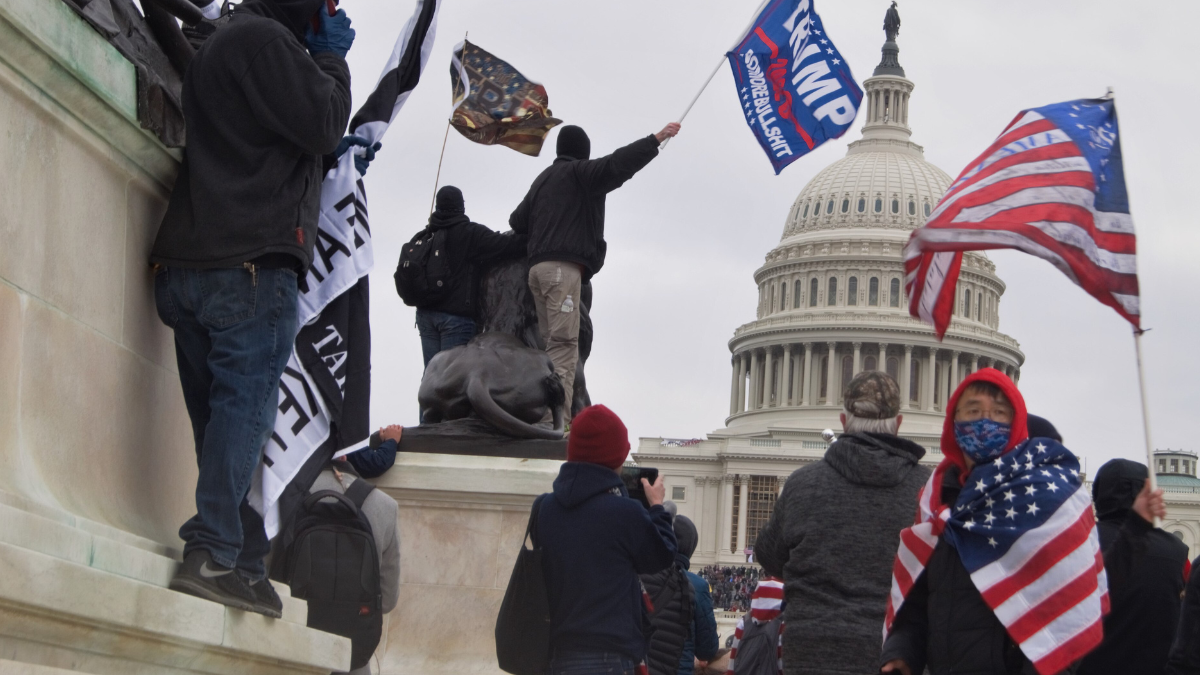
Many of the episodes now seem pretty passe in comparison to what we are exposed to via a scroll on X, a reel on Instagram or a flick through news channels. The characters that were relegated to the fringes in the late 1990s now exist within the mainstream. In the episode ‘Head For The Hills’, Theroux joins a group of survivalists in a remote area of Northern Idaho called ‘Almost Heaven’. Since the episode was shot in 1998, the subjects of the film will have surely felt ratified in their view that a ‘new world order’ has control of the world on numerous occasions. America came under attack in 2001, the economy crashed in 2008, a pandemic saw the government instruct people to remain in their homes, the Epstein files have revealed a world of elite sex trafficking and soliciting of underage girls, and Trump supporters performed an insurrection on the Capitol.
The last example holds a great level of irony, considering that Trump played on so many of the deep state conspiracies espoused by the survivalists. In a 2020 retrospective, Theroux spoke to Mike Kane, a survivalist who lived at ‘Almost Heaven’ in the 90s, who said of the pandemic: “If you don’t wear a mask in public, you’re going to be arrested, same old tyranny bullcrap.” Mike may have felt vindicated and that the prognosis he offered over twenty years previously was now being revealed to the masses. Many people who would have once watched Weird Weekends and derided his views in the 90s may well now align themselves with Mike. There is no evidence to suggest that the pandemic was a conspiracy. There is no evidence to suggest that the 2020 election was stolen from Donald Trump. Yet millions of people believe both to be true.
The Trump base is made up of characters to be found in Weird Weekends, with conspiracies such as QAnon being foundational to the movement. Of course, to win two (not three) elections, Trump has managed to win over a far wider cross-section of society. However, the core MAGA base was made up of the fringes. Tim Walz, the running mate of Kamala Harris, tried and ultimately failed to brand the Republican party as weird in the run-up to the 2024 election, an indication of how this ‘weirdness’ now sits comfortably in the mainstream having previously been derided.
But it would be another failure of the former mainstream to disregard the power of the message that these subcultures, conspiracies and communities share as one that is reactionary or as a result of social media algorithms promoting the sensational. The erosion of traditional institutions and the fragmentation of society as a result of economic and social crises have left people looking for community and a sense of belonging. In the face of poor economic prospects and a lack of physical connection as a result of a poor job market, lockdowns and the atomisation of dating and friendship culture in the age of social media, people have sought to find meaning in ideas and communities that were once on the fringes. Weird Weekends offers a retrospective on ideas that were once seen as fringe, whilst simultaneously highlighting the power of belief, the strength of community and the endurance of a good story.
Words by Eddie Monkman
Support The Indiependent
We’re trying to raise £200 a month to help cover our operational costs. This includes our ‘Writer of the Month’ awards, where we recognise the amazing work produced by our contributor team. If you’ve enjoyed reading our site, we’d really appreciate it if you could donate to The Indiependent. Whether you can give £1 or £10, you’d be making a huge difference to our small team.