
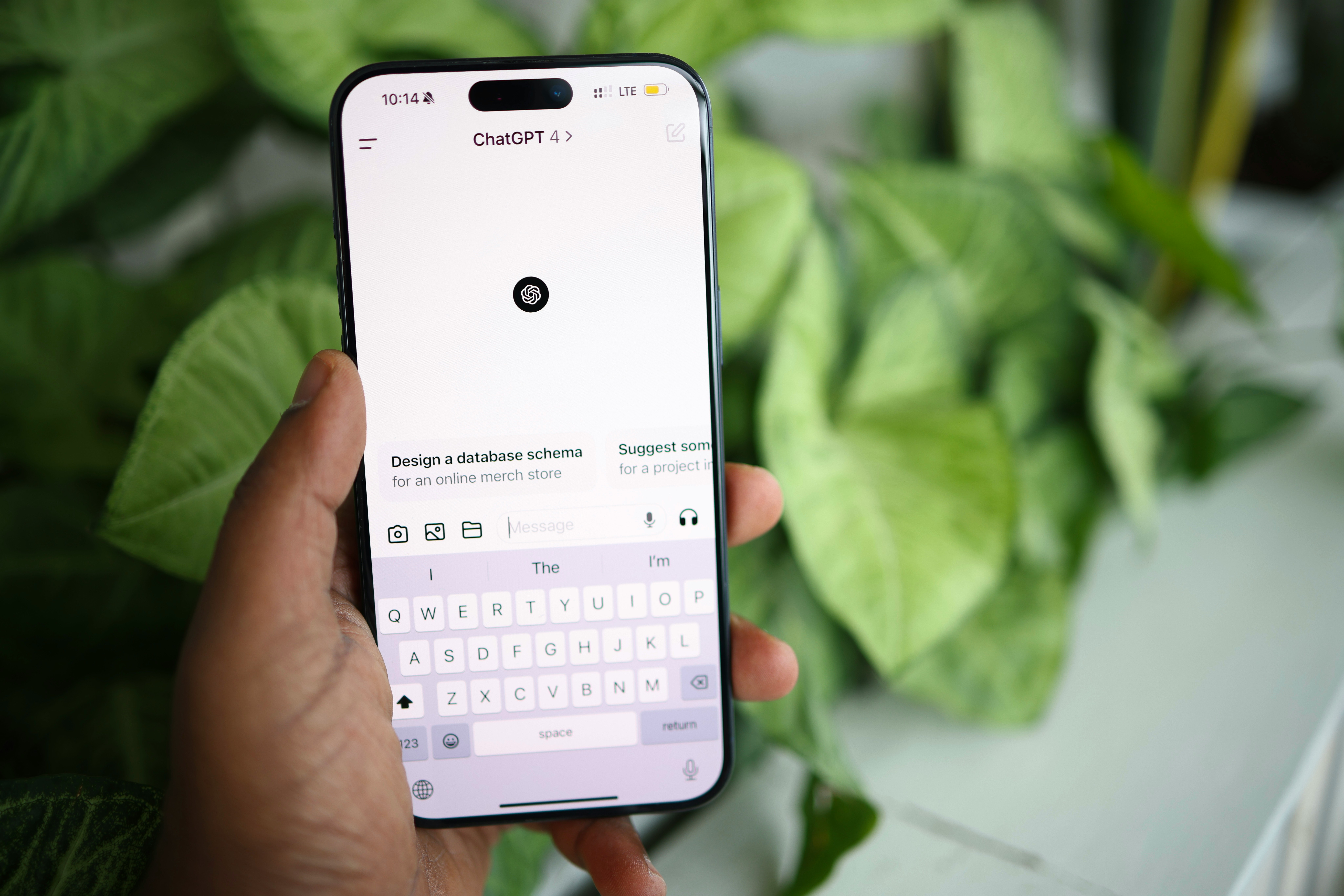
ChatGPT is down, I’m forced to use my brain’ is a joke I’ve seen circulate on TikTok dozens of times. I was particularly struck by a video I saw a few weeks ago made by a girl who complained she had planned to bake a cake that day, but the ChatGPT servers were down. The creator insisted that she could no longer bake as she was relying on the chatbot for the ingredients and subsequent recipe. Surely not, I thought, but I opened the comments to find almost everyone agreeing with her. People were explaining times of when their plans have been ruined because ChatGPT hadn’t been available to provide a response. Maybe I was naive, but reading the comments made me realise just how many people are using AI for simple tasks, and made me question whether we, as a society, are becoming too reliant on generative AI.
AI’s infiltration into the everyday
It’s fair to say that over the past few years there has been a significant increase in the infiltration of AI tools into everyday life. Whether it be using ChatGPT to make shopping lists, or adding CapCut filters onto TikTok videos to ‘see who in the friendship group would get arrested’. It seems as though artificial intelligence has crept up almost out of nowhere, yet is now becoming a crucial part of thousands of people’s daily routines. I have noticed how it is now practically impossible to avoid AI when using the internet. Google always summarises your search, brands use it to produce marketing campaigns and creators use it for filters on the likes of Instagram and TikTok. It is, in short, terrifying how accessible artificial intelligence has become and how normalised it is to use for simple tasks.
As someone who finished their degree last year, I feel as though I briefly missed the complete takeover of AI usage by university students. What started as a ‘helpful tool’ for essay ideas when I was in my second year, it seems that now people are extremely comfortable with getting ChatGPT to essentially write essays for them. For some reason, I have seen little to no conversation on social media regarding how generative AI is not just helping people pass exams – it is acting as the tool between passing and failing their whole qualification. Using it for daily tasks aside, why does no-one appear to be concerned that they are graduating with essays written solely by a chat bot?
Environmental cost and entertainment value
The incessant exposure to AI also brings harmful environmental impacts, which admittedly, I only learnt the extent of recently. Huge amounts of water has to be used for the cooling system for the hardware of AI models. The rapid rate of usage is leading to a strain on water supplies and eco-systems. Furthermore, studies conducted on the carbon footprint of training popular open-AI platforms have concluded that their usage emits about 626,000 pounds of carbon dioxide. With the popularity of AI for domestic use increasing, this number is only expected to rise. For a generation that is associated so much with being mindful of climate change, it is bizarre that so many Gen Zs are comfortable with the casual use of AI.
Since we were struck by Covid in 2020, it is fair to say that TikTok has become a staple app for most people, offering funny and relatable videos on a For You page that seemingly never reaches the end. Recently, I can’t help but notice how AI has begun to creep up on every few videos. The CapCut filters do not fall short of this. I’m sure most people find these kinds of videos amusing, as they range from showing what your future children may look like, to making a picture of someone dance, but the bottom line is these videos are a product of AI. The 5 second laugh given from a video like this is contributing to a much bigger issue of reliance on AI, as well as climate change. As well as this, not all videos are recognisable as AI, which is contributing to an even larger issue of believing fake news/events.
The risk of cognitive laziness
Although I was aware of how AI was popular amongst students, TikTok has also opened my eyes to how people are using ChatGPT to write professional emails for work, or as mentioned, help structure their daily routines by writing to-do lists. ChatGPT can answer any question, acting as a therapist (?!) for some, or a PT for others. Its almost like an episode of Black Mirror. It is frightening how people are essentially using AI as a replacement for their brain. It is undoubtable that being so reliant on generative AI is creating some kind of irreversible effects on the brain. It is scary to see how almost every social media platform has introduced its own AI agent in some kind of form. Almost every tweet I see on X has a comment calling for Grok to explain things in a more simplistic way/asking it to fact check.
It is fair to say that the personal use of AI is rapidly getting out of hand and is giving people everything in the simplest of means. We, as humans, are heading in a direction that is making our brains redundant due to dependency on AI. As AI’s presence expands beyond what we once imagined, so too does its power. To respond, we must accept that AI is no longer the future — it is the present.
Words by Lydia Potter
Support The Indiependent
We’re trying to raise £200 a month to help cover our operational costs. This includes our ‘Writer of the Month’ awards, where we recognise the amazing work produced by our contributor team. If you’ve enjoyed reading our site, we’d really appreciate it if you could donate to The Indiependent. Whether you can give £1 or £10, you’d be making a huge difference to our small team.