
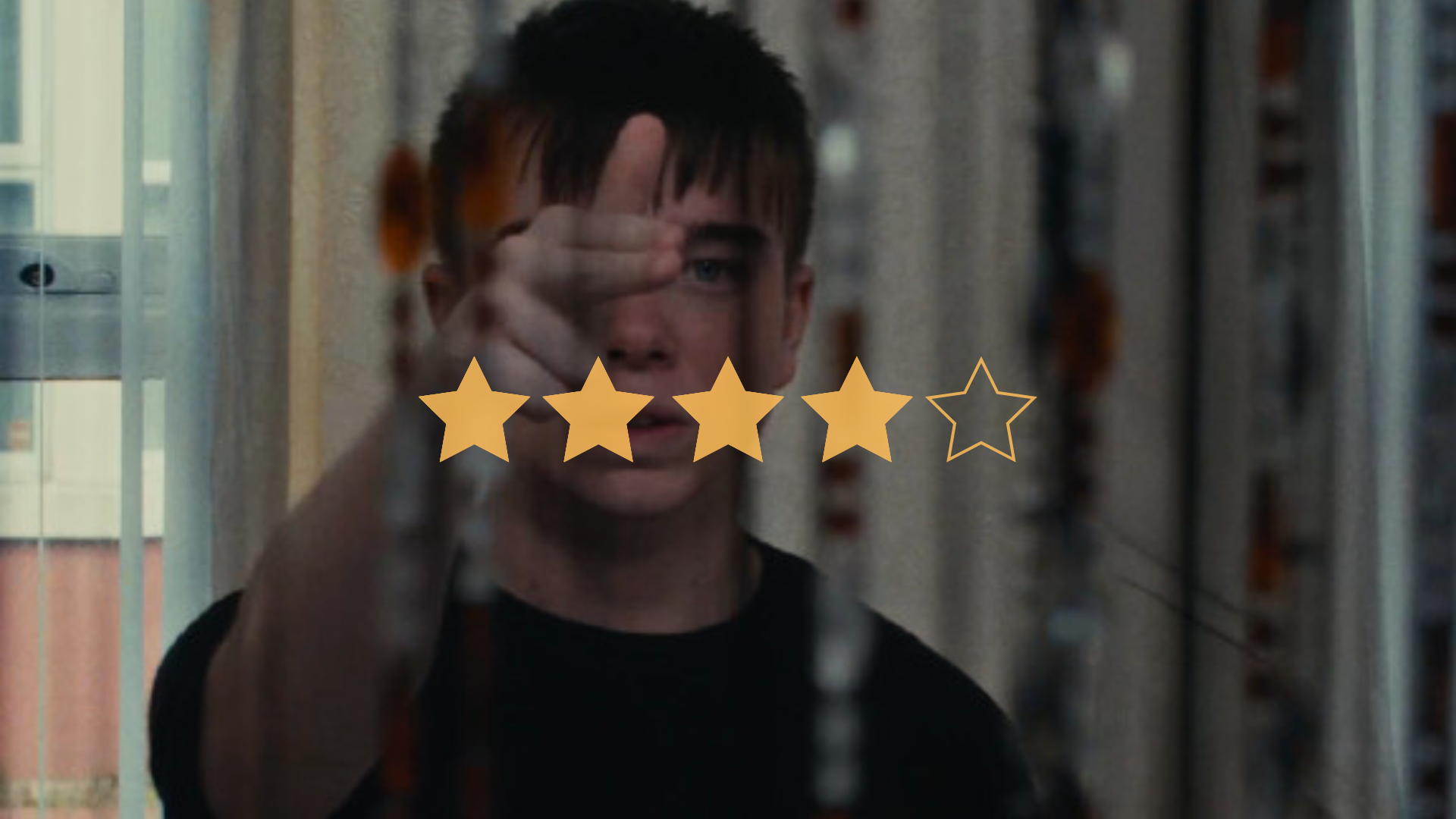
The multi-layered city of Liverpool, famous across the world for its cultural contributions, is proud, vibrant, welcoming, and resilient. It is also the third most deprived local authority in England, where 63% live in poverty. Against the backdrop of this harrowing statistic comes Michael J. Long’s hard-hitting directorial debut, Baby Brother.
★★★★☆
In the opening moments of Baby Brother, we are introduced to Adam (Paddy Rowan), who is ruminating over the kind of person he could have been. The version of him that might have been allowed to exist if he had different parents, a different home, a different life. Adam is a tragic victim of circumstance, with an alcoholic mother and violent stepfather. Any notion of hopes and dreams had to be squashed in order to stay and protect his titular baby brother, Liam (Brian Comer).
Themes of generational trauma, violence, and addiction run through this film, which take place over two days, five years apart. Flashback scenes are artfully shot in black and white, placing a clear distance between the two timelines. In the past, teenagers Liam and Adam traipse the streets of Liverpool, avoiding school and the unemployment line.
In between instances of bad behaviour, which for the most part strike a tentative balance between hijinks and illegality, the two boys find escape in their shared love of acting. In contrast to practically every stereotype you could throw at them, the brothers are clever and considerate, qualities that shine when they practice their impersonations and accents. They adopt new vocabularies and personas, finding respite in practicing improv scenes and lightly critiquing each other’s performance. It’s an inspired, important choice by Michael J. Long. The boys are not afraid to look silly, or effeminate: a bittersweet reminder of such wasted potential.
Half a decade later, we learn that Adam has swapped one toxic environment for another. He returns home to find that Liam, now in his twenties, is no longer the lapdog that once doted on his older brother. Rowan perfectly portrays the confused and erratic Adam, an angry young man on borrowed time. Not a single look or line of dialogue is wasted.
Long’s first feature film is admittedly low-budget, but this debut director has a real talent for telling working-class stories. Not afraid to call out exploitation by those in authority, he cleverly uses local radio hosts as omniscient narrators. In the background, they read reports on the “cloud of corruption” in Liverpool—“lions led by donkeys… this city with all the bravery, courage, and determination of The Lion. A proud, proud city.”
This corruption, that runs through councils and governments, goes some way to explain why kids like Adam and Liam are trapped in impoverished homes.

Long writes layered characters, struggling with addiction and abuse, who in another lifetime could have so much promise. He captures modern Britain with heart-wrenching realism, akin to the style of fellow directors Ken Loach and Shane Meadows.
Filmed across 11 days in Liverpool, with (crucially) local actors with local accents, Baby Brother’s cinematography is surprisingly light and airy. Days with the brothers are spent in bright sunshine, with scenes of greenery a welcome contrast to the hard-hitting themes.
The film is at its best when it shows rather than tells. Some lines come across too on-the-nose and the heavy content at times feels over-explained, sounding stilted coming from young mouths. However, when Long lets the talent shine, it results in beautiful, natural moments such as school-age Liam, gleefully hitching a piggyback from Adam, calling his older brother his “little taxi”. This effortless, comfortable dialogue shows a heart-warmingly accurate sibling relationship.
The Verdict
Baby Brother is a brave, heart-wrenching debut from Michael J. Long, telling a harrowing story of cyclical and generational trauma that creates victims of circumstance. These deeply flawed young people don’t know better and so can’t do better. All we can do is hope and pray that someone, somewhere along the line breaks the cycle.
Words by Tayler Finnegan
Baby Brother is available via streaming now.
Support The Indiependent
We’re trying to raise £200 a month to help cover our operational costs. This includes our ‘Writer of the Month’ awards, where we recognise the amazing work produced by our contributor team. If you’ve enjoyed reading our site, we’d really appreciate it if you could donate to The Indiependent. Whether you can give £1 or £10, you’d be making a huge difference to our small team.