
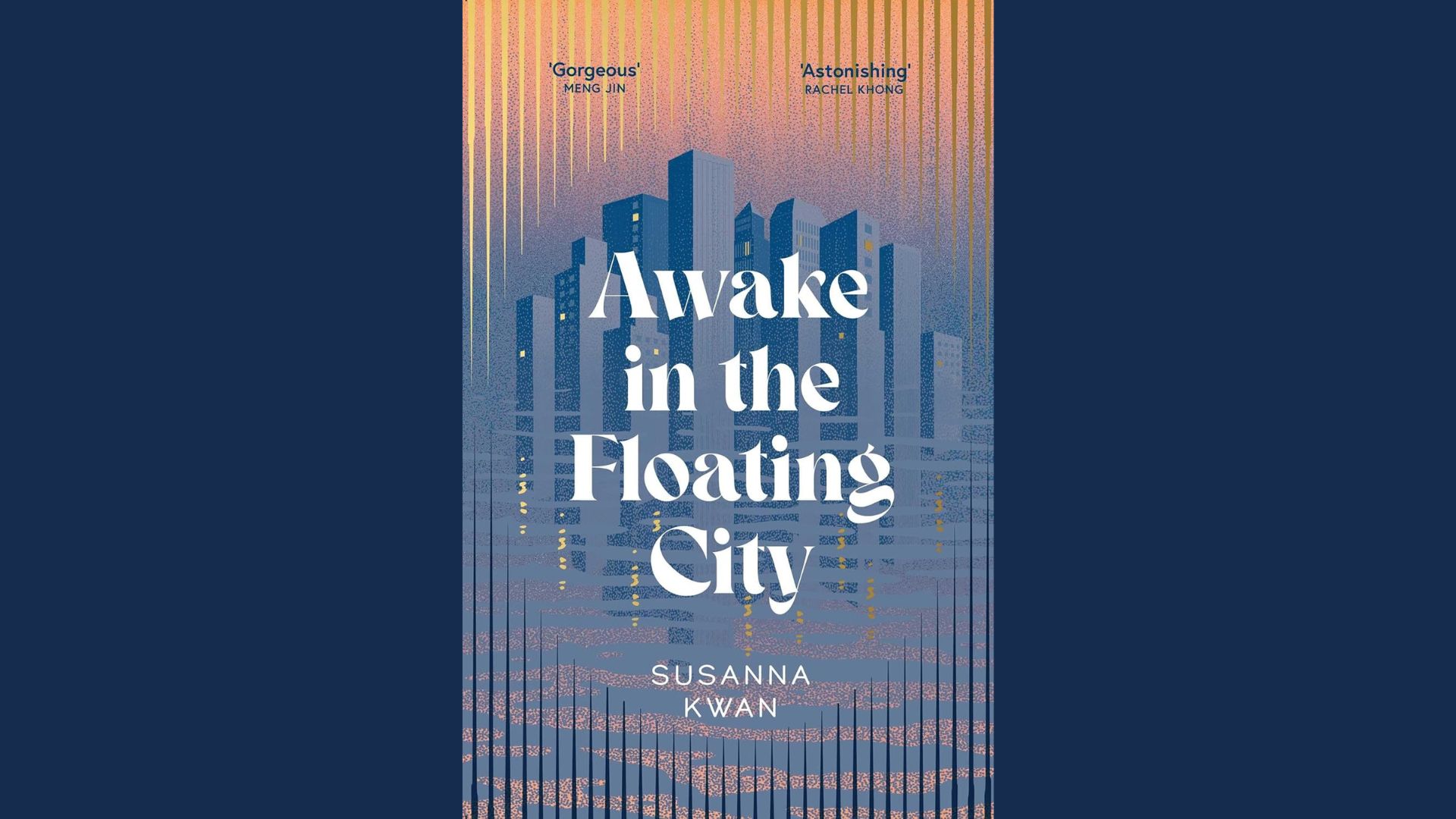
The debut novel by Susanna Kwan, Awake in the Floating City follows an artist in a flooded world who feels paralysed by her own grief. After missing chance after chance to get out of her partially underwater city, Bo agrees to work a few days a week for Mia, a ‘supercentenarian’ woman who has lived to be 129. With Bo grieving her mother, and Mia’s strained relationship with her own daughter, the two seem to provide something that the other is looking for.
Bo is an interesting character. Struggling to find the motivation to continue with her art in the wake of family loss, she cannot seem to figure out how to live for herself and what she wants, now that her mother is not there to want it for her. She has undertaken care work for the older residents of her building before, and seems invested in helping them to keep leading rich lives even in the face of climate collapse.
Unfortunately, Awake in the Floating City does sometimes get bogged down in its worldbuilding. Although Kwan has created a rich landscape here, with plenty of knowledge of how this partially-underwater world would work and the ways in which communities would reshape themselves, this information is at times oddly placed. Characters will be mid-conversation when the reader is pulled away for several lengthy paragraphs of exposition about mycelium walls or whose family has moved where, before abruptly rejoining the conversation with little memory of the last thing each character said. While every bit of detail is interesting and carefully considered, it might have been best if it were distributed throughout the story rather than racing to insert everything in the opening chapters.
That being said, the world Kwan imagines here is an interesting one, with rooftop markets and bridges built between high-rises, wildlife-monitoring drones and pulley systems to deliver food between floors. The glimmers of community we see within this world are compelling and are a good springboard for considering how we might reshape if faced with such a crisis. Kwan’s depiction of Bo and Mia’s intergenerational bond and the ways in which it helps them both to recover something they have lost is another strong point of the book—there is more emphasis within the plot on this and on care and memory than on the disaster elements, for those with a preference between the two.
While aspects of the novel such as these have great potential, there is a disconnect between its climate fiction setting—one surely filled with more urgency in the fact of rapidly rising waters—and Bo and Mia’s story, which feels as though it could have taken place in plenty of other settings. Its themes of art, caregiving and memory would be equally relevant set in an unflooded world. While the author’s love for this setting shines through, it could have been further applied.
Words by Casey Langton
Want more Books content from The Indiependent? Click here
Support The Indiependent
We’re trying to raise £200 a month to help cover our operational costs. This includes our ‘Writer of the Month’ awards, where we recognise the amazing work produced by our contributor team. If you’ve enjoyed reading our site, we’d really appreciate it if you could donate to The Indiependent. Whether you can give £1 or £10, you’d be making a huge difference to our small team.