
When you think of advice columns you might have ‘90s fictional portrayals in mind. Of course, you might have a more recent cultural touchstone in mind than Dolly Parton. But wherever you mind goes, it is unlikely to land on a publication from the 1690s.
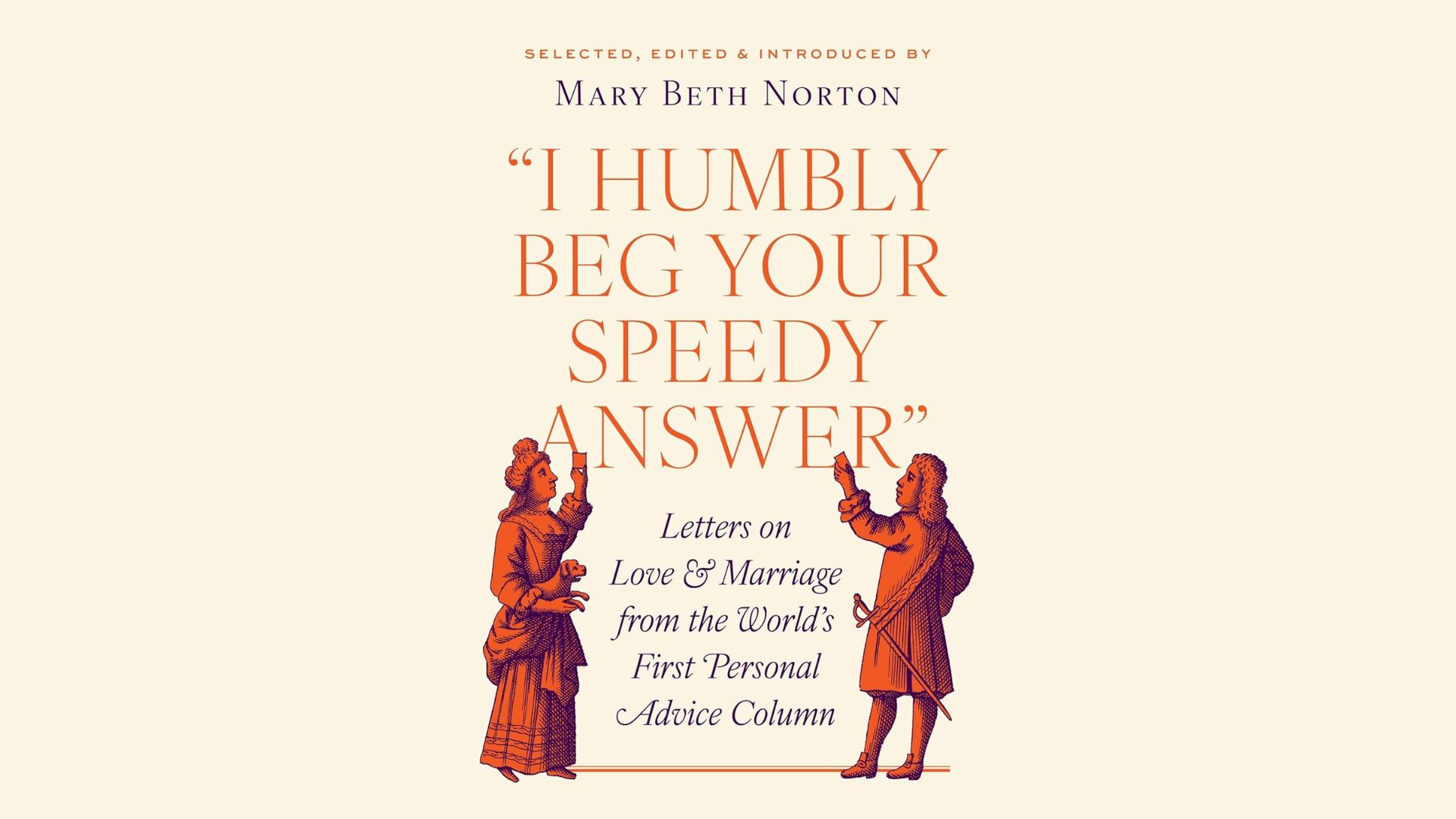
“I Humbly Beg Your Speedy Answer”, is a selection of edited excerpts from The Athenian Mercury, a London periodical published from 1690-97. The selected answers are chosen, edited and introduced by Mary Beth Norton. Collections of such answers are not new, as the periodical’s publisher, John Dunton, quickly began to sell volumes collecting multiple issues of The Athenian Mercury together. There was also a later multi-volume compilation, The Athenian Oracle, that remained in circulation into the 19th century. But this collection brings new life to the source material and consciously sets out to give an encompassing view of The Athenian Mercury rather than cherry picking excerpts to please the reading, and vitally buying, public.
Norton’s presentation is adeptly done. At first glance it appears just a selection of answers, collected thematically with short introductions, but Norton intersperses the excerpts with commentary. This is not commentary that tells you what to think, it just gently notes context with the slightest hint of opinion. That careful balance between presenting the selection as is, and giving context alongside interpretation, is loose enough to permit the reader to disagree where they like, but is firm enough to keep the reader engaged in what might otherwise be a confusing jumble of historic sources.
Presenting text from so long ago brings complications. Do you leave the text, littered with variant spellings, as it is even if it is incomprehensible to the average reader without extensive notes, or do you modernise and edit the text to appear as if it were written recently? Norton’s solution – presenting edited text, with ellipses to show parts cut for concision, alongside references to the original text – neatly provides the best of both worlds. For those who want to understand the ideas of the text it works as is, without the encumbrance of notes (or even a full critical apparatus noting differences between manuscripts), and for those interested in the original text it is not hard to look it up from the references.
What is almost unthinkable, is that this was the first published advice column. An idea thought up on a jaunt through a park, now seems rather mundane, but at the time was revolutionary. It was a powerful idea that’s influence quickly spread. Originally aimed at the men of London’s coffee houses, it soon had to adapt as question came in from the across the country, and from women. The periodical quickly evolved making clear it was open to questions from both men and women.
When I first picked up “I Humbly Beg Your Speedy Answer” I expected it to just be of historical interest and that it would give an insight into the world of broadsheets and coffee house gossip, which it does brilliantly. What I did not expect was for it to be such an entertaining insight into people’s lives and to seem quite so modern. The problems people might write into a paper about (or cynically just those the publisher deems worthy of print) have hardly changed in over 300 years. Society and legal complications might have changed, but people have not.
Words by Ed Bedford
Want more Books content from The Indiependent? Click here