
The winner of the 2024 Booker Prize was, in many ways, a conventional choice. Samantha Harvey’s Orbital was recognised for “observ[ing] Earth’s splendour, whilst reflecting on the individual and collective value of every human life”—a suitably literary aim for the ultimate literary prize. Except, of course, it was set in space.
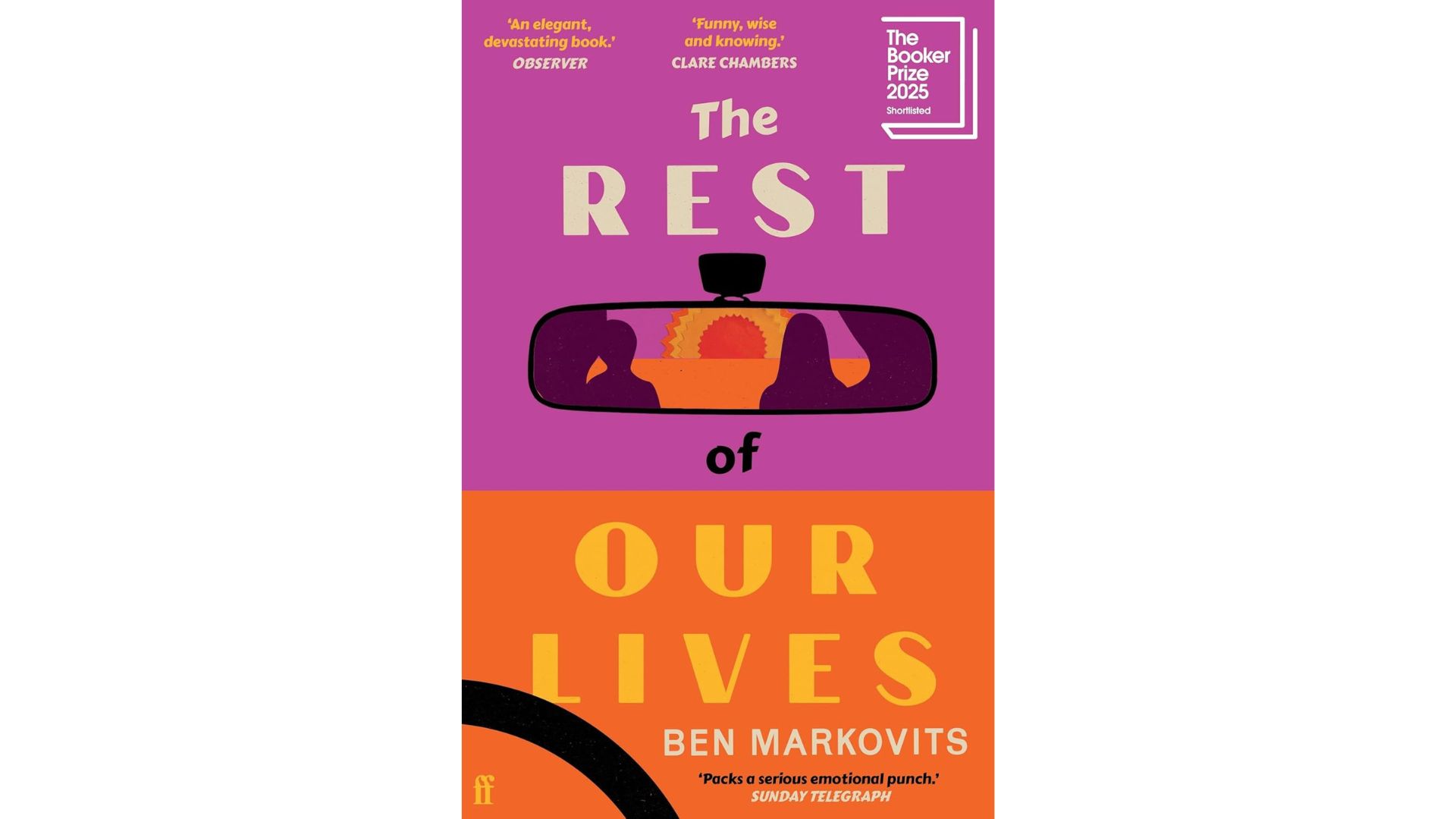
By contrast, the beginning of Ben Markovits’s The Rest of Our Lives—shortlisted for this year’s iteration of the prize—seems remarkably grounded. Law professor Tom and teacher Amy are a normal American couple, with two grown-up children and a shared history of minor dramas and disappointments. Chief amongst these is Amy’s brief affair with a friend twelve years ago, after which Tom promised himself he would leave her when their younger child turned eighteen. But when that moment comes, he takes far less conclusive action. Instead of walking out, he drops his daughter off at university and just keeps driving, sparking a road trip down memory lane via the homes of old friends, his brother, son, and ex-girlfriend.
The Rest of Our Lives thrives on its ordinariness. It is written lyrically but informally, so it often feels (in the best way possible) like you’re listening to a dissatisfied middle-aged man talking you through his life. Tom has a litany of seemingly insignificant but chronic issues, from his inability to forgive Amy to the mysterious health problems doctors repeatedly misdiagnose as long Covid. But, as Markovits expertly shows, it is these small things which bleed into each other to make a life: after all, if you have ‘a C-minus marriage’, that ‘makes it pretty hard to score much higher than a B overall on the rest of your life.’
But as with any Booker-shortlisted novel worth its salt, the knotty personal lives of our protagonists come with a backdrop of 21st-century social issues. Tom himself is neither uncomplicated nor wholly unproblematic; he is suspended from work for refusing to put pronouns in his email signature and being on the wrong side of a high-profile legal case over racist comments. He even admits himself to having ‘objectionable thoughts’, and believes himself a dying breed as ‘a middle-aged white man who likes to teach dead white men’. Yet later on, when he meets a failed basketball player determined to sue the NBA for systemic bias against white people, he feels disturbed rather than outraged. In the end, Tom never becomes the villain, victim, or hero of any of these subplots—he’s just a person.
Despite what the title promises, there is limited closure on what The Rest of Our Lives will actually look like for the Laywards. Having travelled hundreds of miles, Tom’s journey—and the reader’s—ends abruptly at a point of crisis which leaves everything up in the air. Yet in some way, an open ending is the only one that could make sense: you drop into Tom’s life almost by accident, then just as quickly you drop back out of it with the feeling that somewhere in the world, the story is continuing without you. It might not have astronauts or the ISS, but the skill it takes to capture a human being quite so precisely would make this enchanting novel a more than worthy winner.
Words by Eleanor Harvey
Support The Indiependent
We’re trying to raise £200 a month to help cover our operational costs. This includes our ‘Writer of the Month’ awards, where we recognise the amazing work produced by our contributor team. If you’ve enjoyed reading our site, we’d really appreciate it if you could donate to The Indiependent. Whether you can give £1 or £10, you’d be making a huge difference to our small team.