
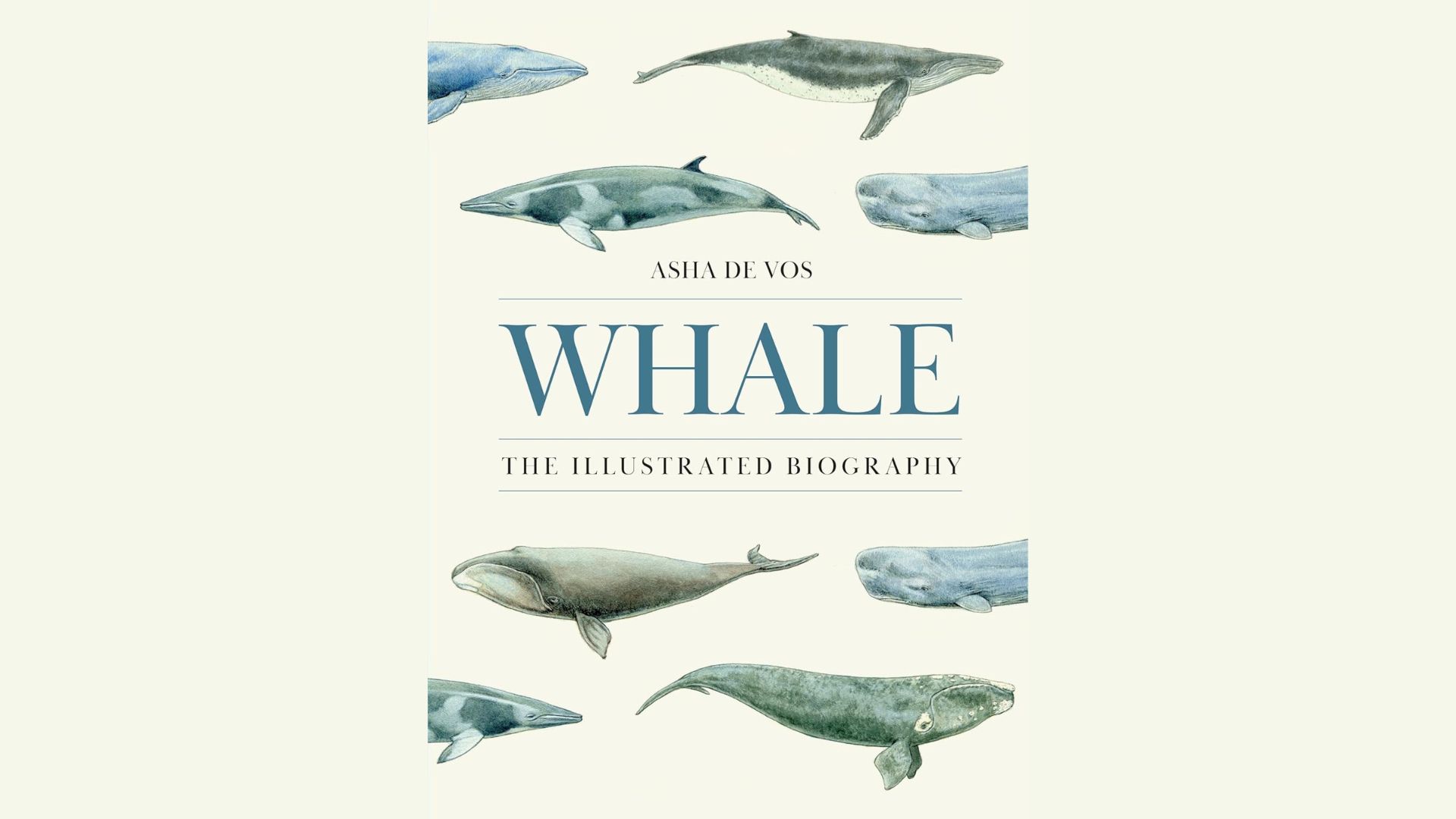
Whale by Asha de Vos is an illustrated biography that brings its reader up close to these marine mammals and delves into their inner lives. Asha de Vos is a marine biologist who founded the Sri Lankan Blue Whale Project as well as Oceanswell, a non-profit organisation dedicated to research and education concerning marine biology. Her dedication to and enthusiasm for the book’s subject matter is both evident and infectious—it is bound to get readers invested in the most unexpected aspects of whale research, from what can be learned from whale blubber samples to how they can be tracked even from space.
The book is filled with lavish hand-drawn illustrations by Adam Hook. Whether it is a sweeping ocean landscape or an anatomical diagram, each one pairs with the text to make the whole book provide a more immersive reading experience.
One of the most interesting, and perhaps heartbreaking, chapters discusses whale song, how it is produced and why increasing amounts of background noise—such as boat traffic, drilling and sonar—are hindering its use for communication across the species. De Vos compares this struggle for whales to be heard by one another in modern-day waters to having a conversation at a house party surrounded by lots of other talking people. This does not anthropomorphise whales too much but rather draws a line between them and ourselves—in a social sense we want the same things, to be heard, to communicate, to connect and have companionship.
As the book’s subtitle is ‘The Illustrated Biography’, it feels fitting that it is not only a biography of the whale but also at times of de Vos herself. Scattered snippets about her early studies and career are just as engaging as all of the whale facts, and may serve as an inspiration to young aspiring marine biologists or conservationists. These extracts only go further to prove that humans and cetaceans have had their lives intertwined for thousands of years—de Vos expands on the history of this relationship by detailing Neolithic petroglyphs of whales, and the darker history of whaling.
Whale does whale conservation a service, for while it does make the reader feel on a personal level for these social and sensitive animals, de Vos takes a pragmatic view of conservation and feels that much of whale conservation has become preoccupied with the issue of whaling and the somewhat romanticised view that we should save whales largely because they are beautiful and charismatic. However, de Vos argues a finer point—that whales are also a vital part of the marine ecosystem and that to lose them would throw everything out of balance. She also raises the point that in the modern world we need to consider the impact that drilling, fishing and having most of our goods shipped by cargo boat are having on whale populations.
This elevates the book from what it already is—a lush and vivid look at an animal family—to something that is particularly modern and current, taking traditional ‘save the whales’ messaging and working it into something more complex. If whales and their habitats are being threatened by millions of seemingly innocuous human actions, this also sends the message that millions of individuals can make a change by altering their actions.
Words by Casey Langton.
Want more Books content from The Indiependent? Click here
Support The Indiependent
We’re trying to raise £200 a month to help cover our operational costs. This includes our ‘Writer of the Month’ awards, where we recognise the amazing work produced by our contributor team. If you’ve enjoyed reading our site, we’d really appreciate it if you could donate to The Indiependent. Whether you can give £1 or £10, you’d be making a huge difference to our small team.