
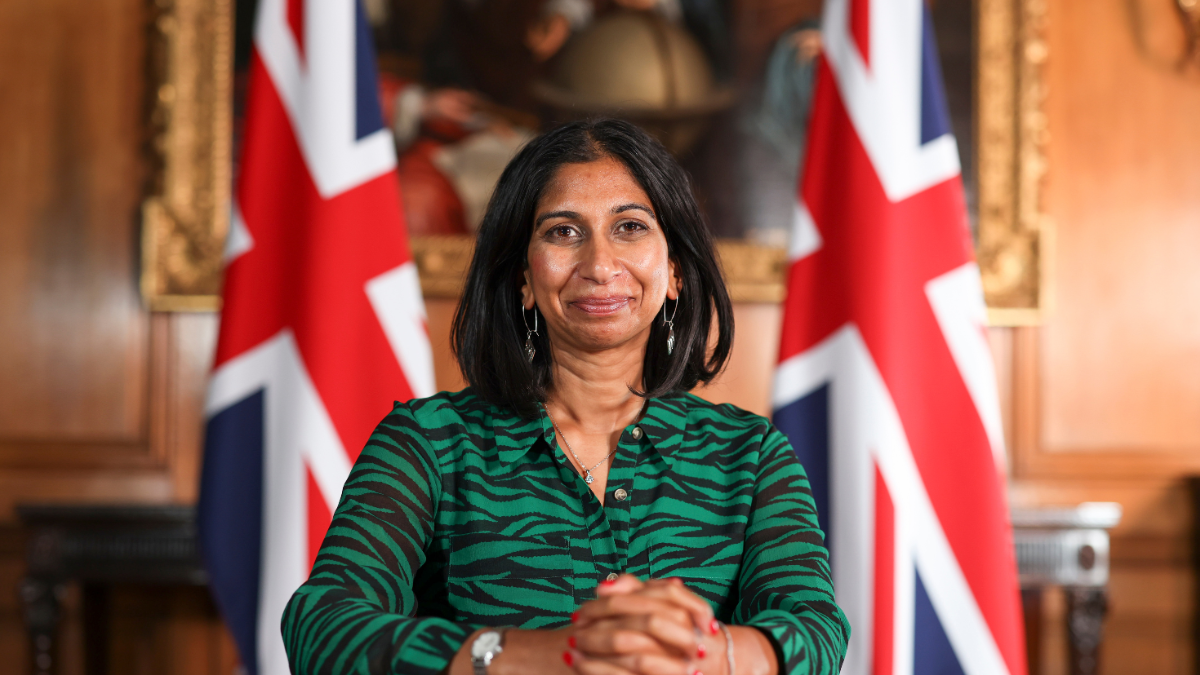
What is a political party? In 20th and 21st-century Western political thought, it is assumed that a political party relies on a mandate first from the membership and then secondly from the electorate. Or perhaps even, the words of Franz Kafka, “One idiot is one idiot. Two idiots are two idiots. Ten thousand idiots are a political party.” Such a buildup of “idiots” means that sometimes assumptions of credibility are not always justified. Politicians lie, break manifesto pledges and, as has been so frequently demonstrated in recent months, defect. In the past few months, around 20 Conservative MPs have defected to Reform UK, culminating in perhaps the most high-profile defections of the lot; former Conservative leadership candidate Robert Jenrick, and former Home Secretary Suella Braverman.
After losing a General Election to a landslide Labour victory in July 2024 and then finding the party outflanked on the right by Reform UK, the Conservative Party risks a freefall into the electoral abyss at the next election. But once again, the question should be raised: what is a political party? Reform UK and The Conservative Party are, of course, distinct from each other in structure, makeup and law. They have different headquarters, different social media accounts and – to a certain extent – different policies. However, whilst the distinction between the two softens with each defection, the two parties’ shared lineage does not begin in 2025. The relationship between the two can be traced all the way back to the Reform UK leader Nigel Farage and the 1970s.
Farage left Dulwich College in 1982 as a member of the Conservative Party before joining the newly formed United Kingdom Independence Party (UKIP) in 1993. UKIP was formed as a single-issue political party: to see the UK leave the European Union. In 2016, under the leadership of David Cameron’s Conservative Party, that ambition was realised. Farage had been at the vanguard of the Conservative discourse over Euroscepticism. Whilst he no longer wore Conservative colours, he had ostensibly used a new political party to force (some may say manipulate) his old one to adhere to the position he desired. Now, years later, he is doing the same thing with Reform UK.
As much as being a party in their own right, Reform UK cannot be separated from the Conservatives. The political right is realigning in the UK, and Reform is a magnet that is attracting those involved. The Conservative Party may lose its electoral power, but the politicians, donors and supporters of the party are still fundamental to British politics. Once loyal Conservative members have found a new host, one that seems better equipped to win elections in the 2020s. And much like the Ship of Theseus thought experiment, is there a point at which the two parties become one and the same if Reform becomes almost completely made up of former Tories?
In the wake of Jenrick being swiftly followed by Andrew Rosindell in defecting, Farage warned that Reform is not a refuge for fleeing Conservatives, claiming that “Any Conservative MP who still clings to the hope that their party can recover and waits until 8th May to try to leave the sinking ship does not understand how rapidly things are changing out in the country.” But even if he now blocks further defections, the fabric of his party is made up of former Tories. Richard Tice, the deputy leader of Reform UK, was a Conservative Party member and long-time donor until 2019, when he financed the newly formed Brexit Party – the embryonic Reform UK. Now he is joined by Jenrick, Braverman, parliamentary private secretary Danny Kruger, and former Tory Chancellor Nadhim Zahawi. Zahawi previously criticised Farage, saying “Welfare and skills are two policy areas which we hear very little about from the UKIP leader. This is unsurprising because they require deep thought and serious long-term reform rather than the angry slogans which are his stock in trade”.
The Conservative Party is, as they have often so often liked to remind the public, the most successful election-winning machine in modern political history. But after Truss, Boris, lockdown parties, and 14 years of economic decline in the UK, that electoral beast has appeared to have breathed its last. But the same wily political operators still exist and have taken the opportunity to find a new political host that can offer them electoral success again. Reform UK is not – as its namesake suggests – a brand new set of ideas, but rather a rightward pivot of the Conservative movement in the UK. According to the independent think tank The Institute for Government, “Reform UK and the Conservatives have set out the toughest policies on both immigration and asylum, mirroring each other on policies relating to the ECHR and deportations.” Reform UK is a repatriation of right-wing politics in the wake of the right receiving a kicking at the polls. Now that the Tories face another one in the upcoming local elections this May, the party continues to dissolve into its new host.
Jenrick has since claimed that the Conservative Party has “almost become the party of posh people. They are so out of touch with the people I grew up around in Wolverhampton and represent in North Nottinghamshire.” It makes one wonder what party Jenrick thinks he was a part of from 2014. Only now that the Conservatives have lost electoral favour and are being outcompeted by a vastly more popular right-wing party does Jenrick come to this conclusion. His defection is emblematic of the ruthless and self-serving approach taken by many former Conservative MP’s who are gambling on Reform UK offering them a greater chance of securing their seat at the next election and perhaps, if Reform were to win an election, a cabinet position.
Whether the Conservative Party will slip into electoral obscurity remains to be seen. Perhaps Reform UK has topped out in the polls and will now struggle to find more voters to persuade. Farage’s style remains off-putting to many, and numerous Tory defections taint the party for many. But regardless of the future, the litany of defections from the Tories to Reform exposes the fragility of the party once its MPs, donors and supporters fear that it no longer offers them a chance of being in power.
Words by Eddie Monkman
Support The Indiependent
We’re trying to raise £200 a month to help cover our operational costs. This includes our ‘Writer of the Month’ awards, where we recognise the amazing work produced by our contributor team. If you’ve enjoyed reading our site, we’d really appreciate it if you could donate to The Indiependent. Whether you can give £1 or £10, you’d be making a huge difference to our small team.