
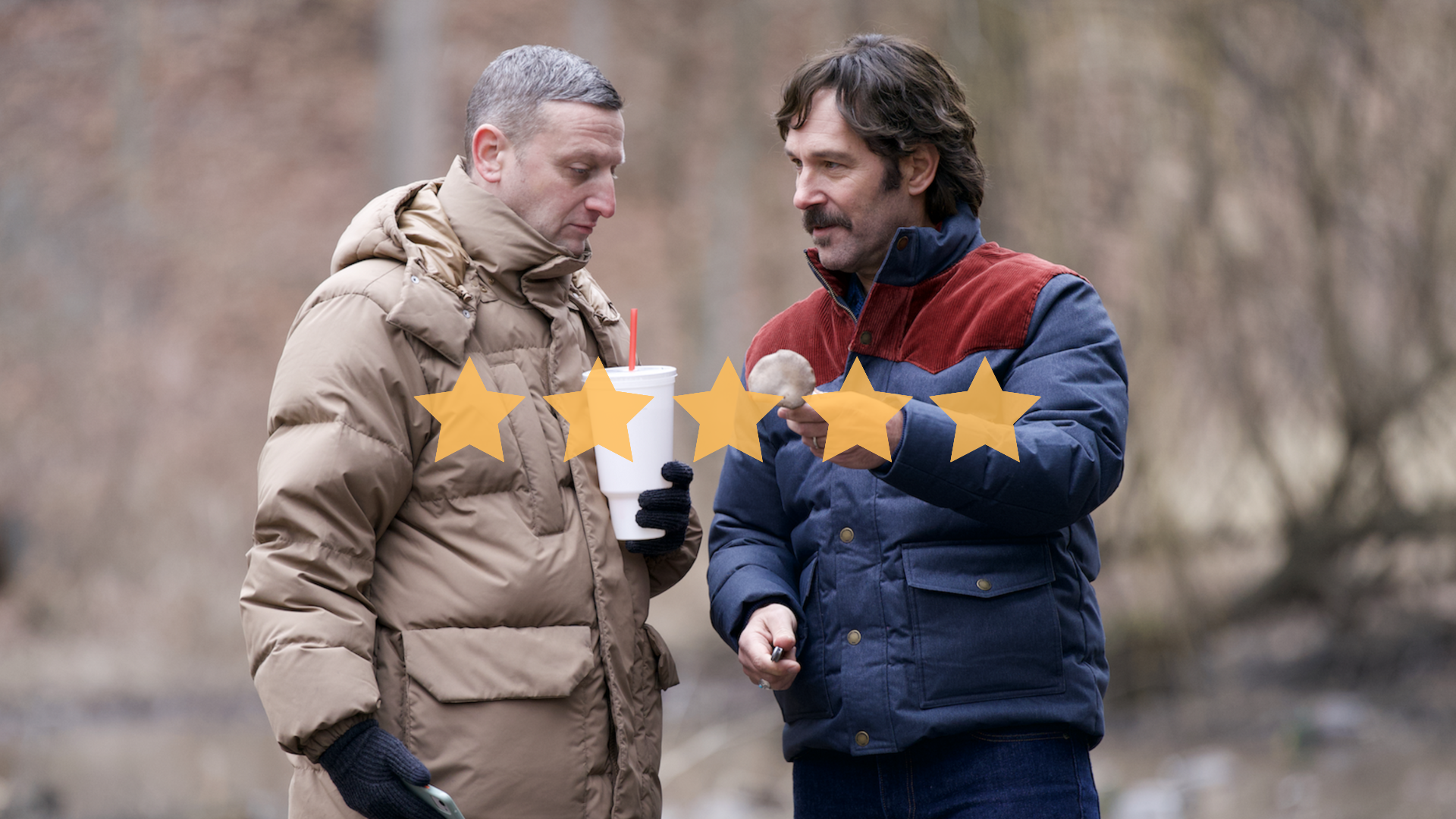
Director Andrew DeYoung walks a mystifying tonal tightrope in his feature debut, a painfully relatable meditation on the desperate, awkward lengths men will go to avoid being alone
Male friendship has long been fertile ground for cinema, offering a window into shifting societal norms, emotional repression, and the evolving politics of masculinity. At some point, Hollywood moved past the likes of Butch Cassidy and the Sundance Kid (1969) or The Sting (1973), where male bonding was framed in adventure narratives away from domestic lifestyles. In its place came interrogations of the vulnerability, insecurities, and emotional depth of these friendships in modern settings, from poignant dramas like Good Will Hunting (1997) to awkward comedies like Superbad (2007).
Friendship lands somewhere in between the goofy comedy and psychological interrogation. Moreover, it resists the sanitised sweetness of the early Hollywood bromance and instead delivers a quieter, more jagged meditation on male intimacy, one that’s as fragile and fumbling as it is devastating.
The story centres on Craig Waterman (Tim Robinson, in a revelatory performance), a man stranded in middle age and slowly dissolving under the weight of a life unlived. His marriage to Tami (Kate Mara) is inert, his connection to his teenage son Steven (Jack Dylan Grazer) is virtually non-existent, and his office job is soul-crushingly dull. Into this bleak landscape enters Austin Carmichael (Paul Rudd), a charismatic local weatherman who seems to radiate everything Craig lacks: ease, confidence, spontaneity.
Their bond begins innocuously; there’s goofy banter, late-night stoner philosophising, even caving through suburban sewer tunnels in search of some elusive ‘edge’. But what starts as friendship quickly metastasises into obsession from Craig’s end. When Austin abruptly ‘breaks up’ with Craig, the emotional fallout is shattering. What follows is a darkly funny, brutally honest spiral of identity collapse that drags Craig and his family into chaos.
It sounds grim. That’s because it is. But that’s the whole point.
Friendship is a razor-sharp dissection of how male relationships are often built not on emotional openness, but on mimicry, posturing, and a fear of vulnerability. Craig doesn’t simply want a friend; he wants Austin’s life. Austin is a weatherman on the verge of promotion to the news room, highly popular around all crowds and seems to not be held back by domestication (no sullen wife or son in sight). Whereas Austin moves through the world with effortless charm and momentum, Craig stumbles under the weight of his own insecurities. Even Austin’s absurd antics, like crawling through storm drains, appear to Craig as glimpses of a higher, freer masculinity.
After their relationship dissolves, Craig desperately tries to mimic the effortless charm Austin seems to wield over everyone. But in attempting to embody this, Craig’s clumsy imitations only backfire with almost tragic precision: his coworkers mock him, his son pulls further away, and in one particularly unsettling moment, his actions put his wife in real danger. Rather than confronting the consequences of his behaviour, Craig retreats deeper into obsession, nursing a bitter, almost involuntary resentment toward Austin. Even his rare moments of decency, like finally buying his wife a practical moving van, are overshadowed by Austin in a flashy sports car, effortlessly stealing the spotlight once again. This all culminates in Craig’s tightly-coiled rage exploding in a hair-raising confrontation with Austin that is a contender for the most tension-induced climaxes of the year.
But make no mistake: Friendship is indeed a comedy. That element comes from DeYoung’s collaboration with Nick Robinson, best known for the cult hit series I Think You Should Leave (2019-present), and leans deeply into the cringe-inducing micro-moments of modern life. It’s a film that uses minor humiliations and social discomfort not as background noise but as central narrative tension. Friendship understands that the ache of wanting to belong and being the odd one out in a room of seemingly cooler, more magnetic people is nearly universal. Who hasn’t told a bad joke to fit in? Who hasn’t misread a moment and felt the shame echo for days? It’s this relatability that gives the film its hypnotic edge. The laughter it provokes comes not just from absurdity, but from recognition.
This raw awkwardness is elevated by Robinson’s astonishingly nuanced performance. Although known for his above-mentioned flair in cringeworthy comedy, Robinson channels the same wounded vulnerability seen from Adam Sandler in Punch-Drunk Love (2002). Robinson fills Craig with both endearing innocence and selfish delusion. These flaws don’t detract from our empathy, they enhance it, because Friendship isn’t about being good or bad; it’s about being human, in all its messy, insecure complexity, and Robinson impeccably exemplifies that.
Paul Rudd is pitch-perfect as Austin, bringing his usual affable charm but layering it with a quiet detachment. His eventual withdrawal from Craig isn’t cruel – it’s self-protective, a reflection of his own emotional insecurities. Meanwhile, Kate Mara shines as Craig’s quietly exhausted wife. Whilst more reserved than Robinson’s performance, every glance speaks volumes about years of unspoken disappointment.
The Verdict
Friendship is as funny as it is uncomfortable, as unsettling as it is true. It’s a miracle of tonal tightrope and a showcase for DeYoung and Robinson’s unique brand of comic pathos. By the time the credits roll, you’ll be laughing, cringing, and maybe texting an old friend just to make sure you’re not Craig, although that may be hard to avoid.
Friendship had its premiere at the SXSW Film Festival on March 11, 2025. It is set to be released in the UK on July 18.
Support The Indiependent
We’re trying to raise £200 a month to help cover our operational costs. This includes our ‘Writer of the Month’ awards, where we recognise the amazing work produced by our contributor team. If you’ve enjoyed reading our site, we’d really appreciate it if you coulddonate to The Indiependent. Whether you can give £1 or £10, you’d be making a huge difference to our small team.