

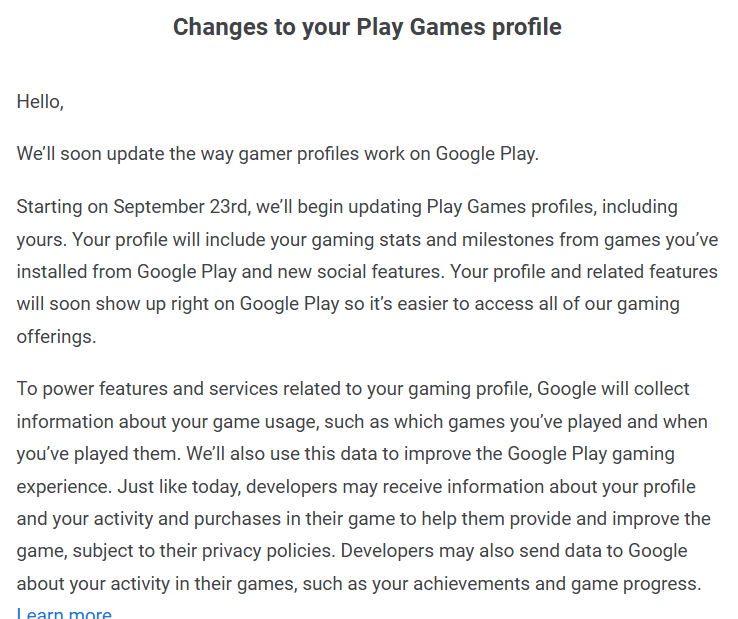
Google will roll out a mandatory redesign of Play Games profiles on September 23, 2025, marking one of the biggest shifts in Android’s gaming ecosystem in years. The update will apply automatically to users worldwide, with the European Economic Area and United Kingdom following on October 1. Unlike past cosmetic tweaks, the overhaul moves Play Games profiles directly into the Google Play Store, adds new social features that resemble Steam’s community tools, and expands the range of gameplay data Google collects from player activity.
The company disclosed the change quietly, publishing on Google Support Help page and emailing Play Games users directly. According to Google, the revamped profile will display gameplay statistics, milestones, and new community-facing social functions. “To power features and services related to your gaming profile, Google will collect information about your game usage, such as which games you’ve played and when you’ve played them,” the notice states. “We’ll also use this data to improve the Google Play gaming experience.”
Inside the Redesign
The overhaul aims to turn Android’s fragmented gaming identity into a centralized hub. Instead of juggling a separate Play Games app, player profiles will now live directly inside the Google Play Store. The shift gives players faster access to stats and milestones, while positioning Google Play as the default identity layer for Android gaming.
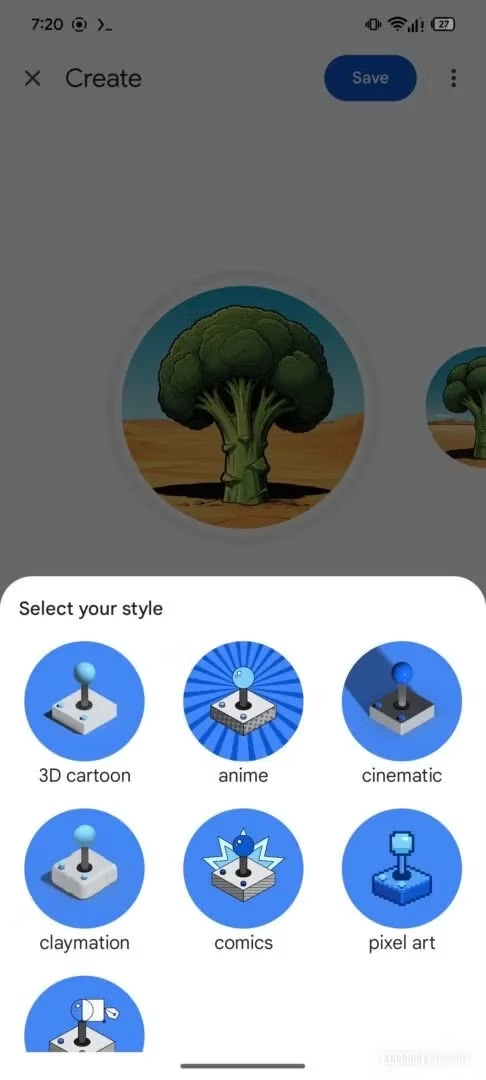
Core functions such as achievements, cross-device progress, and cloud saves remain in place. On top of those, Google is introducing community tools — including follower and following counters, public visibility controls, and customizable avatars.
Early teardowns of the Play Store beta, reported by Android Authority, suggest players will be able to choose from avatar styles such as anime, 3D cartoon, claymation, and pixel art. The update shifts Play Games from a background utility into a front-facing identity hub, echoing the way Steam combines player records with community interaction under one profile.
Data Collection and Player Control
Of course, the new features come with strings attached. Google stresses that to make this system work, it will gather more detailed usage data, including which games players install, when they launch them, and how long sessions last. Developers will continue to see activity and in-app purchase data from their own titles, while some information — including achievements, leaderboard standings, events, and saved progress — may also be shared back with Google.
Players cannot opt out of the revamp update, as profiles will switch over automatically when the rollout begins, leaving deletion as the only alternative for those who object. Google has confirmed that existing visibility settings will carry over, but removing a Play Games profile — or an entire Google Account — is the only way to erase all associated data. For players who’ve built up years of progress, Google will offer a one-time option for players to import past game activity stored in “My Activity” logs, allowing years of stats to carry over to the new profile.
Why It Matters
The overhaul comes at a time when Google is reshaping Android’s data policies. Earlier this year, the company deprecated Android ID as a persistent device identifier, restricted how apps access photos and videos, and introduced the App Set ID (ASID) — a tool meant for fraud prevention and analytics that is explicitly barred from advertising use. The Play Games redesign is the most visible consumer-facing piece of that policy push, pairing stricter developer rules with new social and personalisation features for players.
The looming September 23 rollout will not prevent players from downloading or playing Android games without a Play Games profile, but anyone relying on achievements, leaderboards, or cloud saves will be automatically migrated into the new system. For some players, the added customisation and community tools will feel like long-overdue attention to an underdeveloped service. For others, the mandatory nature of the update — and the expanded depth of usage tracking — may read as another trade-off between convenience and privacy.
Whether the Play Games redesign is embraced as progress or criticised as overreach will depend on how players respond once the system goes live.
Words by Khushboo Malhotra
What do you make of Google Play’s new direction—long-overdue upgrade or another step into data-driven gaming? Share your thoughts with us on X (@indie_pendent), and check out The Indiependent for more updates on the latest in gaming.
We’re trying to raise £200 a month to help cover our operational costs. This includes our ‘Writer of the Month’ awards, where we recognise the amazing work produced by our contributor team. If you’ve enjoyed reading our site, we’d really appreciate it if you could donate to The Indiependent. Whether you can give £1 or £10, you’d be making a huge difference to our small team.