
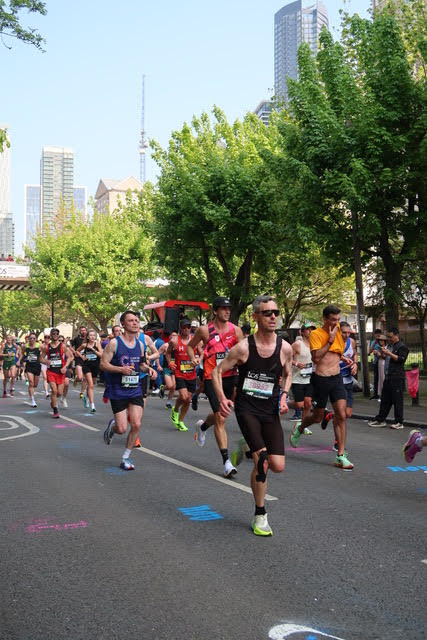
While talking to someone recently about doing a 30K run, I was asked: “Why run that far if you’re not racing?” That question struck me. When did running become an activity justified only by an official finish line or medal?
Beyond medals and PBs, running remains one of the most accessible ways to improve mental and physical health, boost mood, and build resilience according to Rochester Regional Health.
This shift is reflected not only in attitudes but also in the material side of the sport. Running, once celebrated as the world’s most accessible, “free” form of exercise, now comes with an ever-expanding catalogue of must-haves: carbon-plated shoes, hydration vests, nutrition gels, and race entry fees that rival concert tickets. Participation is booming, but so is the pressure to buy, upgrade, and consume in order to “do it properly.”
Running has exploded in popularity over the past few years. More than 1.1 million people entered the ballot for the 2026 London Marathon which is not only a world record but nearly double the figure from 2024.
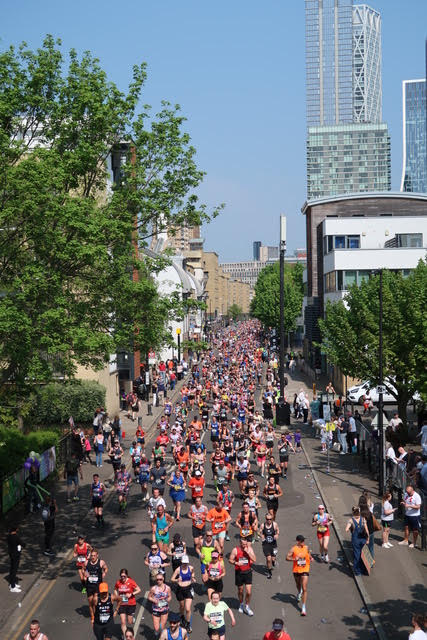
Coined by The Guardian as “running’s third great boom”, and powered by Gen Z, this wave of popularity began in 2023 and is more diverse than ever before. London Marathon Events says that in 2024 the number of runners from ethnically diverse backgrounds was twice as high as three years earlier, and that over 1,200 disabled participants also took part.
Grassroots groups and initiatives such as Parkrun, Run Dem Crew, and Black Trail Runners further widen access, providing inclusive spaces for beginners and experienced runners alike. In 2024, Parkrun alone welcomed over 200,000 finishers per week in the UK.
Strava revealed that UK running club activity rose by 64% in 2024, and according to OMR Global, the running gear market was valued at £33.4 billion in 2024 and is projected to grow to around £64 billion by 2035.
Is this popularity explosion, however, making running less accessible?
There’s an increasing perception that being a “real” runner requires buying into products like gels, sports drinks and protein supplements – a belief reflected in the UK sports nutrition market, valued at around £1.1 billion in 2023 and projected to reach nearly £2 billion by 2030 according to Grand View Research. Recent advances in sports science have improved understanding of optimal fuelling, hydration, and recovery strategies, helping explain why runners increasingly invest in gels, energy drinks, and supplements beyond marketing hype. However, these items aren’t necessarily needed for amateur runners.
This surge in gear and race travel also raises sustainability questions. Brands are experimenting with recyclable shoes, and many marathons are working to reduce waste, but the environmental footprint of the running boom is growing.
While none of this is essential for a casual jog, many passionate runners will tell you that once running becomes a regular habit, the urge to enter races soon follows, and with that comes the need for proper kit, structured training, and the right support.
The mentality towards running is shifting, fuelled in part by its rise on social media. As of early 2025, the hashtag #running has been used more than 92 million times on Instagram worldwide, according to Our Sporting Life. Platforms like TikTok and Instagram are awash with clips such as “A day in the life of a runner” or “Come with me to run a marathon,” giving recreational running unprecedented visibility. By showcasing everyday runners alongside elites, social media has made the sport feel more accessible. Seeing people from a wide range of backgrounds take part is helping to reshape perceptions of who running is for, adding momentum to the current boom.
The rise of platforms like Strava has reinforced the idea that every run should be tracked and shared. Wearables and apps offering AI coaching or personalised training plans make it easier for runners to monitor progress, but they can also contribute to the sense that running requires constant optimisation and tracking.
Race culture fuels spending on race tickets and kit. Entry fees for the World Marathon Majors typically range from £160 to £210. With Sydney joining as the seventh Abbott World Marathon Major in 2025, the series underscores the global scale of the running boom.
For newcomers, this can all feel intimidating and risks overcomplicating a sport that, at its heart, is simply about putting one foot in front of the other. Running isn’t about appearances or expensive gear, but about moving your body, at any pace, for any distance. Yet with starting costs averaging around £1,000, this boom also raises questions of affordability, highlighting that running, while inherently free, can feel out of reach for some in today’s economic climate.
Words by Amber Lowen