
★★★★
Here There Are Blueberries begins with a brief history of the portable camera. Leica was a big hit in Germany in the early 20th Century, leading to huge amounts of material being produced. As we are told this, photos are projected at the back of the stage. First there are classic family portraits and candids, holidays and picnics. But then the music gains an ominous note, as do the pictures; grinning children wearing swastika armbands. Nazi flags draped among beach-hut bunting. Swathes of people proudly holding up the Nazi salute.
When the US Holocaust Memorial Museum received an album of photos, allegedly of Auschwitz, they were sceptical. The museum is regularly the recipient of material that people have found in attics and basements, lost mementos from parents and grandparents who lived through World War Two and the Holocaust. Yet this was a different piece of history entirely; the images were not of prisoners in the camp, but instead of those who ran it. The daily lives of people committing atrocities.
The play follows archivists at the museum as they try to uncover the story behind the album; who created it, and why? In parallel, monologues from descendents of those featured in the photos emphasise the intergenerational impact that their actions had. One man fears that his father’s evil could be passed down to his own child. Another wrestles with the stories his father told him about working as a doctor in the camp.
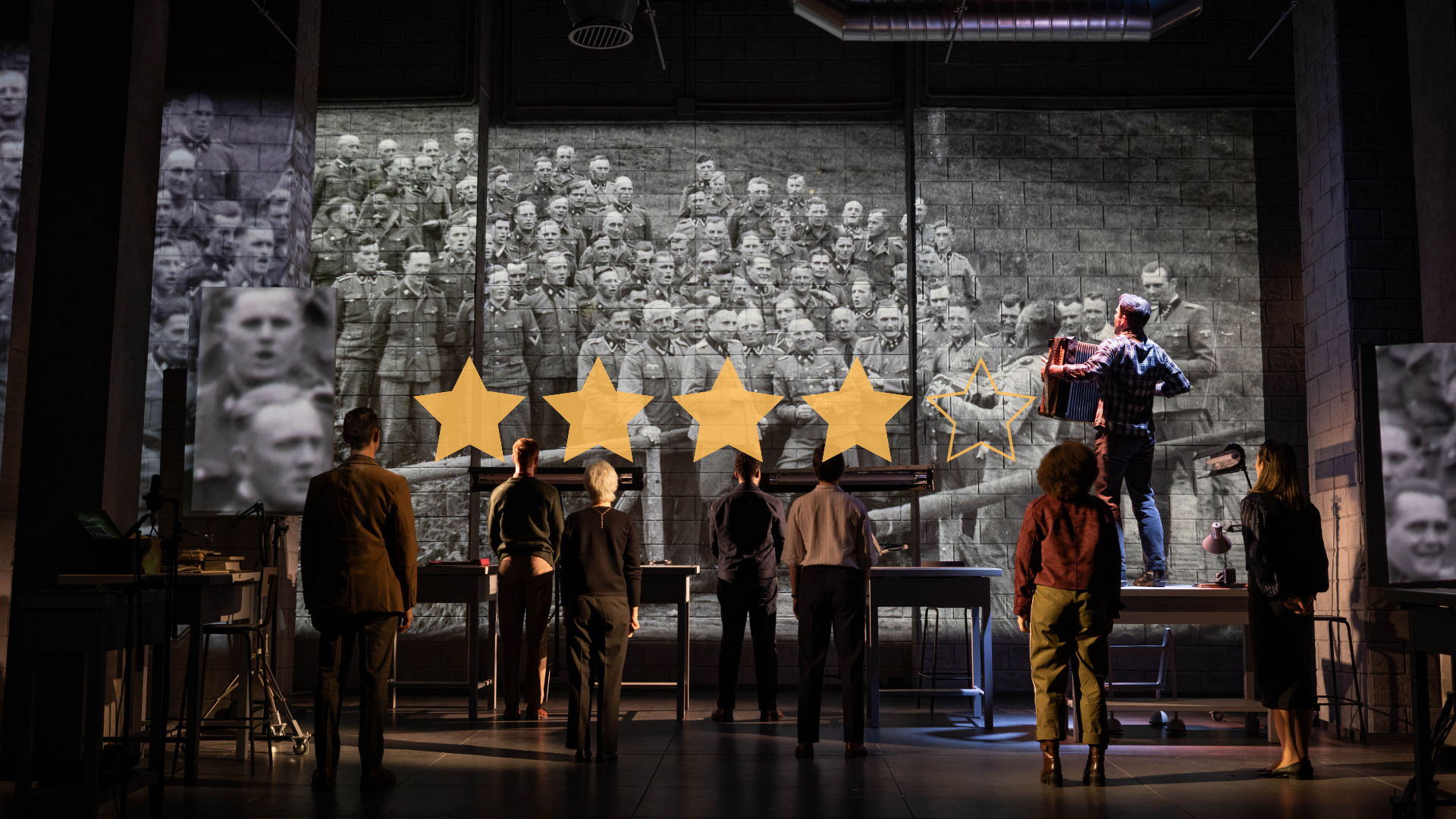
Throughout, the album’s photos are displayed at the back of the stage. Sometimes particular elements are highlighted, or further material is shown to illustrate a point. It’s a masterful design, and really brings home both the masked horror of the images and the intense work that went into decoding them. Occasionally it makes the piece feel more like a photo essay than a play, but the research and academic rigour that has gone into it can’t be faulted.
The title of the play, Here There Are Blueberries, is taken from the caption of one photo depicting young women and the album’s creator sitting at a holiday chalet in the mountains. If you didn’t know that this chalet was part of the Auschwitz compound, that these young women were transmitting messages between Berlin and the camp, that everyone in the image was aware of and complicit in terrible crimes against humanity, it would be innocuous. Such is the case with many of the photos included in the album—until you know the context, what lies outside the cropped image.
Each cast member seems fully aware of the gravity of this story, and the monologues in particular are deeply affecting. There are a lot of characters featured, the cast members pulling double or triple shifts throughout the show, but it never gets confusing. At times, the script is a little repetitive, but with a topic like this there’s not much space for nuance.
Here There Are Blueberries is chilling, gripping and horrifying. The careful treatment of the source material, thoughtful staging and dedicated performances make for a necessary if often troubling watch. Its images will be burned into your eyelids long after the final bows.
Here There Are Blueberries will be performed at Stratford East until 7 March.
Words by Lucy Carter
Support The Indiependent
We’re trying to raise £200 a month to help cover our operational costs. This includes our ‘Writer of the Month’ awards, where we recognise the amazing work produced by our contributor team. If you’ve enjoyed reading our site, we’d really appreciate it if you could donate to The Indiependent. Whether you can give £1 or £10, you’d be making a huge difference to our small team.