
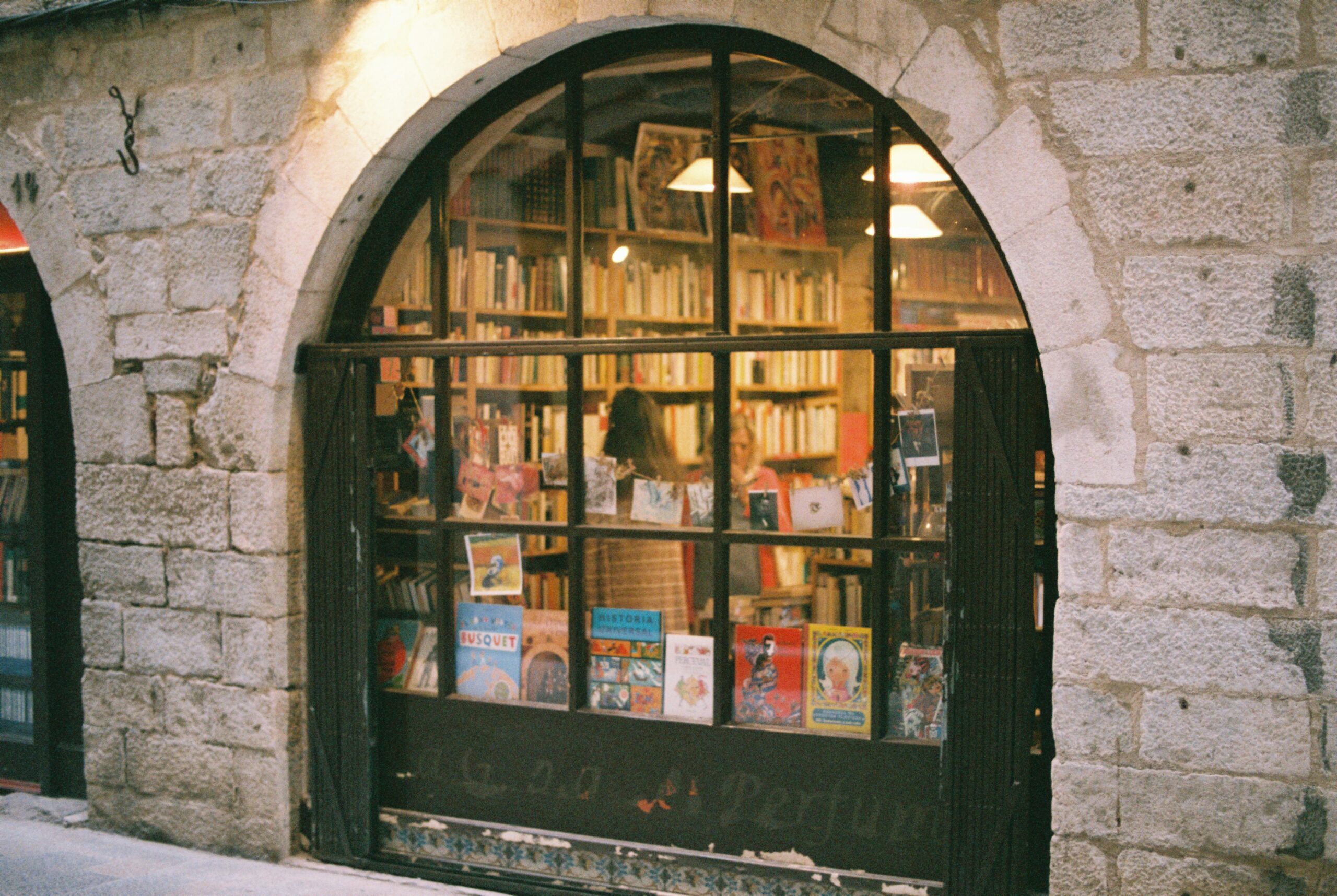
Tucked away in Madrid’s aptly named Barrio de las Letras (the Literary Quarter) lies Secret Kingdoms, the biggest 100% English-language bookshop in Spain’s capital. Over the past few years, this hidden gem has cultivated a quasi-cult following with the help of its online presence, not only for the curated selection of books it offers, but also because of its unique, cosy feel. I discovered the bookshop about a year ago, and since then, it has become my go-to place for books in English in Madrid. Whether you enjoy romantasy, classic literature, thrillers or even non-fiction, there is something for everyone here.
More than books, however, Secret Kingdoms has grown beyond the literature it sells. Hosting a wide range of social gatherings, including book clubs, philosophy talks, and writers’ events, the shop has become a wonderful hub for the English-speaking community in the city. Whether you are a Madrid local or a tourist in the city, a visit to Secret Kingdoms is a must.
In this interview, we catch up with founder and owner, David Price, to chat about the origins of the bookshop, its most sought-after genres, and the role social media has played in its growing popularity.
What made you open a bookshop here in Madrid?
My happy place has always been bookshops. I’ve never been happier than when surrounded by books. When I was about 16 or 17, my dad asked what I wanted to do when I grew up. I said I wanted to have my own business, ideally a bookshop. He went pale. After a long pause, he said, “Son, you know less about books than you think, and you know nothing about running a business.”
Then a lightbulb went on for him. He said, “The people who do know about business are banks. Why don’t you work for one, and then you’ll know?” So I got a placement with Barclays Bank in Canada for six months between school and university. That led to summer jobs and eventually a full career at Barclays. Thirty-three years later, I was still there.
As for Madrid, that came earlier. In my late 20s, I was working at Barclays’ head office in London when a new Spanish finance director was appointed. We expected him to move to London, but he said, “No, no, you’re all coming to Spain.” I’d never been and I didn’t speak Spanish, but off I went. Here, I met my wife, Beatriz, at an intercambio, a language exchange. That was 27 years ago, and I’ve lived in Spain ever since.
The dream of opening a bookshop never went away. Eventually, Barclays pushed me out in my 50s, with a small package. Beatriz suggested I take time rather than leap into something familiar. I went on a week-long cycling trip from León to Santiago, which helped me think clearly. That was November 2021.
We hunted for a space over the winter of 2021–22. The university UNED offered a spring course on how to open a bookshop from scratch, which I took. This spot on Calle de Moratín was only the second space we looked at seriously, and it turned out to be perfect.
How did the bookshop’s name, Secret Kingdoms, come about?
We needed something distinctive. At first, Beatriz was going to sell handbags as well, so the shop briefly went by “Books & Bags.” Fun, but not entirely convincing.
I’d thought of “Small Kingdoms,” reflecting a cosy, medieval feel, but it was rejected by the Spanish business registry. Then a friend suggested “Secret Kingdoms.” Immediately, it clicked. A secret kingdom is what you enter when opening a book, or what an author creates in writing. But you can’t truly enter another person’s mind; there’s always a secret, so the name felt perfect. The bookshop’s ceiling, with lichen-covered beams and forest-like atmosphere, even ties into the medieval kingdom idea.
What does a typical day in the life of the bookshop look like?
We open at 11 am, though we’re usually there half an hour earlier to tidy, straighten the shelves, and settle in. Wednesdays are especially busy with new book deliveries. We’re currently open three and a half hours in the morning and three and a half in the afternoon, with a break in between. From September, with more full-time employees, we’ll extend hours from 10:30 straight through the day, Wednesday to Saturday, keeping Sunday mornings open too.
When you opened, what kind of customers did you expect?
We divide the shop into two spaces—new books in the front, secondhand in the back. Customers vary widely, which has been fascinating.
We assumed our customer base would be mainly expats, international residents, and tourists. And we have plenty. But to our surprise, a third to half of our customers are Spanish. That’s thanks largely to BookTok, Bookstagram, and social media, and to bilingual schools. Even if only a fraction of Madrileños read in English, in a city of seven million, that’s a sizable audience.
What do your customer demographics look like?
Mostly young women, teens through early 30s, who love to read in English. BookTok drives sales in romantasy, which is especially popular, and classics too; White Nights by Fyodor Dostoevsky and The Secret History by Donna Tartt are always bestsellers.
Across the board, what kinds of genres do well?
We focus on fiction, classics, and fantasy. Sports and business books sell minimally, so we keep those sections small. Thrillers, surprisingly, are less popular now, while classical literature, pre-1950, has grown from one column in the bookshop to two, and we’re considering expanding to three.
You mentioned BookTok earlier. How important has social media been for the shop?
Crucial. In our first six to eight months, our posts barely reached anyone. Then suddenly, sales and footfall shot up by a third in one week. Customers told us we’d gone viral on BookTok and Bookstagram. Influencers had posted about us without us knowing. Now we collaborate with one regularly, and she helps with our online presence. Social media has been a major factor in making the business sustainable.
It has even impacted the shop layout. We’ve expanded the young adult section from one to two large columns with tables for bestsellers. Thrillers have been reduced to one column. The shop evolves naturally based on what people buy and request.
How important is it for you that the bookshop fosters a sense of community amongst English-speaking people in Madrid?
Hugely. I wanted to reconnect with Madrid’s international community. The Madrid Writers’ Group started meeting here weekly when bars became too noisy. That was our first regular gathering. We also have a book club and philosophy discussions, and we host authors.
Who have you hosted and are there any upcoming projects in the works?
The British ambassador opened the shop on June 20th 2022. We’ve had Giles Tremlett (Ghosts of Spain, Isabel de Castile, The International Brigades), William Chislett, and others. Author events are crucial—our stage can host 28 folding chairs, turning the shop into a small theatre.
This autumn we have several upcoming talks. William Chislett returns in September. We’ll host the translator of The New Art of Cookery by Juan Altamiras, originally written in 1745, adding context and updating recipes. Local poet Julie Weiss will do an acoustic poetry evening. The philosophy group also continues, though only 20 people fit per session, creating a waiting list due to popularity.
Looking ahead, what is your vision for the next five years?
We’re reorganising, growing, and responding to trends. A recent web article, for example, called Secret Kingdoms a good place for manga in Madrid, and we’re working to make it a reality.
To end on a more personal question, are there any books that changed your life?
Humankind by Rutger Bregman. It’s similar in vein to Yuval Harari’s Sapiens but much more cheerful, asking fundamentally, “Are humans kind?”. I highly recommend it. It convinced me humans are kind and collaborative, except under stress. It snapped me out of a slightly depressed mindset and gave me optimism and energy, which led to founding the shop.
The transcript for this interview has been edited for clarity and brevity
Words by Sofia Cristobal Holman-Smith
Support The Indiependent
We’re trying to raise £200 a month to help cover our operational costs. This includes our ‘Writer of the Month’ awards, where we recognise the amazing work produced by our contributor team. If you’ve enjoyed reading our site, we’d really appreciate it if you could donate to The Indiependent. Whether you can give £1 or £10, you’d be making a huge difference to our small team.