
★★★★★
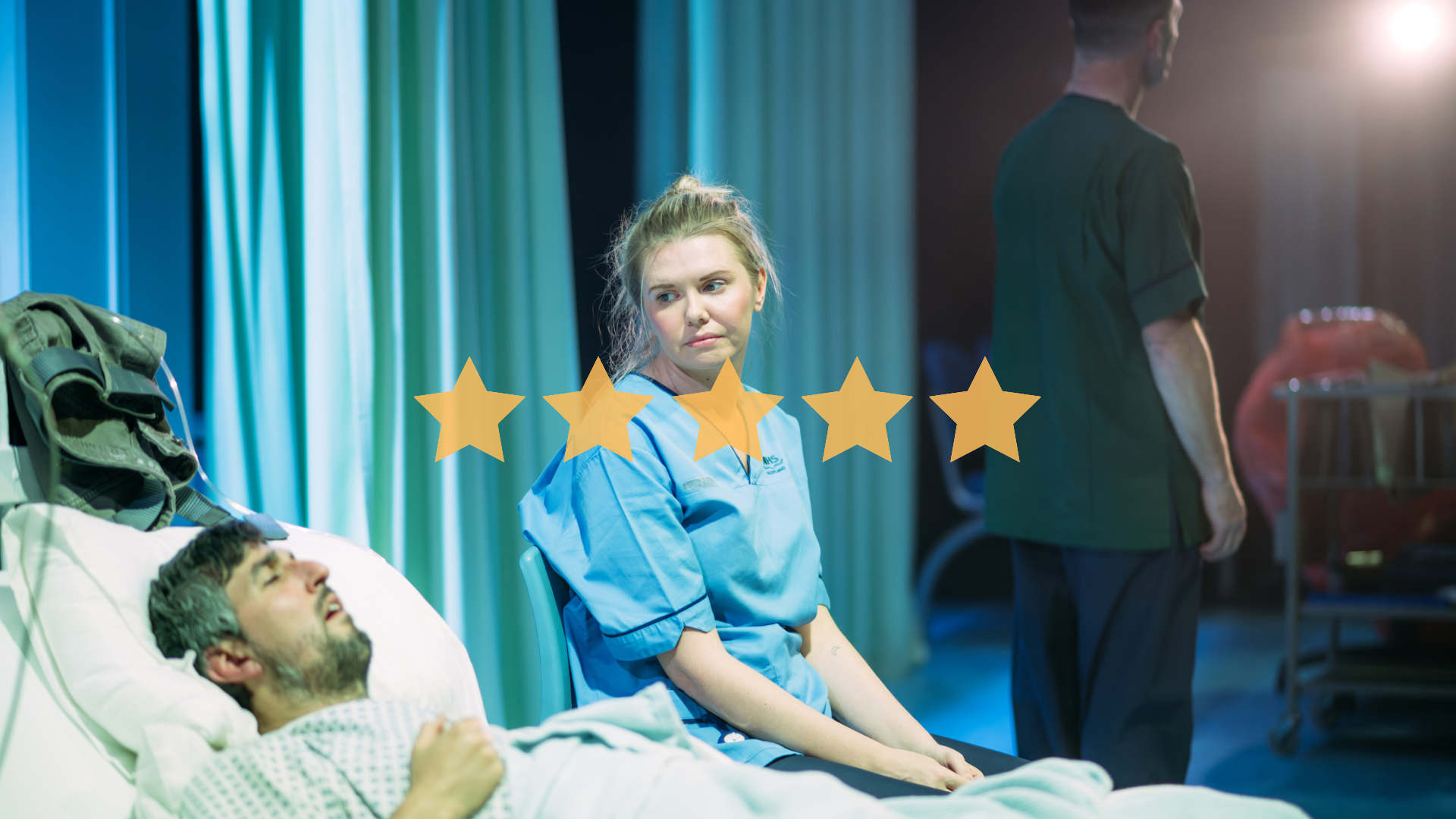
Walking into the Traverse theatre for Uma Nada-Rajah’s Black Hole Sign is like walking into a hospital ward. There’s a reception desk with a tiny waiting area, hospital beds and pale green curtains illuminated by harsh strip lights. We are taken back in time to a December night, where a hole has appeared in the roof of the A&E department. With no help arriving anytime soon, senior charge nurse Crea (Helen Logan) and staff nurse Ani (Dani Heron) are forced to work around it to care for their patients, one of whom has been admitted with a brain bleed and is not expected to make it through the night. Running parallel to this is a present day tribunal, where Crea has been accused of misconduct due to a preventable death occurring on the night in question. Immediately we are sucked into the story.
The set up is almost farcical: the department is severely understaffed, an incompetent nursing student (Betty Valencia) has been sent to help, and to top it all off, Ani mistakenly tells the wrong patient that they are dying. Strangely, it works perfectly with the serious messages in the play, and Nada-Rajah hits an ideal balance, ensuring that the comedy doesn’t take away from the problems highlighted within the NHS. For instance, Mr Turnbull’s hallucination where there is no healthcare system and he has to pay a large fee to be treated by “muses” is highly entertaining, yet demonstrates how student nurses and international workers are vital for the NHS to run smoothly.
The characters are delightfully detailed, with intricate backstories that bring them alive. Mr Hopper (Beruce Khan) is almost one year sober, and longs to reunite with his estranged son, while Isla is hospitalised with severe bruising, yet her problems seem to run deeper. Mr Turnbull’s rants about the long wait times and “poor care” are anger-inducing. Tersia (Ann Louise Ross), an elderly woman suffering from delirium due to a UTI, steals the show. Her delusions provide plenty of comic relief, while small poetry sections that show the hole in the roof is widening helps the show to transition smoothly. Their varying needs demonstrate the wide variety of tasks that nurses do, while showing their patience and perseverance.
The toll that the job takes on NHS workers is explored too. Crea loves her job, but is spending increasing amounts of time at the hospital, and she is burned out. Ani is considering leaving the profession, tempted by low pressure jobs abroad. There is also a focus on how the porter Billy’s (Martin Docherty) role affects him: he sees incomprehensible grief one moment, then turns a corner where everyone is unaffected. The importance of his role is underappreciated, and he helps with other tasks when he can. It is his monologue as he sits beside the dying man that is the highlight of the show. It’s beautifully poignant and moving, and I watched the rest of the show with a lump in my throat.
Put simply, Black Hole Sign is theatre at its best. It manages to show the severe pressure on all NHS workers while also demonstrating the skill and necessity that they bring. Even beyond the political messages, it is highly entertaining, well executed, and packed with hilarious yet realistic characters.
Black Hole Sign will be performed at the Traverse Theatre until 18 October.
Words by Ellen Leslie
Support The Indiependent
We’re trying to raise £200 a month to help cover our operational costs. This includes our ‘Writer of the Month’ awards, where we recognise the amazing work produced by our contributor team. If you’ve enjoyed reading our site, we’d really appreciate it if you could donate to The Indiependent. Whether you can give £1 or £10, you’d be making a huge difference to our small team.