
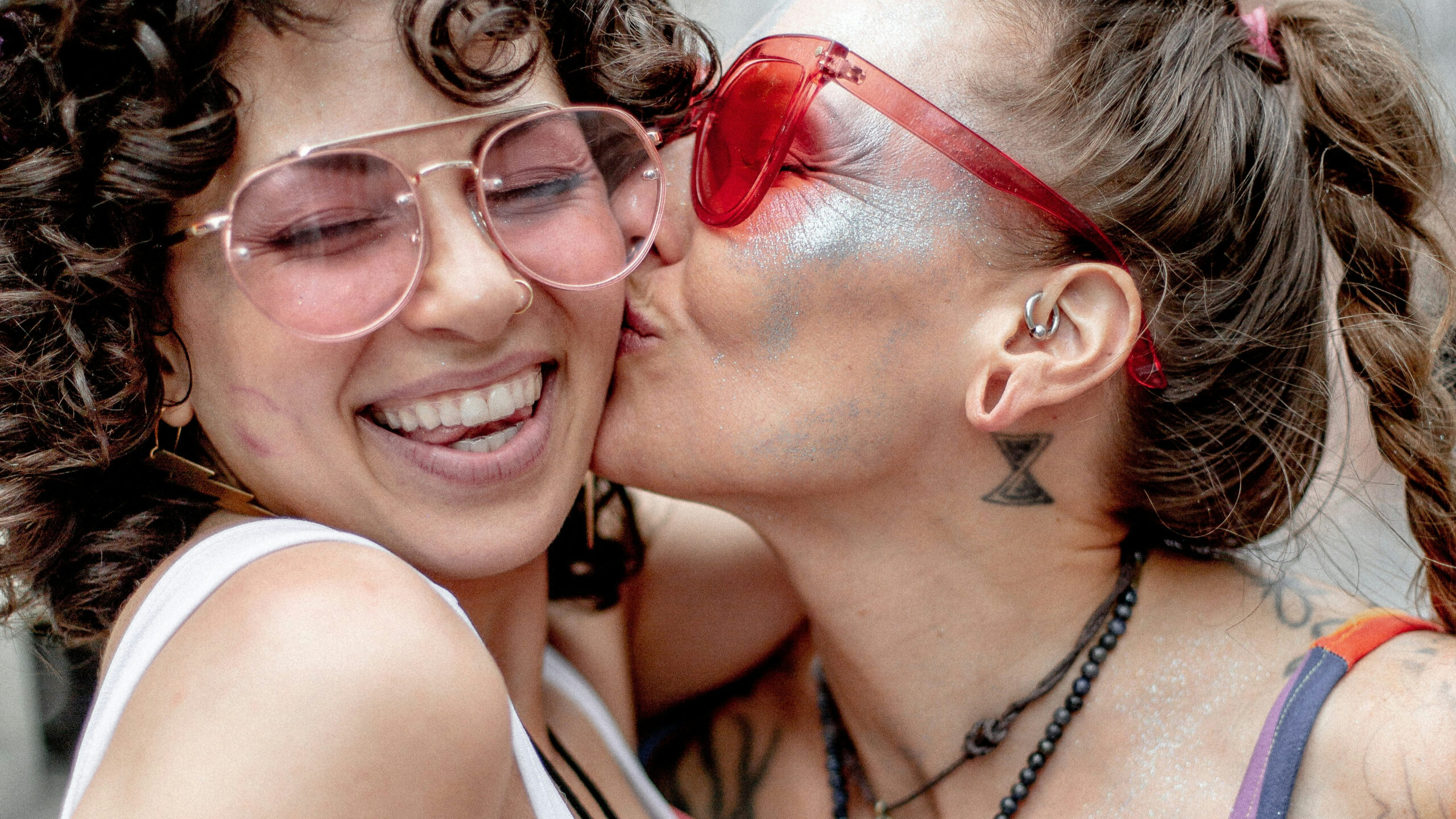
In the midst of a Lesbian Renaissance, queer culture has seeped into the mainstream media, with big influences in music and fashion. A community that once thrived off of revolt and rebellion now sits comfortably, or so it seems, within the very forces it once sought to escape. To the untrained eye, there isn’t much wrong with straight girls having septum piercings and men loving Clairo. Much of this shared media should be seen as a big step towards equality for lesbians and other members of the LGBTQ+ community, but this integration reveals a loss of community and frustration as a result.
In recent years, artists such as Chappell Roan and Renee Rapp have skyrocketed into fame, allowing the experience of lesbians to reach audiences outside of their assumed fanbase. For example, Roan’s famous song ‘Good Luck, Babe!’ was written about one of her lovers who denies both a connection to Roan and being gay. The song explores the repercussions of compulsive heterosexuality and internalised homophobia. So hearing it play at the supermarket, or in the waiting room of a doctor’s office, is a strange oxymoron. Historically, queer music was a catalyst for exploration, conversation, and seeking safety. Queer music could be known enough for other gay people to identify you and niche enough for the outside world not to. Even in recent years, with the rise of TikTok, the phrase ‘do you listen to Girl in Red?’ was used to identify other lesbians online.
When Girl in Red’s song ‘We Fell in Love in October’ reached those beyond a smaller queer audience, it caused a minor discourse and confusion among the lesbians of the app. This niche artist who helped people accept their lesbianism was now being posted by the homophobic girl from school who would call you slurs before you even knew you liked girls. The lines between complacency and disagreement are much easier to blur online. With so much of music consumption coming from TikTok, these small snippets are taken out of context. Because of this, it was inevitable that niche and curated communities would eventually merge with the rest of the content, becoming part of the all-synthesising online machine that cares little for subtlety or nuance.
TikTok has become one big dumping ground for anyone to consume and access as much media as they desire, including lesbian anthems. The liberation of queerness expanding outside the four walls of the community is, of course, uplifting, and yet there is a backlash from those who fought so hard for freedom. Where there once was celebration, there is now a blanket of passive consumption.
Queer music doesn’t have the same role in bringing a community of people together to defy the standard as it used to in the past. This media has been plagued by both accessibility and acceptance. It walks this fine line of gratitude in acceptance, because although some spaces are more accepting, the majority of the world still imposes hate and discrimination. This exists on a spectrum as huge as death row to homophobic insults hurled across the playground. It poses a question: what is the cost of queer media entering the mainstream? Acceptance that is veneered with a fear of being cancelled? Microaggressions that are labelled as subconscious? It’s difficult to pinpoint how the community would look if its creativity were still held as sacred, largely kept separate from those who don’t see it for what it really is.
It’s no secret that the queer community is lacking the sense of camaraderie that it once had. Queer spaces, like lesbian bars and gay clubs, are evident examples of this. It is rare to find a like-minded crowd from the community, even in spaces created for them. With fashion also, the cliques of the 1980s that categorised the New Romantics from the punks no longer hold any relevance to the way the gay scene is operating in cities like London and Manchester.
Another example of queer music filtering its way into mainstream consumption is through the artist Clairo, who has released gay anthems such as ‘Bags,’ ‘Sofia,’ and ‘Juna.’ Clairo began to gain popularity in 2019, emerging as a bedroom pop artist and then making her way into sapphic pop. Clairo’s sound is delicate, soft, and feminine, embodying the tenderness associated with lesbian intimacy. These traits oppose stereotypical male qualities, hence why the pinnacle of a ‘performative male’ is a Clairo listener. The ‘performative male’ is also paired with reading feminist literature and drinking matcha in public spaces to impress women. Seemingly, this transgresses traditional social behaviour and patriarchal expectations where women would look for a protective, dominant man to care for them.
By this standard, women are more interested in a man with emotional depth who is in touch with his femininity. With the upsurge of the ‘performative male’, it reveals that there is a bigger percentage of straight women who seek femininity in a partner, which is ironically found in lesbianism. It would be mindless to deny the queer community’s influence on social behaviours like this. Queerness has built empires of acceptance in places untouched, and lesbian music entering a straight man’s playlist is just a microcosmic ripple effect of this harsh fight for change.
It’s a full circle moment to see artistic outlets that frame lesbians and queerness more broadly so tenderly being consumed obliviously by those outside of the community. Although the ‘performative male’ began as a joke to mock posers, it highlights the erasure of queer culture entering the mainstream media. Throughout music, gayness has had to be kept ambiguous, up until recently. Hits like ‘It’s a Sin’ by Pet Shop Boys and ‘Poker Face’ by Lady Gaga both touch on sexual fantasies towards the same gender. They both have vague lyrics to appease a wider audience, keeping listeners distanced from the real meaning. There’s a questionable bittersweetness to the way queer music has entered the mainstream. Although this may be harmless, and defiant even, the undercurrent of carelessness relays the roots of discrimination that very much still exist.
Lesbian culture has been diluted into gender-neutral love songs, leaving its context easily overlooked, with performative males often treating it as an aesthetic rather than an identity. This erasure chips away at a sense of community, and as a result, lesbians only have the bare bones of a community to fall back on.
Words by Louella Venus
Support The Indiependent
We’re trying to raise £200 a month to help cover our operational costs. This includes our ‘Writer of the Month’ awards, where we recognise the amazing work produced by our contributor team. If you’ve enjoyed reading our site, we’d really appreciate it if you could donate to The Indiependent. Whether you can give £1 or £10, you’d be making a huge difference to our small team.