
It was 44 years ago, the 1st of August 1981, that from the 36th floor of a small building on Manhattan’s west side, a temporary behemoth was born. Producers glanced out of the windows of the plain brick studios, waiting for the hour to strike. Then, they waited a minute longer, until, at a minute after midnight, the television screens, of potentially a few million viewers that can receive it, light up. This was the birth of MTV.
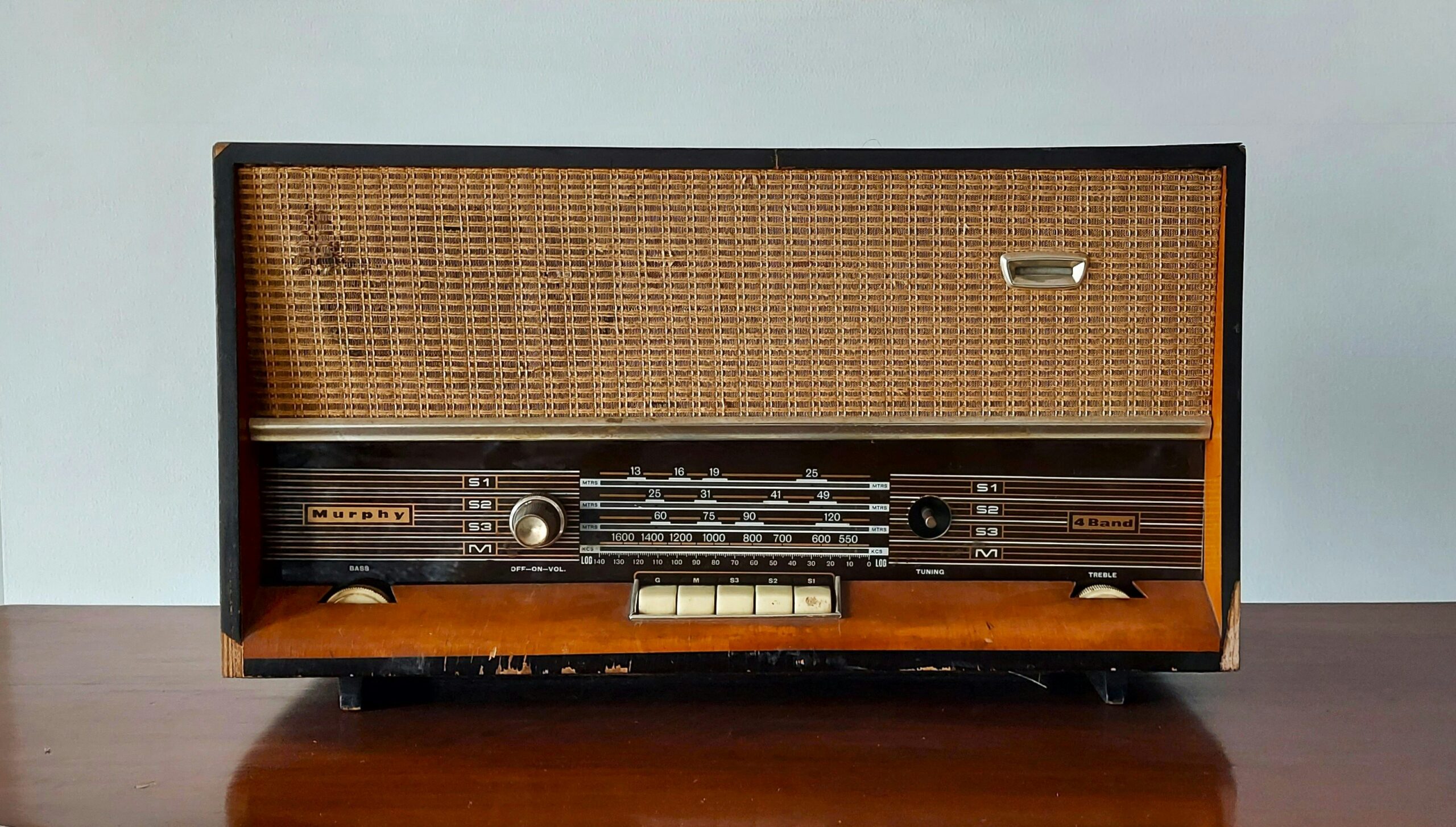
It was marked by some fanfare in the way of the famous animation of an astronaut planting a flag on the moon, and then the immortal lyrics of the Buggles’ number one hit, ‘Video Killed The Radio Star’. A fitting song. A song that, at the time, sounded like a surefire prophecy of the future of the way our ears and eyes absorbed the music we loved. So, why didn’t video kill the radio star?
Naturally, this story has to start at a radio station, my natural home as a presenter myself. WKQX is my choice, founded in 1948 and still going almost eight decades later. Though the name, thanks to complicated rules for radio across the pond, means no one would know that it’s based in Chicago, spinning the likes of Radiohead and the Cure as part of its alt-rock brief.
Nowadays, it’s not physical records that are spun by the disk jockeys, but in 1975 it most certainly was. If you walked along the station’s corridors that year, you’d have come across the desk of a man called Robert Pittman—or Bob, as he was known to his friends. He was the program director at the time and obviously knew what made radio popular, growing up career-wise during radio’s boom. In 1960 alone there were already over three thousand stations in the USA, and the radio bug was spreading worldwide.
The heady combination of having constant access to the top tracks of the day, being able to hear a friendly voice, and being able to listen wherever you might be, all helped radio become incredibly popular. Worldwide, the proliferation of radio sets jumped up from seven percent of all people in the world in 1950 to 13% a decade later, meaning many millions more people getting their hands on a receiver.
Radio also brought with it a whole raft of new commercial opportunities. For example, adverts could now be incredibly specific to their audience—in many places there was a radio station for every type of person. Planet Rock was, and still is, for fans of Iron Maiden and Van Halen. Classic FM for Beethoven and Mozart. I could go on. The best bit was that, for fear of seeming boring in this exciting new medium, businesses came up with jolly catchy slogans (“Snap, Crackle and Pop” anyone?) that many of them took over to the telly.
And ‘to the telly’ was a place that oh so many people were looking towards in the ‘60s and ‘70s. Sci-fi had got us dreaming of the future; a future that was in vision as well as sound. Sitting in his office in Chicago, even Robert Pittman was not immune to the TV bug. I like to imagine that it was as he was sitting down in his ’70s lounge (swirly wallpaper included), watching the box, that he got his brainwave. ‘Why isn’t music on the telly?’
Now, Pittman wasn’t the first to think of having music on video. One of the first music videos was Queen’s Bohemian Rhapsody and Top of the Pops was already on TV in the UK.
But a whole channel dedicated to it? Now that was groundbreaking. Bear in mind that despite some star power and major record labels (like The Who, who were early adopters) getting behind them, music videos were still a niche art form, hidden in the cupboards of labels ad departments.
Pittman’s idea was to use these videos to collate a never-ending stream of entertainment, all carried on the budget friendly broadcasting method of cable television, supported by adverts. With a distinct, bold, rebellious personality—in addition to great music and a collection of popular ‘video jockeys’—MTV took what made radio great and put it on screen, making it just that bit more interesting thanks to the visuals.
The channel wasn’t going to be an overnight success though. In those first few summer days, the producers who populated that small building in Manhattan struggled to find enough videos to play to keep the 24-hour channel going with fresh content. Eventually, videos by British bands, who were virtually unknown across the pond—like Duran Duran and Soft Cell—had to be drafted in. The whole channel only had seven months to be prepared, with the executives that Pittman pitched his idea to wanting it all ready by the next summer.
Naturally, some niggles couldn’t be avoided in the early days, with spotty cable coverage meaning that newly minted video stars would be mobbed in some places and completely unrecognised in others. But that was overcome and the channel snowballed. It even spawned awards shows. By only 1982, it had tripled its subscribership to nine million. So far it was tremendously successful.
But this image that Pittman dreamt up way back in the ‘80s wasn’t looking the same even 20 years later, let alone 30 or 40. It had lost the might to destroy the radio star.
In my mind, 2005 was the year that marked the death of the behemoth. That was the year that people started to log on to the now ubiquitous YouTube. There was now a new way of getting your music video fix, and if you didn’t fancy that, then music—without the visuals—was becoming easier and easier to get a hold of thanks to various internet services (some of questionable legality).
Those at MTV had seen the writing on the wall, just music videos weren’t going to work much longer. So they tried new programmes: reality shows, competition shows, even talk shows. Today, barely any music graces the channels schedules.
It’s obvious that the reason video didn’t kill the radio star was that the video star was barely in the same ballpark anymore. Instead, it had become barely a real competitor. But what about all the other threats to the wireless; the online listening for example, ones The Buggles would have never heard about. Why were these not real threats to the radio star?
No one really knows, but from my point of view from within the radio studio, be that Pittman’s old home of WKQX or any of the new stations set up, is that radio is a very special type of chameleon. Picture a bright green one—quite an old chameleon, given radio’s age, but nevertheless—it can adapt to the rapidly changing landscape around it in ways that MTV just couldn’t. Want to listen anytime? There are podcasts for that. Want to listen without having a radio? There are hundreds of internet radio stations for you. Want more chat or just music? Well, that’s easily solved thanks to the cheapness of radio broadcasting meaning there are a myriad of stations on offer, each with their own unique styles.
What also makes this chameleon special is its ability to keep its defining spots from changing. A whole set of characteristics that MTV tried, but failed, to replicate. There is no other medium that makes you feel so close to the person doing the presenting, for you are let into their lives by the intimacy of speech.
Radio also engages the imagination, able to create all sorts of mental images that would cost a whole sack of cash on telly. But, more than anything else, it’s the immediacy of radio that makes it so popular still. It’s the peace of mind that, whilst you’re listening to the Top 40, you are safe in the knowledge that any breaking news will be brought to you straight away.
The listeners (us) can obviously recognise how great radio is. We’ve stood by it through thick and thin and now in a time of success. In the US, podcast listening is up 38% from a decade ago, which is essentially an evolution of the radio medium. In the UK, a staggering 87% of people tune in at least weekly, and ad revenue is up from around five hundred million pounds in 2013 to over seven hundred last year. The radio star is stronger than ever, perhaps a bit battered by video, but one thing is clear: video certainly didn’t kill the radio star.
Words by Matthew Carter
Support The Indiependent
We’re trying to raise £200 a month to help cover our operational costs. This includes our ‘Writer of the Month’ awards, where we recognise the amazing work produced by our contributor team. If you’ve enjoyed reading our site, we’d really appreciate it if you could donate to The Indiependent. Whether you can give £1 or £10, you’d be making a huge difference to our small team.