
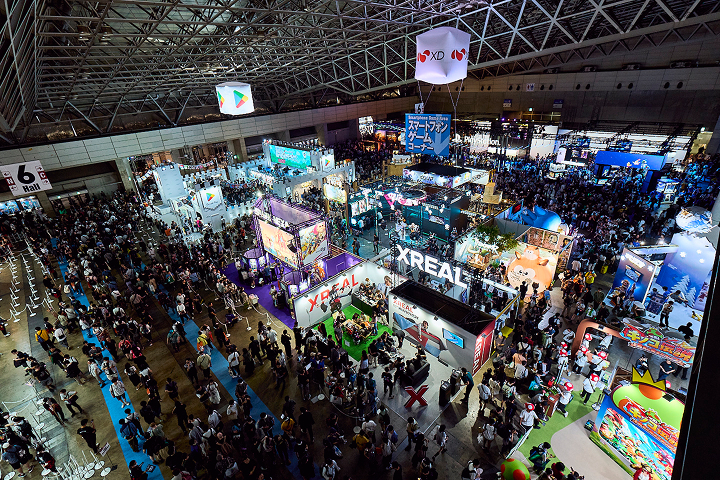
Over half of Japanese game companies are now integrating artificial intelligence into their development pipelines, according to a preview of a new report from the Tokyo Game Show organizer, the Computer Entertainment Supplier’s Association (CESA). Visual asset creation—including character design and in-game imagery—emerges as the most common application, followed closely by story generation, programming support, and text creation.
The data, reported by The Nikkei, comes from a survey of 54 CESA member companies conducted between June and July 2025. While the sample size is relatively small, it included major developers such as Capcom, Konami, Square Enix, FromSoftware, Level-5, and Sega, alongside smaller indie studios. The findings indicate that 51% of respondents use generative AI in some capacity. Notably, 32% of companies leverage AI to assist in developing proprietary game engines—a growing trend that signals deeper integration beyond surface-level tasks like art and text.
Despite the apparent uptake, not all Japanese developers are embracing AI. Nintendo, for example, recently stated that while generative AI is a “hot topic” with potential technological benefits, the company intends to “deliver value that is unique to [Nintendo] and cannot be created through technology alone.” Shigeru Miyamoto, Nintendo’s designer, producer, and game director, also stated last year that the company would “rather go in a different direction” as part of its pursuit of originality.
The discussion around AI in game development is far from theoretical, as industry voices emphasise measured adoption. Embracer CEO Phil Rogers called for a “smart implementation of generative AI in ethical and sustainable ways,” while Testronic chief Sharon Baylay-Bell cautioned that “AI is an accelerant; it’s not the answer.” Several Japanese studios have openly experimented with AI. Square Enix CEO Takashi Kiryu announced in 2024 that the company would be “aggressive in applying AI,” including in its short-lived shooter Foamstars. Level-5 reportedly uses Stable Diffusion for tasks ranging from visual upscaling to code generation, and Sega maintains an internal AI team to support development efforts.
CESA’s full 2025 Video Game Industry Report, expected later this year, will provide a comprehensive look at AI adoption trends across Japan’s gaming sector. Japan’s game industry appears to have reached a tipping point, balancing technological efficiency with creative integrity—a debate likely to intensify as more developers experiment with generative tools. Ahead of the Tokyo Game Show, AI has also featured prominently at international events like Gamescom, signalling its growing role in both major and indie studios’ development pipelines.
Share your thoughts with us on X at @indie_pendent, and dive deeper into gaming news and analysis at The Indiepenent.
Words by Khushboo Malhotra
Support The Indiependent
We’re trying to raise £200 a month to help cover our operational costs. This includes our ‘Writer of the Month’ awards, where we recognise the amazing work produced by our contributor team. If you’ve enjoyed reading our site, we’d really appreciate it if you could donate to The Indiependent. Whether you can give £1 or £10, you’d be making a huge difference to our small team.