
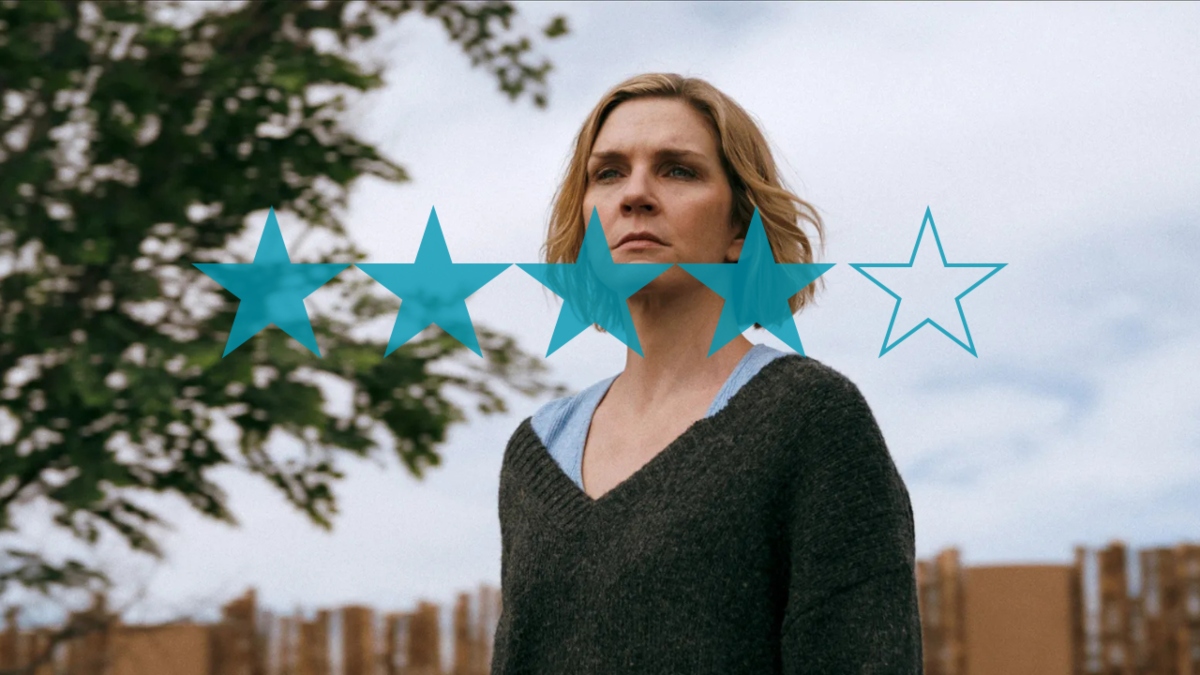
This latest Apple TV+ series, from the creator of Breaking Bad, is timely, audacious, and unfailingly weird.
★★★★☆
If you spend any time at all in the new year catching up with TV shows you might have missed from the tail-end of 2025, you’d do well to put Pluribus right at the top of your priority list. This is the excellent new show from writer-director, Vince Gilligan, his first in almost two decades to be set outside the Breaking Bad/Better Call Saul universe, for which he has become a televisual household name.
Pluribus is a very different beast from either of those shows, but Gilligan has wisely carried one of that franchise’s greatest assets over to this project: Rhea Seehorn, effortlessly brilliant as legal eagle Kim Wexler in Better Call Saul, and here given a belated opportunity to play a part where she is, quite literally, the centre of the universe.
Seehorn plays Carol Sturka, a commercially successful yet cynical novelist, whose tendencies towards hard drinking and vague misanthropy are curbed only by the placating influence of her wife and manager, Helen (Miriam Shor). When we first meet Carol at a book signing in her hometown of Alburquerque, it’s clear that she’s only just capable of masking the contempt she has for her own fanbase. They can’t contain their excitement about the latest instalment she has churned out of a chart-topping romantasy series—Carol herself thinks that stuff is mostly ‘mindless crap’, and is itching to publish the ‘serious’ manuscript she’s been working on for years, but can’t seem to get anyone to publish. This quandary rapidly turns into small potatoes, though, as a twilight trip to a local bar turns from a nightcap into a nightmare.
By the end of a riveting first episode, owing more than a little to Invasion of the Body Snatchers, Carol comes home to find a personally addressed message on her television, broadcast straight from the White House press room. A drunken fever dream? She could only wish—instead, Carol is informed by the besuited man behind the podium that, in talking to him, she is actually speaking to ‘every person on Earth’. Tonight, a ‘Joining’ has taken place: an extraterrestrial virus, harnessed by some unknown party, has transformed the entirety of humanity into an unabashedly content hive mind (referred to, as the show continues, as the ‘Others’). Everyone is everyone—that is, with the exception of around a dozen people worldwide, including Carol herself, who have remained mysteriously unaffected.
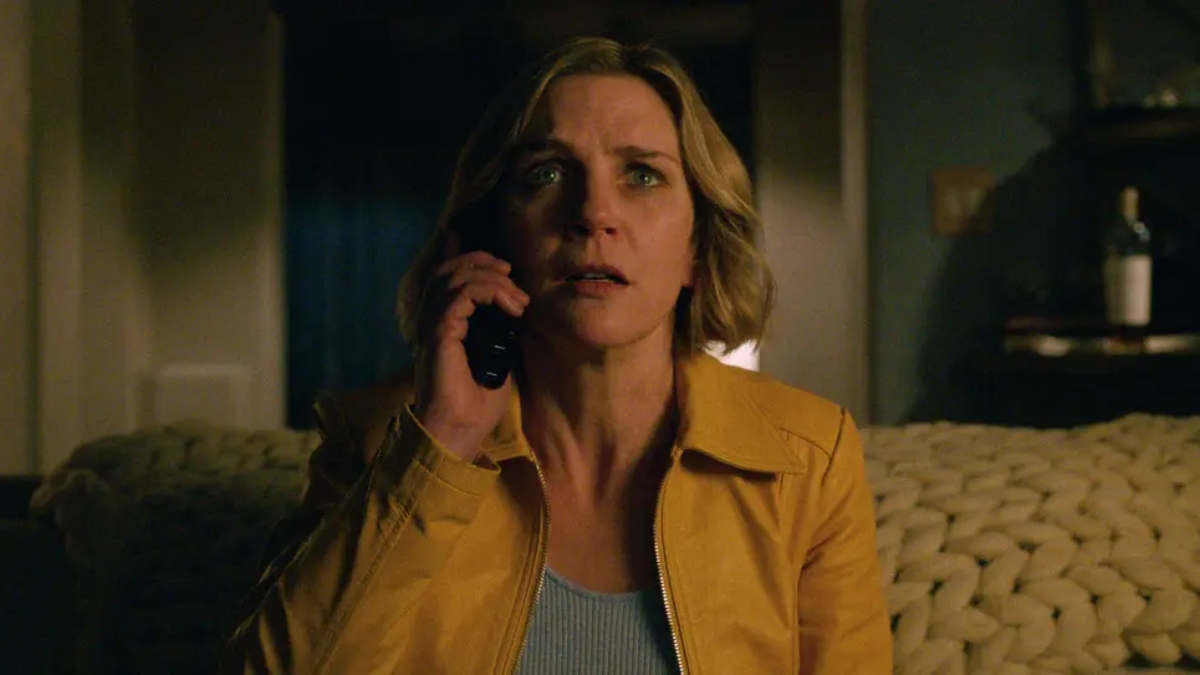
The ‘Others’ are quite happy, even actively eager, to accommodate the wishes of this select few—if only whilst they try to figure out what makes them ‘different’, and how they can ultimately go about assimilating them into the collective. It may all be peace in our time now, but the apocalyptic chaos which ensued during the ‘Joining’ has resulted in millions of fatalities, including Carol’s beloved Helen. No wonder, then, that Carol isn’t overly keen on the prospect of joining the hive mind, and sets about trying to find a way to fight back. To paraphrase Gilligan’s own pithy elevator pitch: it falls upon the most miserable person on Earth to save the world from happiness.
The show gets its unusual title from a Latin phrase, a traditional motto of the United States to which it adds a wickedly humorous new valence: e pluribus unum, meaning ‘out of many, one’. It would be easy, in our age of corporate algorithms and AI-induced cultural homogenisation, for Pluribus to characterise its inciting incident as merely an eerily prescient doomsday scenario—the death of the individual consciousness as, effectively, the death of what makes humanity human. But, it’s testament to the deftness and intelligence of the writing here that such moral dichotomies are carefully avoided. What if what appears to Carol to be a soulless dystopia is actually the exact kind of new beginning sorely needed for a species perpetually on the verge of causing its own destruction? After all, who has to worry about geopolitical crises or nuclear brinksmanship in a world where everybody, by definition, has to get along? Even the natural world seems to be getting a better deal out of things—as well as being unfailingly neighbourly and innately incapable of deception, the ‘Others’ are also avowed fruitarians.
Carol’s attempts to rally a resistance from her fellow ‘survivors’ don’t amount to very much; most of them, it turns out, are quite happy to adjust themselves to the new status quo. So Carol finds herself effectively alone—and, by consequence, much of Pluribus ends up resembling a Rhea Seehorn one-woman show. It’s lucky, then, that there are few actresses working today as compelling as this one, and few greater writers of character than Vince Gilligan. Pluribus doesn’t exactly move at a fast pace, but, even when it feels a little like the show is spinning its narrative wheels, Seehorn is its saving grace, reliably imbuing what could risk becoming an overly cerebral exercise with real emotion and a bone-dry sense of humour.
More fool those viewers fond of hard-and-fast TV formulae or easy narrative pay-offs: the final episode here, in particular, is understated and light on action, spending less time providing answers than it does gesturing towards yet more fascinating questions. If Better Call Saul is anything to go by, Gilligan and Seehorn’s collaborations tend to reward a viewer’s patience above anything else: how lucky we are, in any case, to still have television this brazenly committed to doing its own thing.
The Verdict
Led by a terrific performance from Rhea Seehorn, Vince Gilligan’s blackly comic vision of a world of unified consciousness is a thrilling testament to individual artistry.
Words by Isaac Jackson
Support The Indiependent
We’re trying to raise £200 a month to help cover our operational costs. This includes our ‘Writer of the Month’ awards, where we recognise the amazing work produced by our contributor team. If you’ve enjoyed reading our site, we’d really appreciate it if you could donate to The Indiependent. Whether you can give £1 or £10, you’d be making a huge difference to our small team.