
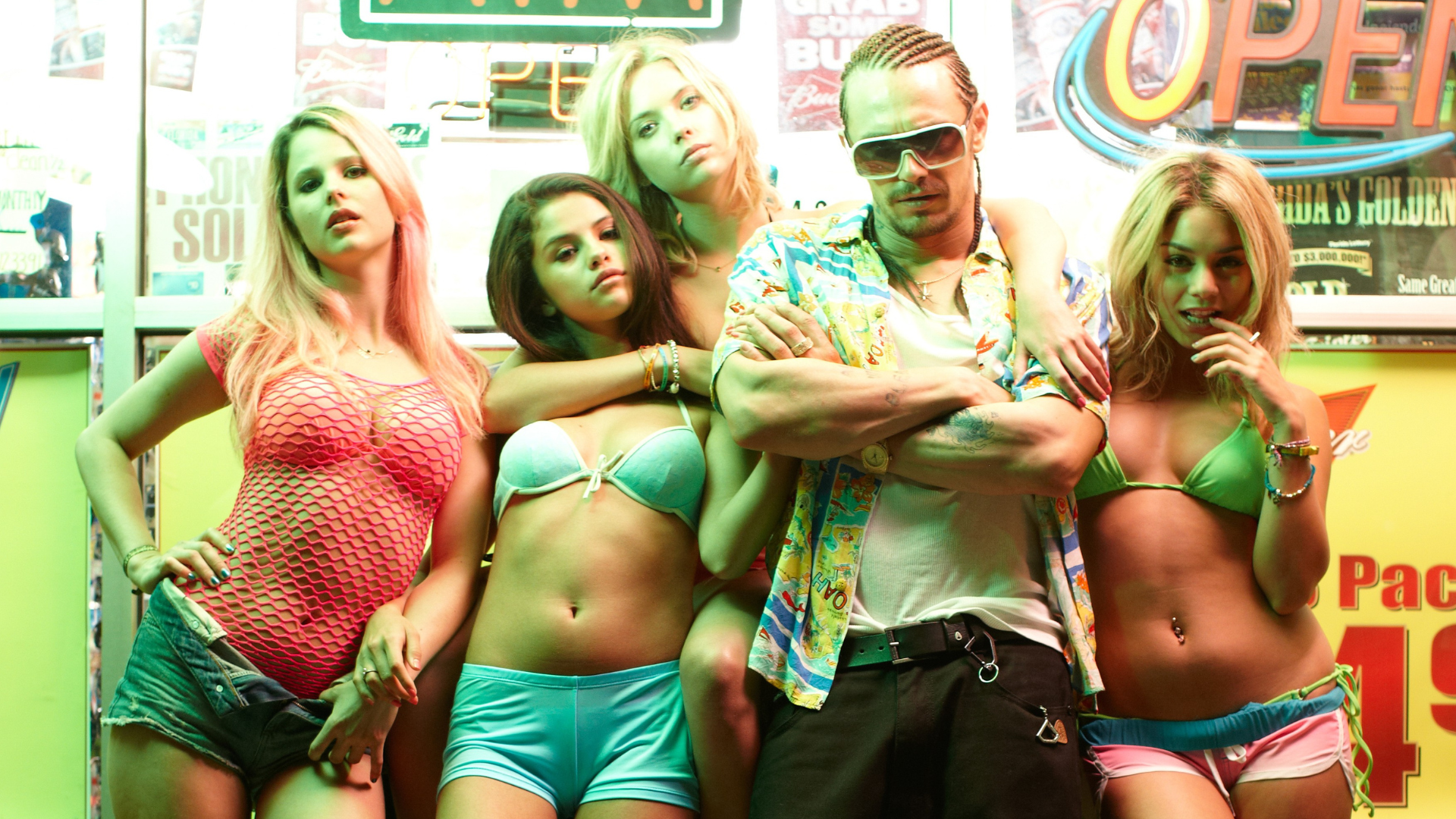
Emerging in the mid 90s as co-writer for Larry Clark’s Kids (1995), Harmony Korine has since established himself as a filmmaker in his own right, continually unwilling to play by any conventional rules.
His ethos of a cinema of rule breaking inspired me when I was younger; for years I had watched as audiences were perplexed by Korine and then over time have started to appreciate and notice his unique creative vision. Whether pushing the boundaries of found footage or dabbling in commercial satire, his filmography resists easy categorisation. Here, I rank his feature films from worst to best.
8. Aggro Dr1ft (2023)
Korine’s most divisive work to date, Aggro Dr1ft is less a narrative film and more an abstract sensory weapon. Shot entirely in thermal infrared and using AI-generated visual overlays, the film drops us into the mind of a stoic assassin as he waxes poetic about his legacy. The film’s commitment to its aesthetic is admirable, but it borders on impenetrable. Without a narrative to latch onto or characters that evolve, Aggro Dr1ft risks becoming monotonous, even as it is daring to invent a new cinematic language. There’s something oddly hypnotic about the slow pacing and droning score but ultimately it feels less like a movie and more like a test of patience.
7. Julien Donkey-Boy (1999)
This Dogme 95 entry is perhaps his most emotionally fragile film, though its abrasive style makes it hard to access. Julien Donkey-Boy follows a schizophrenic young man, played with aching realism by Ewen Bremner, as he navigates a chaotic home ruled by a tyrannical father (a really unhinged Werner Herzog). Shot on lo-fi DV tape and adhering to the Dogme rules, the film plays like a home movie from another planet. But it has a very intimate quality as it was shot in Harmony Korine’s grandmother’s house. This adds an autobiographical element as the title character himself is based on Korine’s uncle Eddie.
While the film is deeply empathetic toward Julien, the film’s fragmented editing, raw sound design, and lack of narrative flow make it a challenging watch. Still, there’s a tenderness underneath all the grime, especially in Julien’s relationships with his pregnant sister and the unseen forces that guide his inner monologue. It’s an ugly yet beautiful descent into family trauma, presented without filter or apology.
6. Baby Invasion (2024)
The film unfolds through a first-person-shooter perspective, following masked intruders as they slip into opulent Florida mansions. Their AI generated faces glitch during livestreams, while they collect coins and speak in a chat box. There is not much room left for motivation or character development but it looks like nothing else out there.
It’s deliberately chaotic and feels like Korine is trying to overload the senses with as much visual stimuli as possible. As a fan of his earlier work I thought it was exciting although it feels a bit rough around the edges and is less of a film and more like watching someone play a video game. He called it a “gamecore aesthetic” and I can see that this film is intended more for desktops than cinematic screens. While publications like Vulture and Art Review were less forgiving, I think this film and Aggro Dr1ft will have to be revisited in a few years.
5. Trash Humpers (2009)
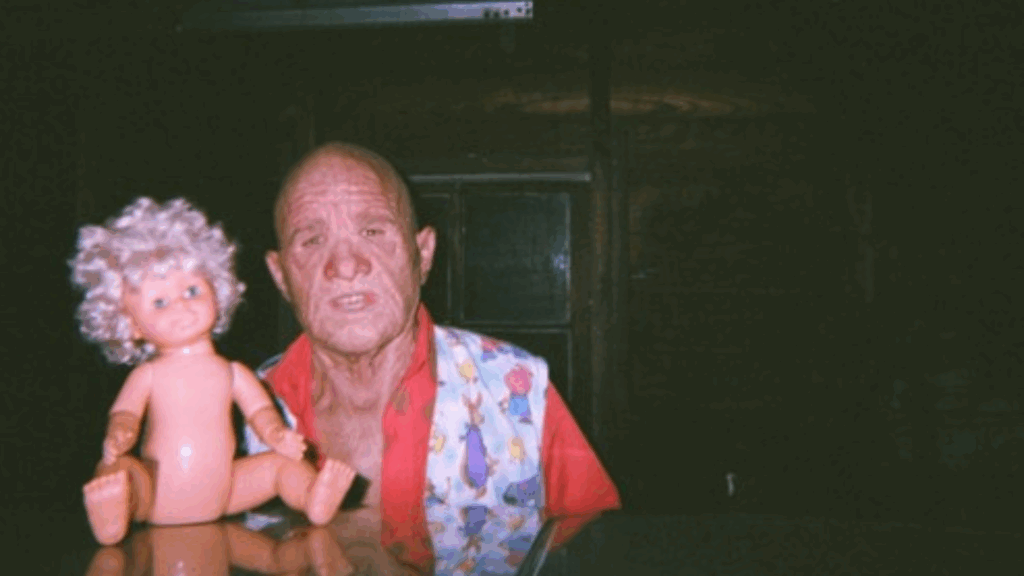
This film is a willful act of anti-cinema. Trash Humpers is Korine at his most nihilistic. I find it funny that he can go from directing this film to then directing former Disney actresses in Spring Breakers (2012). Shot on degraded VHS and edited to resemble a found object from the gutter, it depicts a crew of grotesque seniors vandalising their way through suburban Nashville. It’s intentionally ugly, chaotic, and incoherent and is less a film than a cinematic act of delinquency.
I feel like this movie was intended to be projected in an art gallery. The film invites observation rather than immersion into a narrative, functioning as an unsettling object meant to provoke rather than entertain. There’s a consistent propensity for destruction; they constantly smash television screens and break glass. It can almost be seen as a precursor to Jackass’ Bad Grandpa (2013). It’s like if the punk scene and some random grandparents got together and tried to set the world on fire.
4. The Beach Bum (2019)
The Beach Bum is Korine in hangout mode. It’s a sun bleached, weed scented, completely anarchic story. Everything is soaked in decadence; none of it matters. Matthew McConaughey stars as Moondog, a poet wandering the Florida Keys in a haze of hedonism and some kind of detached wisdom. It’s probably Korine’s most accessible film, partially because of the cast, and because although things get weird it never gets to that weird Korine level that can be off putting to come.
What makes The Beach Bum so endearing is its sense of freedom. Moondog is a fool and a sage, an irresponsible deadbeat who might also be an accidental prophet. Korine’s camera floats through parties, weddings, yacht explosions, and rehab clinics with the same giddy lack of concern for consequence. The film’s lightness is its strength and I think is the best way into Korine’s world.
3. Mister Lonely (2007)
Mister Lonely tells the story of a Michael Jackson impersonator (Diego Luna) who finds solace in a commune of impersonators, including Marilyn Monroe, Charlie Chaplin, and the Pope. I really enjoyed this film and the tone of it. His appreciation for French cinema is present throughout this movie such as the location and his collaboration with Leos Carax and Denis Lavant.
The film’s dreamy tone and patient pacing make it feel unlike anything else in Korine’s filmography. There is an undercurrent of grief throughout the film that punctuates Monroe’s slow unraveling. We watch as the hopes and dreams of the characters fall apart one by one. The doomed illusions of the commune turn the film into a quiet elegy. Korine has said that his parents lived in a commune when he was growing up, which adds a personal touch to the film. For a director so associated with chaos, Mister Lonely is a different kind of film, more melancholic and slower paced.
2. Gummo (1997)
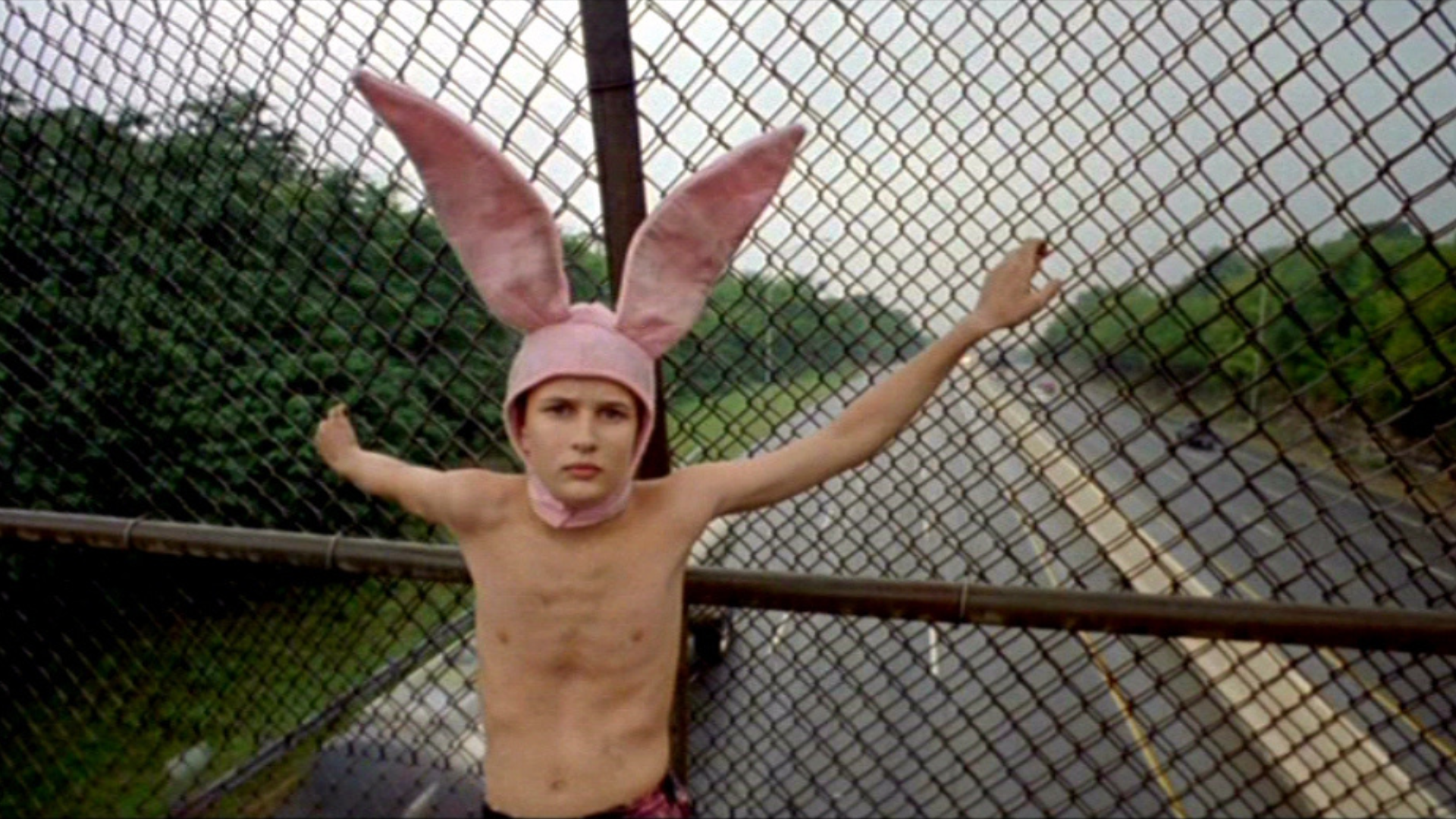
Korine’s debut remains a shocking achievement that makes more sense in the internet age than it did when it first came out. Gummo is less a narrative and more a mood, an impressionistic tour through a tornado ravaged town in Ohio filled with wild children, disaffected teens, and lonely outcasts. There’s no central plot, just a mosaic of weird, poetic, and darkly funny moments stitched together. One minute you’re watching a boy in bunny ears wander down a desolate street; the next, two kids shoot BB guns at a car that is on fire.
What makes Gummo work is its balance of horror and humanity. Korine doesn’t judge the people he films but he celebrates their strangeness, their resilience, their sadness. From the infamous bathtub spaghetti scene to the kid lifting weights with kittens, every moment feels like a relic from a lost America. The arm wrestling scene is another classic, the kind of moment that says everything about Gummo. It’s crude and unpolished, yet somehow intimate. We’re in a random kitchen watching as a kid arm wrestles with an adult and his family cheers him on. This film is chock-filled with memorable and strange sequences that stand out. It’s an emotional experience, one that hits harder the more you surrender to it.
1. Spring Breakers (2012)
Korine’s most commercially successful film is also my favorite. Spring Breakers begins as a party flick starring ex-Disney girls (like Selena Gomez) in bikinis and quickly spirals into a wild journey of neon, violence, and American emptiness. James Franco as the character of Alien—part rapper, part gangster, part performance artist—steals the show, but it’s the film’s daring style and hypnotic repetition that makes it a masterpiece.
Spring Breakers isn’t just a critique of youth culture, it’s an embodiment of it. It all points to a filmmaker who understands both the beauty and the horror of spectacle. Korine weaponizes style to portray a culture obsessed with image. It’s his most mature, cohesive, and haunting film and the one that realizes all of his recurring motifs into one cinematic tour de force.
Words by Sebastian Sommer
Support The Indiependent
We’re trying to raise £200 a month to help cover our operational costs. This includes our ‘Writer of the Month’ awards, where we recognise the amazing work produced by our contributor team. If you’ve enjoyed reading our site, we’d really appreciate it if you could donate to The Indiependent. Whether you can give £1 or £10, you’d be making a huge difference to our small team.