
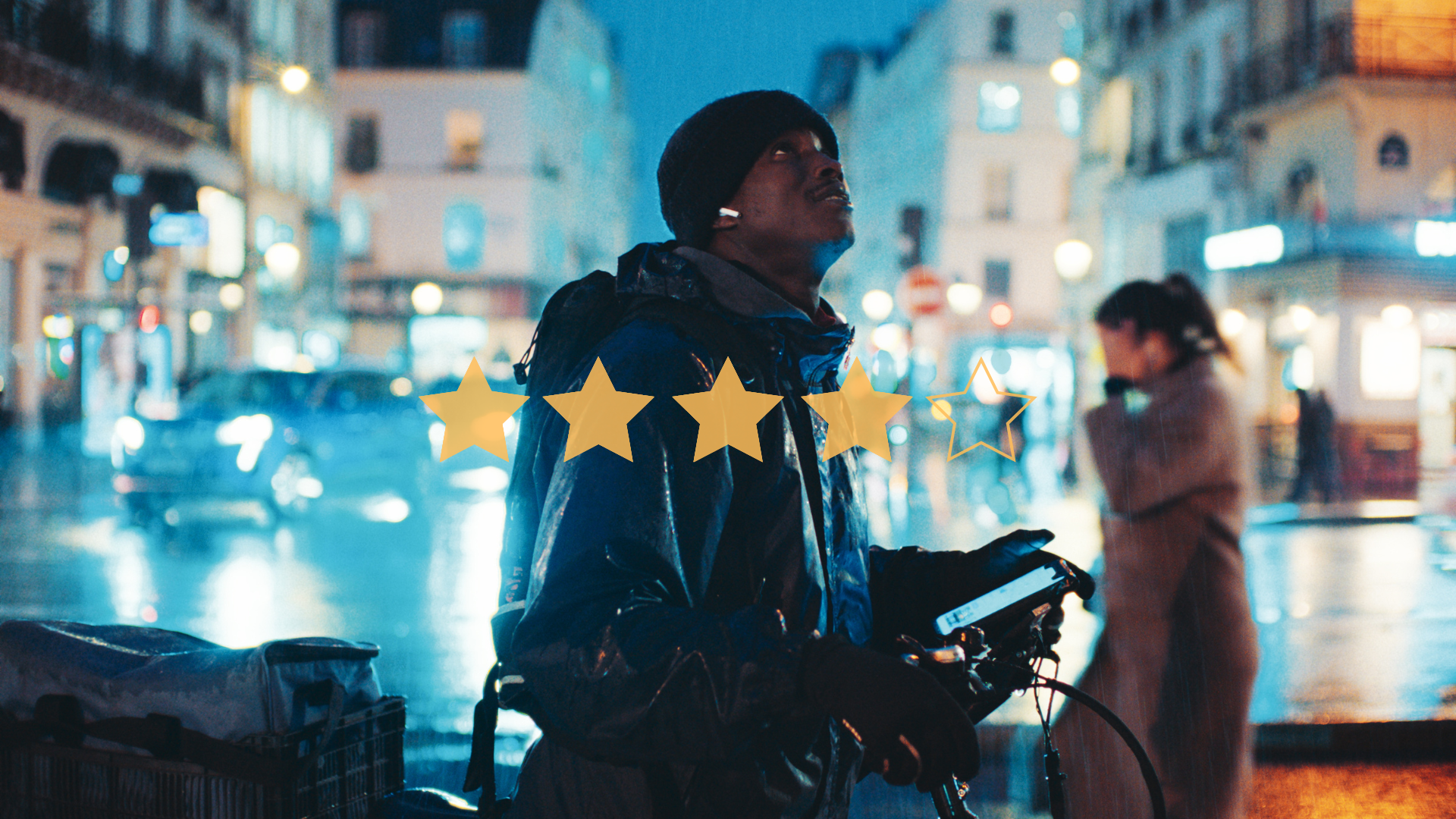
A Guinean immigrant in France must navigate his upcoming asylum interview application while working as a delivery driver in Boris Lojkine’s anxiety-inducing latest film, which is bursting with empathy at every turn.
★★★★☆
Boris Lojkine’s Souleymane’s Story is an arresting work of art that grabs viewers, plunges them into the day-to-day reality of its protagonist’s life and refuses to release its tight grip. As the world seems to close in on the eponymous Souleymane (Abou Sangaré), a young Guinean national who is attempting to secure asylum in France, it feels as if these forces hem in viewers just as steadily. Lojkine’s film flows so freely with empathy that Souleymane’s struggles, despite how easily the touchy subject of immigration can lead to polarisation and dehumanisation, feel like a universal fight against oppressive forces. The movie’s greatest achievement is its adept ability to make it impossible not to hope for rays of sunlight to infiltrate these dark days in Souleymane’s life.
Over the course of just two days, Souleymane must learn the rote facts of his made-up political identity in Guinea, the country he fled to forge a better life for himself. Having made his way to France, the only roadblock to citizenship is an upcoming interview, for which he must remember key dates in a manufactured tale of political oppression that you can imagine has been sold to countless other asylum seekers. ‘Sold’ is the keyword here, with Souleymane working tirelessly as a delivery driver to pay for fictitious documents and storytelling guidance from shady “social worker” Barry (Alpha Oumar Sow). This line of work is strictly reserved for French citizens, however, so Souleymane is at the mercy of fellow African immigrant Emmanuel (Emmanuel Yovanie), who takes a sizable cut of Souleymane’s pay in exchange for allowing this protagonist to work using Emmanuel’s account.
The film does a wonderful job of orienting viewers in Souleymane’s present moments, tracking him dutifully as he hurries from one destination to another, unable to decompress for even a second. No matter how hard he struggles, he is always working against intangible forces. He can’t fight time, despite how much he paces with worry while waiting for one of his delivery orders to be made up, or finds his restless thoughts circling back to his pending interview instead of being able to relax. Whether it’s through tracking shots that jitter uncomfortably along with Souleymane’s bike-riding through Paris, or tight shots that make it seem as though the world is bearing down on him, Lojkine does a fantastic job of immersing us in this protagonist’s world.
It is extremely rare for Souleymane not to be the focus of the camera, let alone for him to be absent from compositions. Souleymane’s Story is doggedly committed to this protagonist, whether that’s through smooth camera movements as Souleymane walks while in conversation with others, or the camera’s jittery, jerky shakes seamlessly mapping on to this protagonist’s constant cycling through Paris streets, weaving in and out of traffic. So much of the film rests on Sangaré’s efforts to convey Souleymane’s emotions at every turn, so it is a welcome change to see the camera follow him from behind during these e-biking excursions, focusing on the blend of repetitiveness and panicked exertion that make up his working day.
When we do see these characters’ facial expressions, each of the film’s performances is so naturalistic that it hardly feels like any acting is taking place. Even minor characters who are present for a single scene are entirely believable. Most of the roles afforded to these performers are not meaty, scenery-chewing extravaganzas. Instead, these characters are no more arrogant or caring or expressive than the people one encounters in everyday life. Were it not for Souleymane’s Story dedication to and skill at drawing out the nuances and heartfelt emotions in Souleymane’s everyday circumstances, these performances would feel muted. But there is such synchronicity between its cast and crew in exploring the sensitivity of everyday moments that the smallest of interactions feel meaningful. That could be a brief oasis of calm expressed through goodwill between Souleymane and a stranger in his hectic schedule, or a callous interaction that manages to be compelling without feeling contrived.
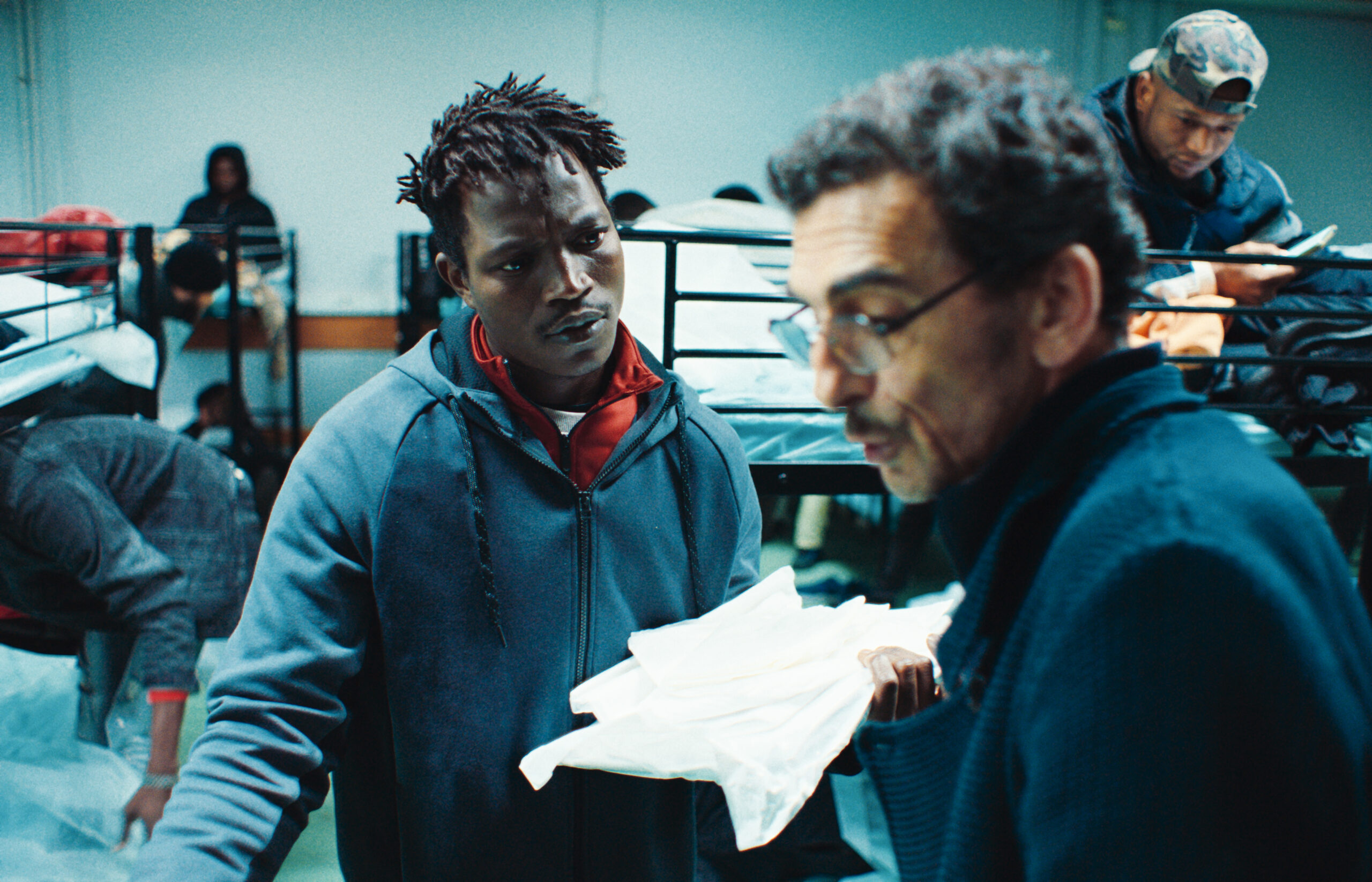
Souleymane’s Story might not have a breakneck pace, especially given its repetitive nature, but that ends up working wonders, offering little breathing room as Souleymane’s tireless efforts also inspire restlessness and panic in viewers. It only takes a few minutes to find yourself anxiously counting down milliseconds as Souleymane waits for his train to stop so he can run to catch the evening bus, or while watching him navigate the many roadblocks that crop up throughout his routine. This is a tale as old as time, where when it rains, it pours, and is told so simply and effectively that Souleymane can be instantly understood and felt for, without the film sacrificing its relevance or timeliness.
If this protagonist runs into a problem in his occupation, the customer service number he rings has a human voice attached to it, but being treated like a human being is no guarantee, with rules and regulations that provide a stopgap between people helping others. The payments themselves go through Emmanuel, meaning they could be withheld from him. If Souleymane can’t make his payments to Barry, he won’t receive the required documentation to support his bogus story. If he misses the bus driving him to the centre for asylum applicants left in limbo, he must sleep rough for the night. By using someone else’s identity, Souleymane is technically an illegitimate worker. By fabricating his backstory, he is an illegitimate asylum seeker. But most importantly, he’s a good person being forced to navigate hellish systems, whether he’s at the mercy of government institutions or private companies.
Lojkine does not assume that viewers will be aware of the intricacies — or even the broad strokes — of France’s immigration policies, asylum procedures or the lives of asylum applicants. But he isn’t looking to simply teach viewers. Instead, by immersing you in Souleymane’s life, the film paints an honest portrait of attempting to scrape by in precarious circumstances. It challenges preconceived notions, be they stereotypically positive or negative, about asylum seekers, trusting its efforts to guide viewers to an emotional destination that makes it impossible not to feel for Souleymane.
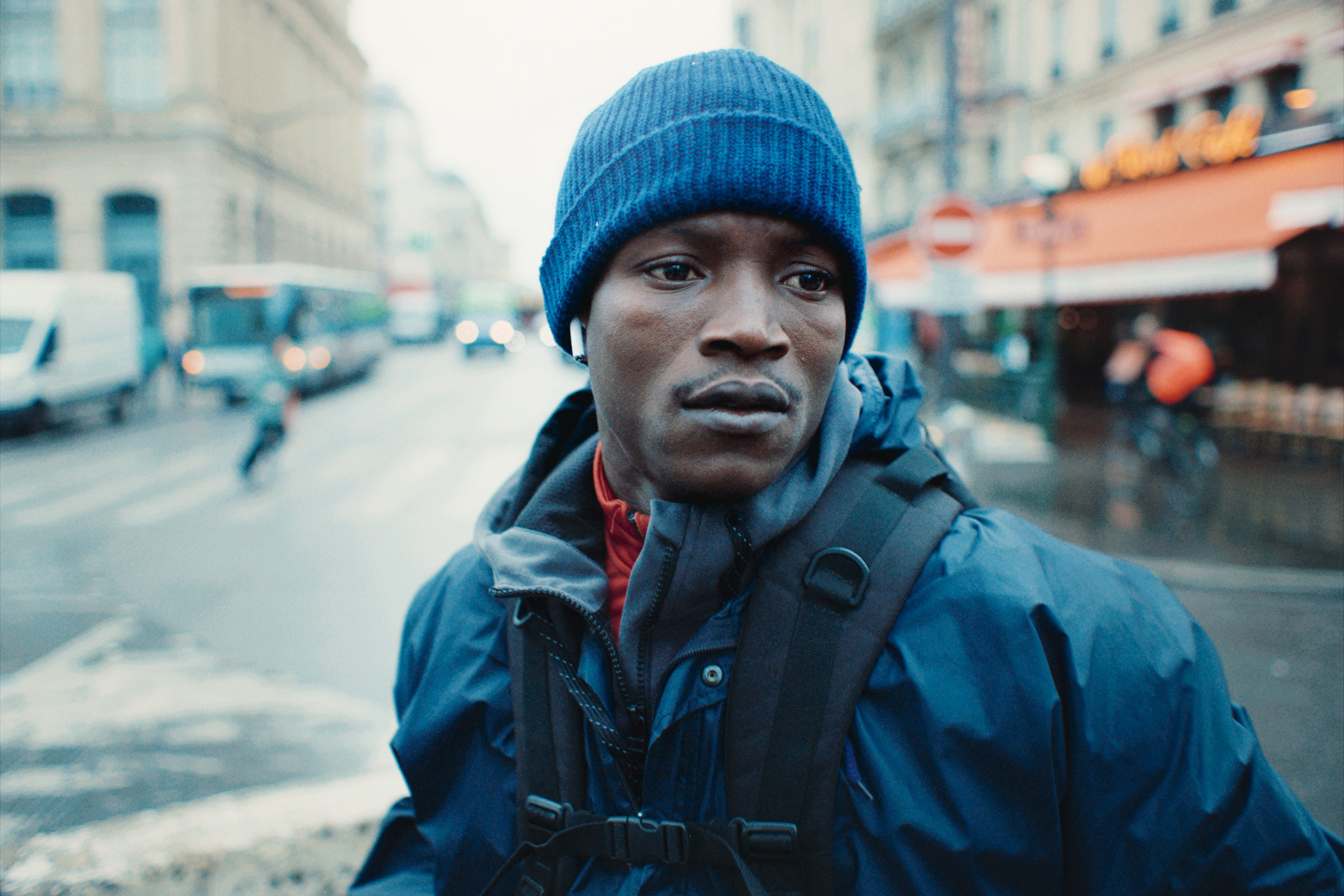
Most films about non-nationals seeking asylum would follow the expected version of oppression that Barry and Souleymane attempt to sell. But Souleymane doesn’t spend time wallowing in self-pity or viewing himself as a victim, nor does he always live by the guidelines that asylum applicants must. Sangaré, a mechanic who hails from Guinea and whose real-life backstory informed Souleymane’s characterisation, is a spellbinding revelation in making us care deeply about this protagonist’s circumstances as the film eschews a typical tale of victimhood. Without such a masterful lead performance at the helm, Souleymane’s Story could have easily felt like a strained attempt at political relevance that loves to bog itself down in misery.
As a human being caught in a system that renders people as subjects, this protagonist is technically an anomaly, but over the course of Souleymane’s Story his struggles feel universal, an incredibly ambitious and difficult task to pull off given the film’s polarising subject matter. Souleymane’s resilience in the face of despair is a much-needed dose of humanity amidst circumstances and procedures that are anything but human. The journey viewers go on with this character builds to a beautiful, devastating denouement that is all articulated to perfection by Sangaré. You don’t just feel the weight of the past few days in his words, but that of his entire life bearing down on him as he speaks.
Even when Souleymane consistently demonstrates goodwill towards those around him, he never feels like a hollow attempt on Lojkine’s part to form an infallible protagonist. “Man is a wolf to man,” an adage that Souleymane runs into constantly, most often perpetrated by people of his own national background, who misuse their secure position in French society to take advantage of their struggling countrymen. By exposing this moral rot without losing sight of its boundless empathy, Souleymane’s Story is beautiful and unsparing in depicting its protagonist’s horrifyingly precarious circumstances.
The Verdict
Souleymane’s Story is a moving testament to resilience in the face of enormous struggle, with the film’s dedicated approach to conveying its protagonist’s day-to-day reality grounding these anxiety-inducing and climactic few days in his life.
Souleymane’s Story is in UK and Irish cinemas from 17th October.
Words by Cian McGrath
Support the Indiependent
We’re trying to raise £200 a month to help cover our operational costs. This includes our ‘Writer of the Month’ awards, where we recognise the amazing work produced by our contributor team. If you’ve enjoyed reading our site, we’d really appreciate it if you could donate to The Indiependent. Whether you can give £1 or £10, you’d be making a huge difference to our small team.