
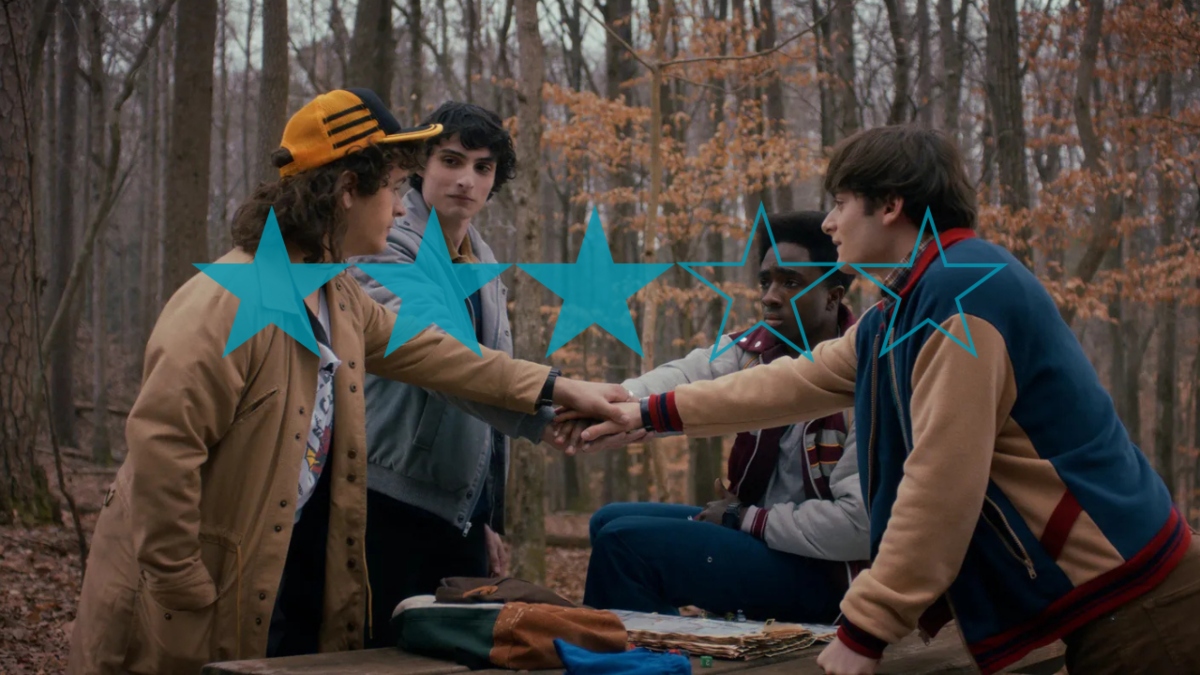
The final season of Netflix’s sci-fi mega-hit is laden with exposition and peppered with heart.
★★★☆☆
Congratulations everyone, we made it! Stranger Things, the Duffer Brothers’ nostalgic tribute to all things 80s and undoubtedly one of the greatest success stories of the streaming era, has at last wound things up with its long-awaited fifth and final season. Across its almost ten-year-run, the show has grown from a modestly realised riff on the most iconic works from the period into a bonafide televisual phenomenon—so popular that the midnight launches of all three batches of these recent episodes have seen scores of viewers take to Reddit to whine about crashing servers and gremlins in the system (not the Spielbergian kind!).
There’s surely few writers in Hollywood, then, who would have envied the gargantuan task which lay ahead of the Duffers at the start of this season: how to deliver an ending to satisfy the show’s legions of devoted fans, all whilst managing an ensemble of almost thirty recurring characters and a retconned mythos so dense and unwieldy it’d be enough to make H.P Lovecraft’s head spin?
The results of their labours are hardly elegant, to say the least. Some will love that Stranger Things has essentially become Netflix’s answer to the MCU, right down to the interdimensional slugfests and CGI-ed brouhahas; others might find themselves missing a lower-stakes era of the show where it felt like we could afford, on occasion, to put our foot on the narrative brakes, and just enjoy hanging out with its characters for a minute. But as an exercise in sheer scale? Even sceptics will struggle not to be swept along for the ride.
There’s not nearly enough space here to go over all the plot baggage with which you’ll have to familiarise yourself in advance of this season — but, fear not, even the characters themselves are pretty confused, and will spend an awful lot of time reminding each other what’s going on, what they have to do next, and why it all matters. When we left things at the end of season 4, fiery rifts were opening all over the ground in our heroes’ hometown of Hawkins, Indiana, apparently threatening to bring the human world into contact with the spine-tingling Upside Down.
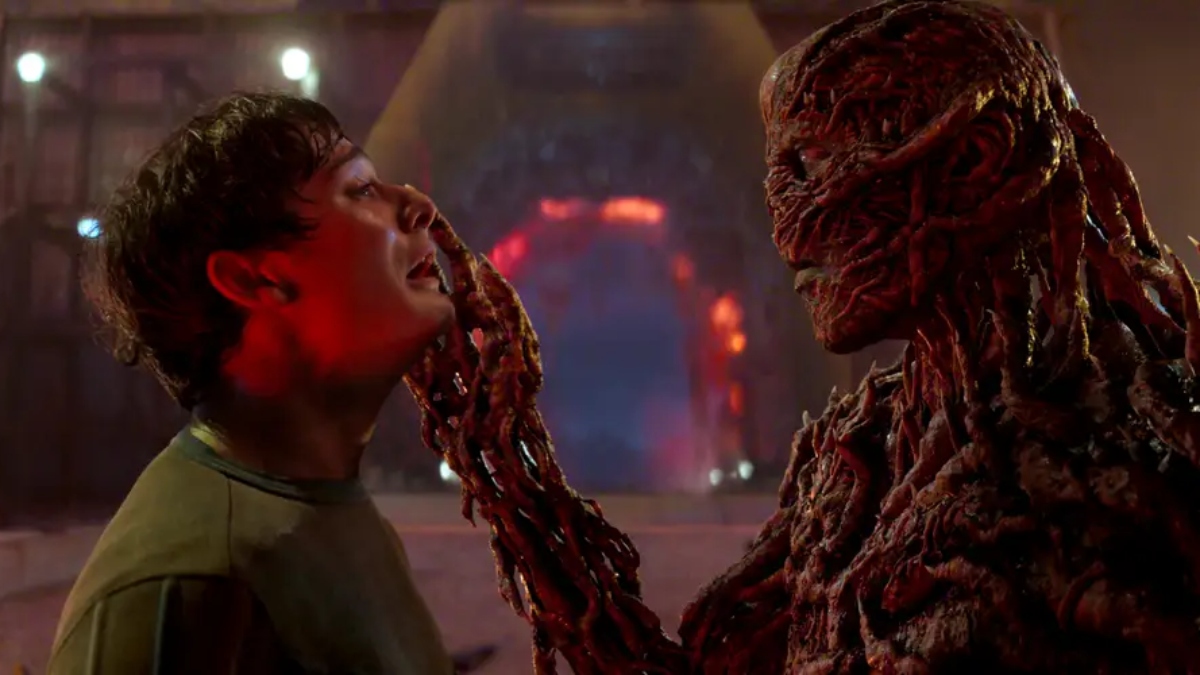
19 months on, and the whole town is in lockdown, placed under the watchful eye of the US military (still very much not the good guys in this show). Our colourful found family of misfits, nerds, and psychic warriors aren’t letting that stop them from doing their usual thing though: they’re still finding time to embark on surreptitious excursions through the rifts in search of Vecna, the demonic overlord of the Upside Down who resembles something of a cross between Voldemort and Groot, with the sunny personality of Freddy Krueger to boot. It looked like he might have met a sticky end in the previous season’s finale, but the party aren’t taking any chances — their suspicions quickly prove to be well-founded, as children start to disappear again from Hawkins, starting with Mike and Nancy’s gutsy little sister Holly (series newcomer Nell Fisher—a welcome fresh-faced addition to an ensemble with increasingly developed frontal lobes).
Mike, Dustin, Lucas and the gang have not only got to try and find a way to save Holly and the other missing kids, but also work out what the intentions are of both Vecna and the US government when it comes to the netherworld lingering at the periphery of Hawkins—all whilst having almost every one of their assumptions about that world challenged at every turn. All bets are off throughout season five, as characters presumed dead return in alarming circumstances, creepy dimensions actually turn out to be wormholes to even creepier dimensions, and, for the first time, we see the burden of telekinetic powers borne by other characters besides Millie Bobby Brown’s Eleven (still, in any case, a reliable deus ex machina for whenever the writers find themselves in a muddle). Much as you might expect, this is TV that’s sprawling, more than a little ungainly, but never, ever boring.
There’s exciting new talent behind the camera too, with the director behind The Shawshank Redemption and self-confessed fan, Frank Darabont, coming out of retirement to take the helm for two mid-season episodes. That said, there’s not much room for aesthetic or tonal flair here—by this point, Stranger Things is well and truly set in its ways, and anyone familiar with the shows set formula and character beats is unlikely to be met with many surprises. Curmudgeonly ex-police chief Hopper’s still in protective dad mode, fearing that, in saving the world, he might also have to face losing his adoptive daughter in Eleven. Nerdy Jonathan and reformed jock Steve are still butting antlers over Nancy—who’s gone from a decent hand with a shotgun to basically being Ripley from Alien, and has about as much time for this protracted conquest for her affections as you probably will. And, of course, there’s always, always time for a wacky and convoluted scheme that can be explained by whoever’s thought it up using everyday bric-a-brac as props, that will surely whisk our heroes out of whatever commotion they find themselves in without so much as a couple of bruises.
The jury’s out on whether this season was a worthy culmination from the perspective of the show’s fanbase: cryptic and ultimately unfulfilled claims by some that the Duffers would whip out a secret ninth episode don’t exactly speak to a universally satisfied clientele. In any case, it’s a circuitous, plot-hole-riddled road to the ending proper—comparatively quiet, and more ambiguous than both its proponents and its detractors have given it credit for. For when you set aside the otherworldly monsters and Cold War espionage, at its core Stranger Things has always been a show about adolescence, about how many of the biggest obstacles in life must sometimes be overcome by the littlest people. For all the new things, exciting and terrifying, that must inevitably be faced in the process of growing up, the very last moments of this stuffed, overwrought, but moving finale reminds us that it’s also just as much about having to let things go.
The Verdict
Stranger Things bows out in its own habitual fashion—with more than a few stumbles, a trusty jukebox soundtrack of 80s hits, and a big heart on its sleeve.
Words by Isaac Jackson
Support The Indiependent
We’re trying to raise £200 a month to help cover our operational costs. This includes our ‘Writer of the Month’ awards, where we recognise the amazing work produced by our contributor team. If you’ve enjoyed reading our site, we’d really appreciate it if you could donate to The Indiependent. Whether you can give £1 or £10, you’d be making a huge difference to our small team.