
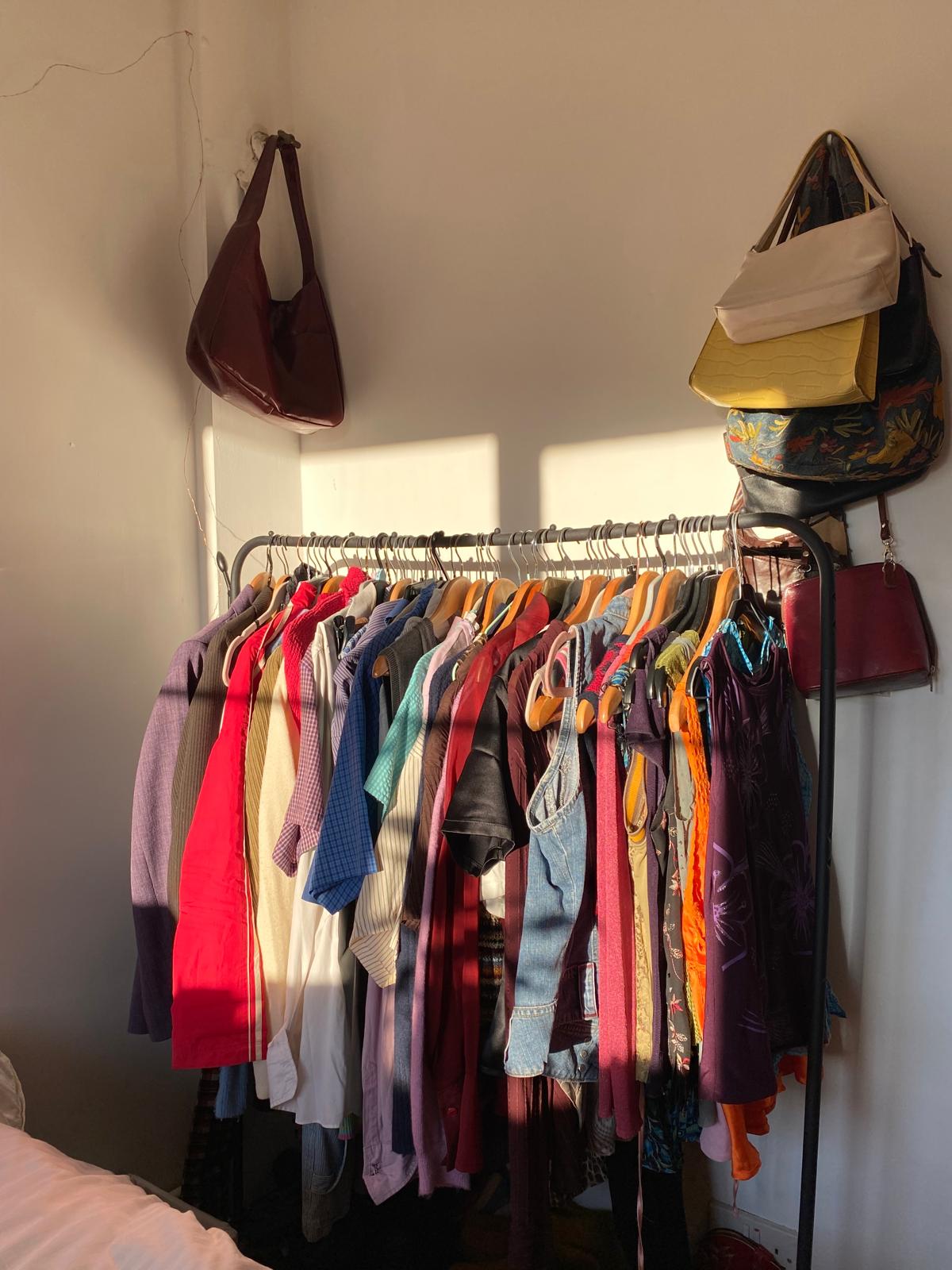
Remember when Lizzie McGuire was dubbed an “outfit repeater”? That should have felt like a compliment. Rewearing isn’t shameful; it’s a testament to creativity and refined taste. Loving what you already own means seeing clothes not as one-off items but as companions that carry you through years of birthday parties and milestones.
As autumn approaches and you haul your seasonal staples out from the back of musty cupboards, a familiar nostalgia stirs. You might feel like Sharpay Evans declaring, “Out with the old, in with the new” as now, a year on, you can see that last year’s wardrobe does not quite align with this year’s self. Perhaps your updated hair colour clashes with old tones, or you can see that the fingerless gloves from that awful breakup you’d rather forget need to go and there are turtlenecks that, frankly, never even made it to your Pinterest board this year.
The trouble is, when a new season rolls around, the urge to throw everything into a black bin bag and rebuild your wardrobe from scratch is very real. New trends feel irresistible, micro-trends even more so. But what if we paused for just a second longer?
Anyone who knows me knows one thing: I love to shop. Trinkets, bags, clothes, mugs-you name it. Spot a second-hand boutique, a charity shop, or a carboot sale and I’m already halfway there. I thrive on little splurges, but I have recently been aiming to make sure my treasure-hunting is kind to the planet by shopping through second-hand stores.
We live in an age of instant gratification: TikToks that we swipe past in three seconds, next-day delivery at our fingertips, fast fashion arriving before we’ve even closed the browser tab. It is no surprise that the UK sends 350,000 tonnes of clothing waste to landfill each year (Fashion Waste – 2025 Facts). The average adult in the UK owns 118 items of clothing, and nearly a quarter admit to buying garments they know they will wear only briefly (How many items of clothing does the average person own UK?; Citizen Insights: Clothing Longevity and Circular Business Models Receptivity in the UK). Wardrobes are no longer curated; they are revolving doors.
I joined Vinted in 2018, back when it felt like Depop and eBay’s older, savvier cousin. These days, I use it constantly. Once I committed to selling consistently, I made over £300 just by clearing out my wardrobe. That became my guilt-free treat money which funded my shopping habit. Finding a vintage top and knowing your old jumper basically paid for it? That’s a dopamine double-hit.
Exchanging clothes for store credit at charity shops works the same way. You get something new-to-you, while keeping the cycle of reuse alive. Second-hand fashion at its core is about relearning how to live within our means in a culture that thrives on one-click spending.
It doesn’t just end there either, clothing is not just a landfill problem, it is also a pollution issue. Nearly 10% of ocean microplastics come from textiles (Earth.Org). Synthetic fibres shed through washing, wear, and waste, ultimately entering rivers and seas. Choosing pre-loved clothing instead of new is not only a financial choice, but an environmental one.
The Project Pan movement, which encourages consumers to use beauty products until they hit the “pan” at the bottom of the container, has gained traction this year. It reflects a wider cultural push toward underconsumption and more intentional use. In a world saturated with haul videos, discount codes, and ever-faster trend cycles, slowing down is not simply restraint, it is an act of rebellion.
Second-hand shopping requires effort. Packages do not arrive overnight, and scrolling through Vinted or Depop can take time. But the reward is far greater when you find the perfect pre-loved piece for a fraction of the cost, while also protecting the planet, delivering a satisfaction that rivals fast fashion.
The biggest lesson I’ve learned through shopping second hand and buying with intention is this: curation takes effort. Understanding the journey of what we consume, asking why we’re consuming it, and resisting the idea that every trend must be ours is where real style lies. I’ll still buy myself a few new clothes this winter, but I’ll do it carefully, with quality in mind, and with the hope that I’m not fuelling the throwaway cycle.
Fashion is supposed to be fun, expressive, and personal. But it shouldn’t come at the planet’s expense. If second-hand shopping becomes not just an alternative but a trend in itself, we get the best of both worlds: the buzz of buying, and the peace of knowing we’re not adding to the mess.
Maybe this year, instead of chasing the next micro-trend, we start a new one – where the real flex is keeping clothes in circulation, styling them in fresh ways, and proving that sustainability isn’t boring. In fact, it might just be the coolest thing you can wear this autumn.
Words by Myfanwy Fleming-Jones
Support The Indiependent
We’re trying to raise £200 a month to help cover our operational costs. This includes our ‘Writer of the Month’ awards, where we recognise the amazing work produced by our contributor team. If you’ve enjoyed reading our site, we’d really appreciate it if you could donate to The Indiependent. Whether you can give £1 or £10, you’d be making a huge difference to our small team.