. Jo Elliott reviews.)
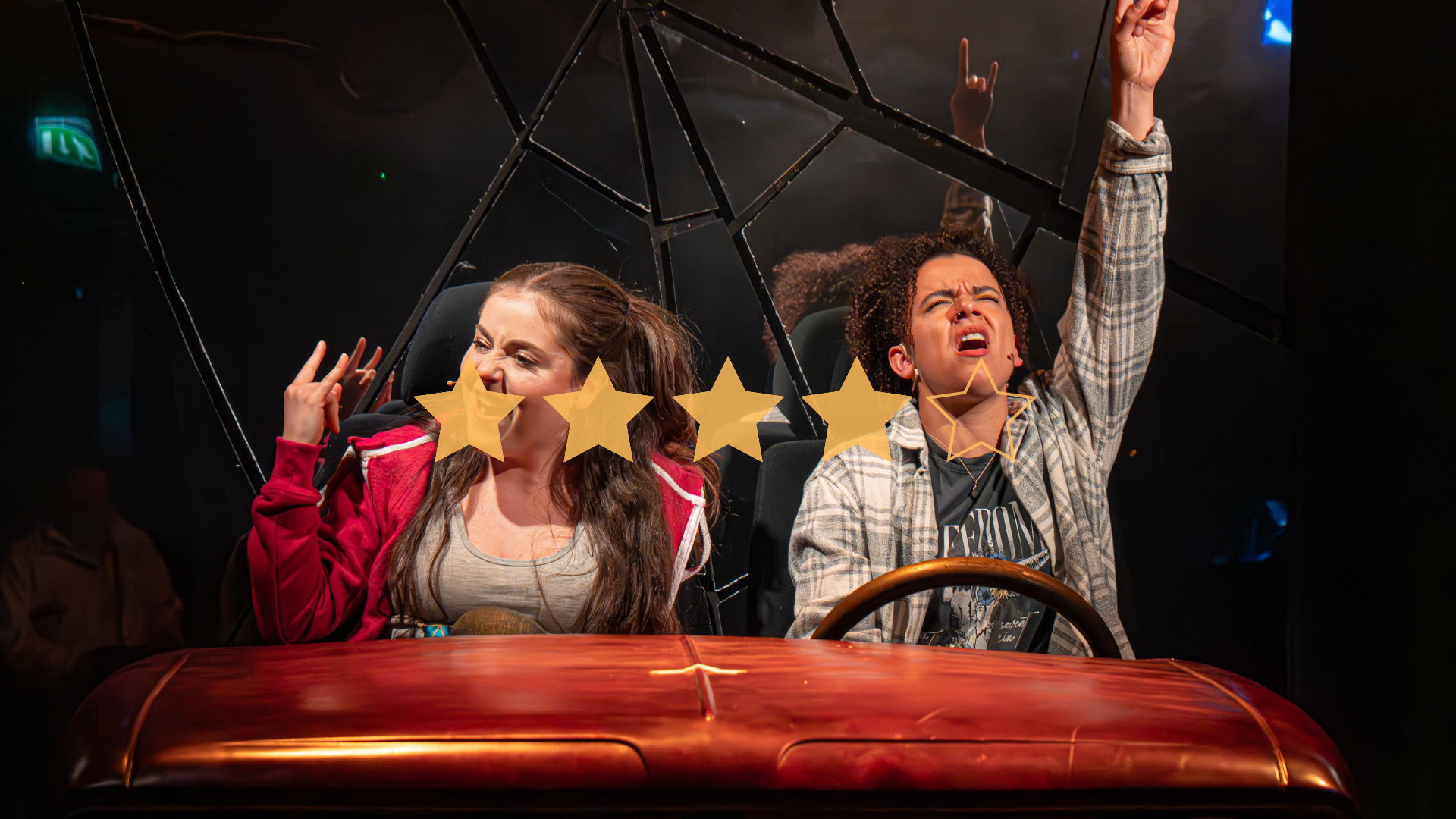
★★★★
The Mad Ones, originally titled The Unauthorized Autobiography of Samantha Brown has had a long journey to the London stage. It started life as a workshop production in 2005 before premiering off-Broadway in 2017. It first premiered in the UK last year at the Old Joint Stock Theatre in Birmingham and finally made it to London this summer for a short run in The Other Palace’s Studio space. The Mad Ones follows 18 year old Sam (Dora Gee) as she struggles to decide what path her future should take whilst dealing with grief over the loss of her best friend Kelly (Courtney Stapleton). This is revealed fairly early on in the show and continues to have a rippling impact throughout the story.
The cast of this show is definitely the highlight; it’s a small cast of only four actors that allows for very intimate performances from all. Dora Gee is absolutely stunning as Samantha. She has an incredible voice and delivers such a nuanced performance that we go through every emotion with her, from the highs of her memories of good times with Kelly, to the lows of her paralysing grief. Her uncertainty of what she wants from her life or where to go with her future feels incredibly relatable and marks The Mad Ones out from other recent teenage coming age stories we’ve seen on stage. Courtney Stapleton’s Kelly is a tour de force in this show: she delivers phenomenal vocals and it is easy to see why the shy, quieter Sam is drawn to her vivacious personality. The two have phenomenal chemistry together and the show shines it’s brightest when they are sharing the stage, especially because the thread of whether there might have been something more than friendship between them is a through line of the show.
Rounding out the cast are Thea-Jo Wolfe as Sam’s mum Beverley and Gabriel Hinchcliffe as her boyfriend Adam. Both offer some great comic relief in the first act but are largely supporting characters in Sam and Kelly’s story. Thea-Jo Wolfe has excellent comedic timing and offers some very witty one liners during the first act but it is Act Two where she really stands out, with her show-stopping number ‘Miles To Go’, a beautiful ode to the challenges of life as a woman and her dreams for her own daughter. We also get to see a little more depth and nuance to Sam and her mother’s relationship in the second act and Wolfe and Gee play off each other beautifully. Gabriel Hinchcliffe as Adam has a beautiful voice but his character has the weakest material and because the character of Kelly is so strong, he pales somewhat in comparison. He has some nice comedic moments which are performed well and nice earnest solo in Act Two (‘Run Away With Me’) but when compared with the female performers in the show, he just doesn’t have as much to work with.
Kait Kerrigan and Bree Lowdermilk are the writers of both the book and the score, and the book scenes (though few and far between, it is mostly sung through) are fun and witty and full of character and the dialogue really sings (pun fully intended). They also pack an emotional punch when needed and the tone is really well balanced throughout. Whilst the show deals with grief, the writers have very cleverly chosen where to add splashes of humour which keeps this a moving and heartfelt piece as opposed to falling into the realm of incredibly depressing. There are some really gorgeous and standout songs and the lyrics are great but the music does fall into the trap of sounding a little too similar in places. This can make it difficult to distinguish between certain songs and to work out where one song ends and another begins. However, the songs function well in driving the story forward and deliver a lot of character so the occasional similarity between them doesn’t matter as much as it might in a show with weaker material.
In terms of the technical elements, the set design by Reuben Speed is utilised beautifully. It’s deceptively simple but so perfect for this show: all we have is a series of cracked mirror backdrops and a half car set piece. The cracked mirror backdrops and the car serve as both an early indication of the ultimate fate of Kelly and the cracked mirrors provide a really clever two way mirror effect for Kelly’s hauntings.
The car setpiece is remarkably versatile and used to clever effect throughout the show. The fractured mirrors also reflect the fractured nature of Sam’s inner thoughts and the splintered storytelling well. Joanne Marshall’s lighting design works beautifully in tandem with the fractured mirrors to creating very interesting lighting effects, and the way that the lighting matches Sam’s inner turmoil, for instance turning blue momentarily whenever she thinks about Kelly’s accident is really cleverly done.
Where the piece falls down a little is the pacing. The fractured, non-linear storytelling is not an issue, it works well for the story that is being told and makes sense for the character: Sam is reeling from Kelly’s death so it follows that everything would be a little jumbled. We know from early on that she’s an unreliable narrator, so the blurred lines between reality and fiction also make a lot of sense. However, we lose a lot of momentum due to the insertion of an interval where there doesn’t really need to be one. The placement of the interval doesn’t come where there is a natural need for a break in the story and instead it interrupts the flow and just feels abrupt. The second act never regains the same momentum of the first and feels slightly more padded than necessary. This would work so much better as a 75-80 minute straight through piece than it does at two hours with an interval.
It may be small but Emma Susanne Lloyd’s direction utilises every inch of the space available in The Other Palace. The car set piece in particular is utilised as multiple different settings aside from its original purpose. The small space works in favour of the piece as it gives it an intimate feel and allows the audience to feel as if they are really immersed in Sam’s mind. Lloyd takes advantage of this with the careful curation of moments when Sam directly addresses the audience and when she pulls back and is less revealing of her feelings. The one element that does feel somewhat hampered by the space is the choreography. Lauren Stroud works well with what she has and huge dance numbers wouldn’t fit the show, but you can’t help but feel that she would have been able to do slightly more with the movement in a larger space.
The Mad Ones is overall a really strong, impactful piece of theatre. It still has room and potential to grow but it is off to a really strong start. With a little more fine-tuning of the pacing of the show, it could be really excellent. It would be great to see further development and hopefully a full West End run at some point in the future, as it’s one of the more exciting new pieces of musical theatre I’ve seen in the last few years.
The Mad Ones is on at The Other Palace (Studio) until 1 June.
Words By Jo Elliott
Support The Indiependent
We’re trying to raise £200 a month to help cover our operational costs. This includes our ‘Writer of the Month’ awards, where we recognise the amazing work produced by our contributor team. If you’ve enjoyed reading our site, we’d really appreciate it if you could donate to The Indiependent. Whether you can give £1 or £10, you’d be making a huge difference to our small team.