
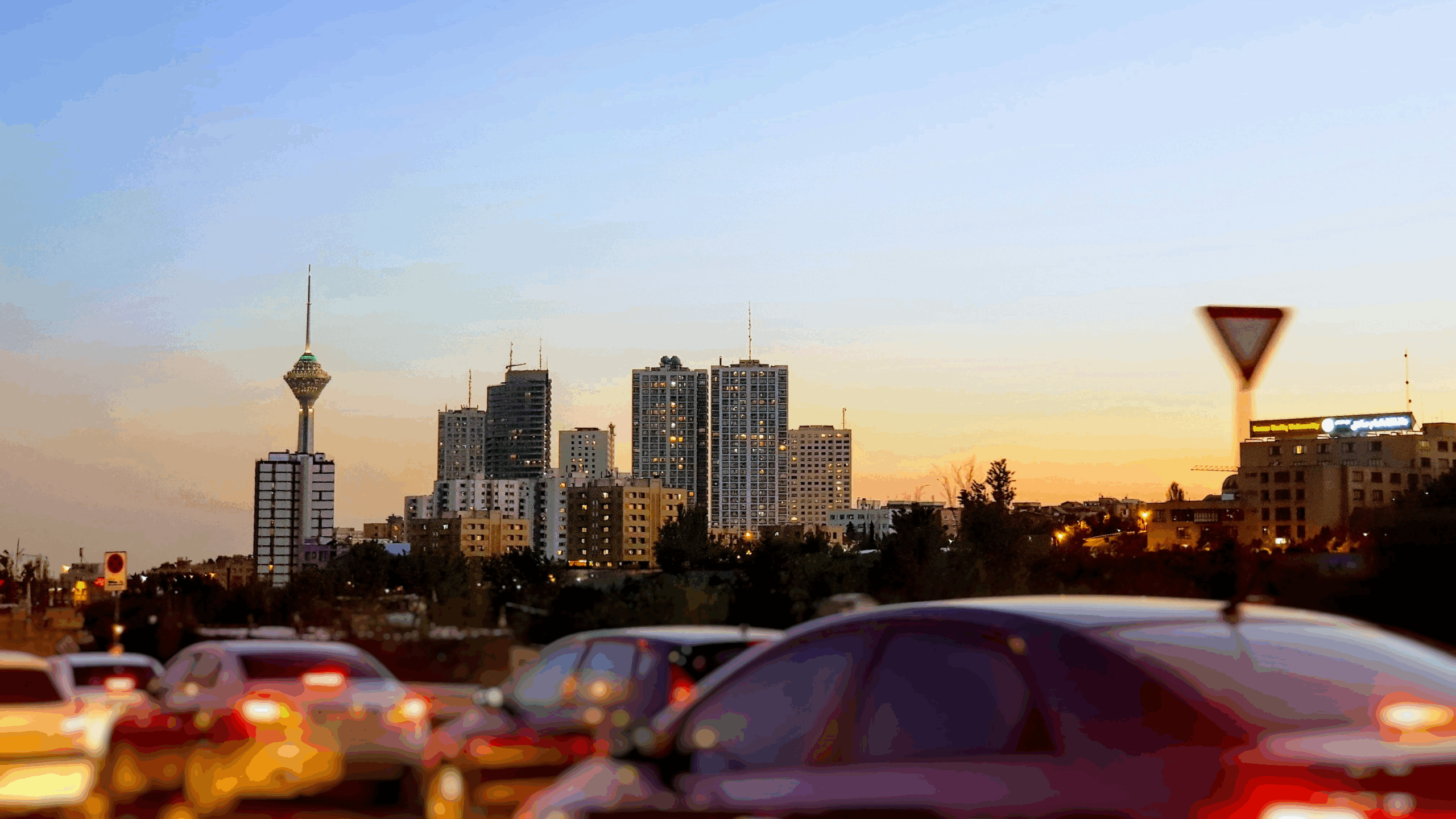
In the seemingly ever-tumultuous region of the Middle East, tensions came to a head once again on Friday, 13th June, when Israel launched surprise military strikes on Iran’s military and nuclear facilities. This follows a history, both recent and longer term, of verbal and military tensions between Iran and Israel. Rapprochement between Israel and several Arab states in the Middle East in recent years has led to the establishment of diplomatic relations with Morocco, the UAE and Bahrain, and negotiations with Saudi Arabia have also taken place. However, the same has not happened with Iran, a country which remains hostile to Israel. Military action was exchanged between the two countries multiple times last year, including the striking of the Iranian embassy in Damascus, the seizure of an Israeli-linked ship, missile strikes landing in Israel itself, and the assassination of Hamas leader Ismail Haniyeh in Tehran.
Following days of Israeli strikes on Iran, the US followed its ally with strikes late on the night of Saturday, 21st June, targeting three Iranian nuclear facilities. US-Iranian relations have been tense since the 1979 Iranian Revolution, which brought the current Islamic government in Iran into power under Ayatollah Khomeini. However, there is a longer history of American involvement in the region. In 1953, a joint British and American effort resulted in the overthrow of Iran’s prime minister at the time, Mohammed Mossadeq. The following year, Iran found itself under pressure to sign an oil agreement handing over partial control of its oil companies to the US, Britain and France. However, overall, the country maintained good relations with the West under Shah Mohammed Reza Pahlavi, who led a Western-oriented and secular government in Iran.
The US and Britain were permitted cultural and political influence in Iran until the 1979 Revolution, when the Shah fled to the US to receive cancer treatment and never returned to his native land. Since then, the formerly Western-oriented nation has been transformed into an Islamic republic, with Sharia law enforced and restrictions on non-Islamic worship and political participation in the country. Since then, American cultural and political influence within Iran has dropped to virtually nil, and there has been less direct intervention in Iranian affairs by the American Government. One notable exception is when President Obama ensured the signing of the JCPOA (Joint Comprehensive Plan of Action) in 2015 (which President Trump later withdrew the US from), placing restrictions on the Iranian development of nuclear weapons.
American involvement in the MENA (Middle East and North Africa) region as a whole has continued to ramp up in recent decades. Notable examples of this are the invasion of Afghanistan in 2001, the invasion of Iraq in 2003, the bombing of Libya in 2011 and the intervention in Syria in 2014 during their civil war. In 2017, President Trump’s government recognised Jerusalem as Israel’s capital, and the American embassy there was opened the following year. The American presence in Afghanistan culminated in 2021 with Joe Biden’s troop withdrawal. With Donald Trump, it seemed, American foreign policy may evolve to become less interventionist. Trump promised that in his second term, he would be “a peacemaker and unifier.”
However, this changed with the latest American strikes on Iran, and adds to the already confusing nature of Trump’s foreign policy. He has often argued against American-led military interventions in foreign countries, lambasting interventions in the Middle East in the early 2010s (albeit in a manner that itself came under criticism). Despite this, direct American strikes on Iran show a great increase in its military engagement in the region, contradictory to the noise coming out of Washington until this point.
Two days later, Trump announced on social media that a ceasefire had been agreed between Iran and Israel. This points to an interesting trend in the Middle East in recent years; Trump’s apparent ability to be able to bring different countries together. One of his notable achievements during his first term was overseeing the signing of the Abraham Accords between Israel, the UAE and Bahrain (and later Jordan and Morocco), which expanded normalised relations between Israel and additional Arab countries for the first time since the normalisation of relations between Israel and Jordan in 1994.
For now, America remains very much an interventionist global power, as it was in the twentieth century, an era characterised by American intervention in other countries; from Europe during the world wars, to Korea and Vietnam in the Cold War, to the Middle East in the Gulf War in 1990. Trump’s latest actions seem likely to continue this interventionist trend and demonstrate a willingness to intervene when American interests or allies are under threat. However, he does this in a more restrained manner than his predecessors, notably President Bush, who oversaw ground invasions of Iraq and Afghanistan. Trump does not want the same disastrous political fallouts that occurred in the early 2000s. There have already been warnings that any further attacks on Iran may deepen a divide between those within Trump’s inner circle who remember both the humanitarian and electoral cost of previous interventions in the Middle East.
Whether this approach will continue and whether it brings lasting peace to the region remains to be seen. For now, however, a ceasefire has been successfully agreed and held. The Middle East remains volatile, with the Israel-Palestine conflict ongoing and Syria’s new regime establishing itself. In contrast with Obama’s more stable approach, Trump’s diplomatic rhetoric can be confusing, as shown by comments made regarding Greenland and Canada immediately after beginning his second term. Nonetheless, in a region marked by Hamas and Hezbollah, multi-ethnic states and decades-old territorial and religious conflicts, America continues to forcefully enact its interests with regards to Iran as it has done for decades in different forms and with different intentions. President Trump, however, has a difficult balancing act to strike going forward if he wants to avoid even more instability in the region.
Words by Ross Hyde
Support The Indiependent
We’re trying to raise £200 a month to help cover our operational costs. This includes our ‘Writer of the Month’ awards, where we recognise the amazing work produced by our contributor team. If you’ve enjoyed reading our site, we’d really appreciate it if you could donate to The Indiependent. Whether you can give £1 or £10, you’d be making a huge difference to our small team.