
★★★★
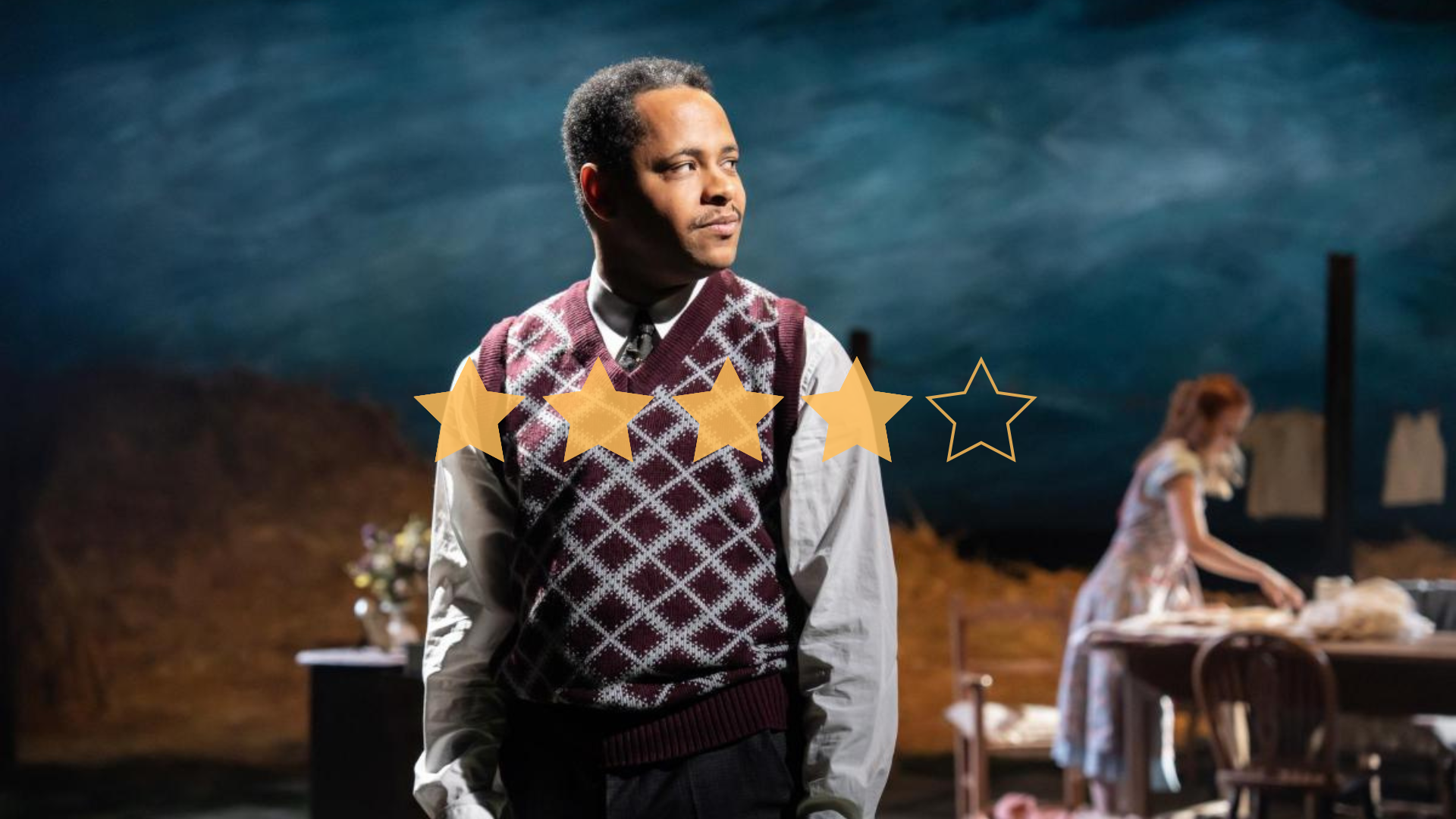
In a kitchen, in Ballybeg, Ireland, in 1936, five sisters are dancing. Heads thrown back, arms flailing, legs pounding the stone; that shrieking, limitless, unstoppable dancing. You can imagine the sort. And when you’re sitting in the round, at the Royal Exchange Theatre, Manchester, you are swallowed up by it—the pure joy, the energy, the sheer life in it! Written by Brian Friel and directed by Elizabeth Newman, Dancing at Lughnasa is a true delight of a performance. It centres around family and society, on strength and hope, and how powerless you can feel at the mercy of change happening around you.
By itself, the set is enchanting. There is a powerful allure to how the kitchen stone sprawls to meet the grass of the world outside. A kitchen that feels homely and cluttered, and where the lighting subtly changes, it becomes boulders and fields. It welds the inside and outside world into one and brings it right into the household where the sisters are going about their day. Around the kitchen table the audience get a glimpse into each of their lives as completely different individuals and how they come together as gently teasing, but fiercely loyal sisters. Martha Dunlea, Rachel O’Connell, Siobhán O’Kelly, Laura Pyper and Natalie Radmall-Quirke compel as the five women. The energy is palpable, the pacing superb, and the performance fills the entire theatre.
One of the sisters, Christina (Dunlea), has a seven-year-old son, Michael (Kwaku Fortune). He features as his older self, in the future, telling the story of his aunts, who are occasionally interrupted in their giddiness by two men: their muddled brother, Father Jack (Frank Laverty), or Michael’s estranged father, Gerry (Marcus Rutherford). Fortune sets the scene across several monologues that allow room for the script to let the sisters run wild in their dialogue. It is hilarious and tender, and draws you fully into their world and the village of Ballybeg.
But the show doesn’t just concern the lives of the sisters. It reaches far and wide to encompass Father Jack’s time in Uganda as a missionary and alights on religion and the staunch beliefs of Catholic Ireland in the 1930s. It considers wartime, the industrial revolution, what the Lughnasa harvest festival means to a small community. Dancing at Lughnasa is a delicate, charming—occasionally careening—performance, with the good-natured humour awash in nostalgia from the perspective of the son.
Clever staging and pacing in turn create intimacy or openings for raucous dancing when required, with each actor resplendent in their role. Compelling in their excitement and equally in their quiet moments as the outside world catches up with them, the performance boasts a lot of heart. Dancing at Lughnasa is the sort of gem of a performance that you don’t want to end. You are caught up in the lives of characters who enchant and yet leap off the stage into reality. Echoing brilliance throughout, Dancing at Lughnasa is not to be missed—even if you reckon you’re not the two-stepping type.
Dancing at Lughnasa will be performed at the Royal Exchange Theatre until 8 November.
Words by Hannah Goldswain.
Support The Indiependent
We’re trying to raise £200 a month to help cover our operational costs. This includes our ‘Writer of the Month’ awards, where we recognise the amazing work produced by our contributor team. If you’ve enjoyed reading our site, we’d really appreciate it if you could donate to The Indiependent. Whether you can give £1 or £10, you’d be making a huge difference to our small team.