
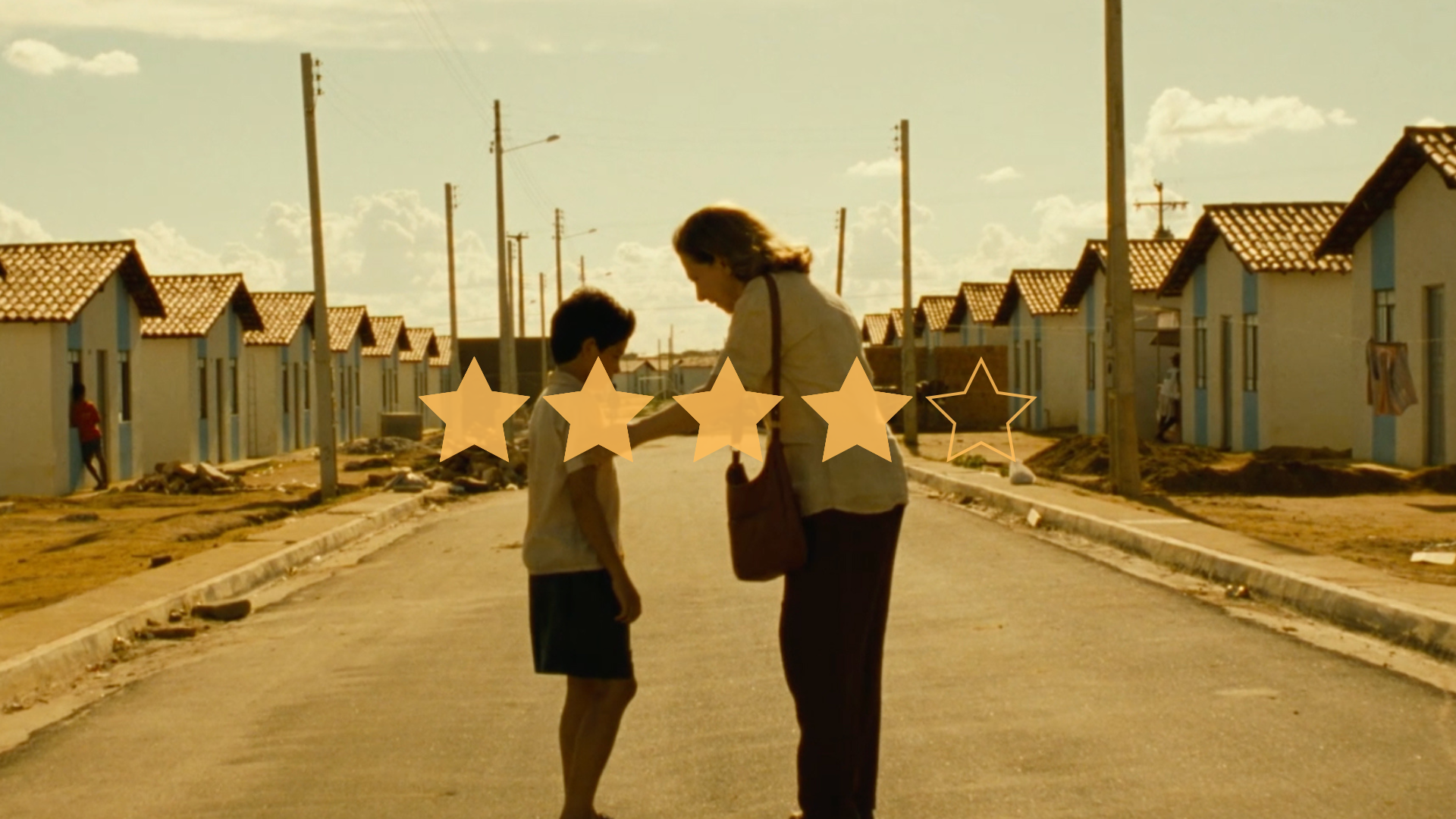
Released back into cinemas after 27 years, Walter Salles’ Brazilian road movie looks like a classic of a kind; an earnest, open-hearted film of families lost and found, with a stunning pair of performances at its centre.
★★★★☆
After huge international acclaim for directing I’m Still Here last year, Curzon have now re-released one of Salles’ earliest films, a universally affecting drama from 1998. This sparkling 4K restoration gives us a chance to savour its spectacular tour of Brazil, from urban sprawl to the northern scrubland, and witness the origins of a collaboration with Fernanda Montenegro which continued in the recent Oscar-winning release.
The station of the title is actually the bustling metro hub of Rio de Janeiro, along with the network of vendors and gangsters who tout their wares for the crowds. Dora (played by Montenegro), humbly describing herself as a ‘letter writer’, props up her retirement by transcribing letters for illiterate passers-by. Her disdain for the sincerity of these messages – often amorous confessions or petty dramas – is clear, and it is a painful moment when she is shown to take glee in destroying the letters rather than sending them. When young Josué (Vinícius de Oliveira) is orphaned at the station after composing a letter to his deadbeat dad, Dora appears to give in to her compassion, and sets out accompanying him on the journey his mother set up.
Montenegro carries off this transformation fabulously; it makes for great comedy as she struggles to hide her dubious smile in the face of the puppyishly eager customers. With an early moment of violence, Central Station seems to gesture towards the New Latin American cinema which exploded onto our screens around the turn of the century, in films like City of God (Fernando Meirelles and Kátia Lund, 2002) and Amores Perros (Alejandro González Iñárritu, 2000). But Salles offers us something more emollient and emotionally accessible: and none the worse for it. The terrifically open and defiant face of de Oliveira even begins to look like young Bruno in Bicycle Thieves (Vittorio de Sica, 1948), putting on a brave mask against an unknown adult world.
The odd-couple bond between the central pair turns this into a compelling road movie. After a fascinatingly slippery first act, as Josué’s life is turned upside down and he is reluctantly rescued by Dora, it soon finds its rhythms away from the train tracks and on the open highway. Through the days they are stuck together in various vehicles, we are constantly asked to question what his best outcome would be, and even whether Dora is only making the trip to assuage herself of guilt over involvement in other families’ business. As the trip goes on, north from Rio de Janeiro through the arid sertão region and on towards a new township, we are treated to some gob-smacking images: all textures of gold and green, leading up to a slowly revealed mass of identical houses as a heart-sinking moment of futility.
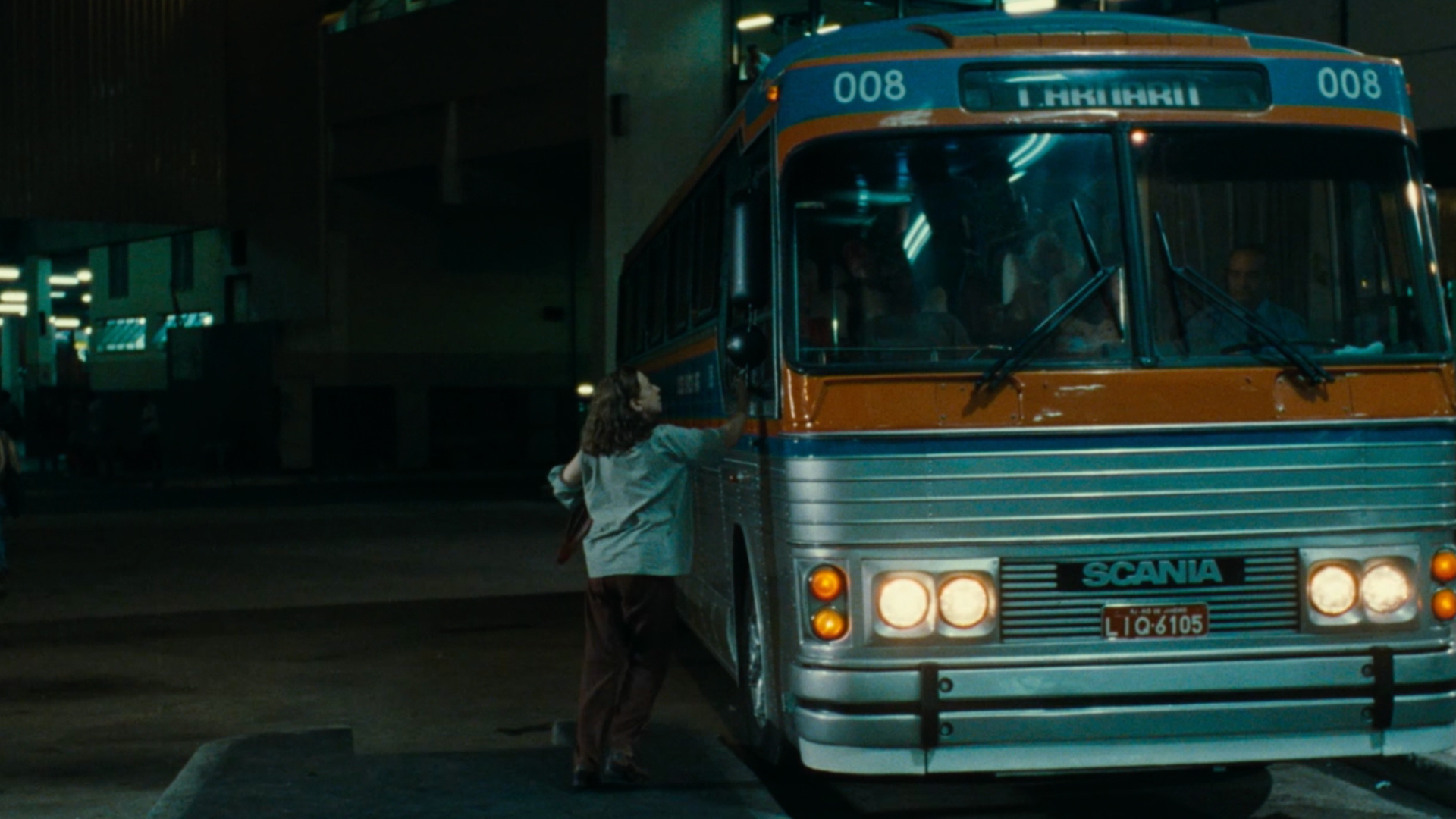
Nonetheless, these are a backdrop to the film’s primary landscape of faces. From the opening credits montage of Dora’s customers speaking directly to camera, the audience is confronted with human connection. Photographs are important, but the act of creating them becomes a memory in itself, and the film often lingers on these meaningful objects. In this respect, it’s quite an old-fashioned movie: sentimentally leaning on the analogue power of snapshots. However, it strikes me that this doesn’t necessarily change a modern audience’s reception compared to initial viewers, with even landline phones being notable by their absence. Its unhurried storytelling swagger is part of the charm, and there is symbolic resonance when a climactic reveal is told not through a photo or phone call but a painting.
Despite the tendency towards warmth and heart, Salles still lets the world’s brutality intrude on Josué’s journey. It is not dwelled upon when Dora’s de facto employer shoots a petty thief dead outside the station, and his attempts to induct the boy into a terrible fate are only subtly disclosed. But these moments are front-loaded in the first act, and make way for the growth of both Josué and Dora. He reflects her conflicted feelings about her own father, and this becomes a bond between them that the young boy clings to; coming to terms with loss and “being able to forget” becomes the film’s most important journey. Early on, as his mother’s letter is picked apart by Dora, she tells her best friend that the father was an abusive alcoholic, and it becomes clear that this truth isn’t hidden from his son. Forced to grow up beyond his years, Josué’s moments of comic bravado lighten the film—but his habit of maintaining an impassive front while silently welling with tears earns our sobs in return.
The Verdict
Though Salles and his writers aren’t playing with new ideas, Dora’s progression is a complex one, and the deft conclusion is surprisingly subdued. As a glowing snapshot of Brazil shot through with tragedy, it is a serious, sincere movie that deserves to reach a larger audience with this restoration.
Central Station is in cinemas now.
Words by Max King
Support The Indiependent
We’re trying to raise £200 a month to help cover our operational costs. This includes our ‘Writer of the Month’ awards, where we recognise the amazing work produced by our contributor team. If you’ve enjoyed reading our site, we’d really appreciate it if you could donate to The Indiependent. Whether you can give £1 or £10, you’d be making a huge difference to our small team.