
In 2012, Meryl Streep was awarded an eighth Golden Globe for her performance as Margaret Thatcher in The Iron Lady. During her semi-improvised outpouring of gratitude, Streep made sure to thank her agent, Kevine Huvane, and: “God, Harvey Weinstein.” This line was greeted by an outburst of good-natured laughter, as the acclaimed producer bashfully shook his head and chuckled.
Thirteen years later, the name Weinstein tends to provoke far less laughter–unless its being evoked as part of an overused punchline to an unfunny joke. Which, I suppose, seems to be rather fitting, as there are many out there in the online commentariat who would argue that Hollywood itself, in the years since Streep’s poorly-aged speech, has become little more than an unfunny joke; a teetering, creatively bankrupt behemoth that can no longer afford to prop itself up by clinging to the coattails of a rapidly-vanishing reputation of past glory.
Back in October, Pamela McClintock, the senior film writer at The Hollywood Reporter, penned an article claiming that–excluding the Covid pandemic–the domestic box office revenue for that month was “the worst showing in 27 years.” Dogged by scandals and burdened by dwindling audiences that have grown tired of a market saturated by sequels, reboots and remakes, it seems uncontroversial to say that Old Tinseltown is not in the best state right now.
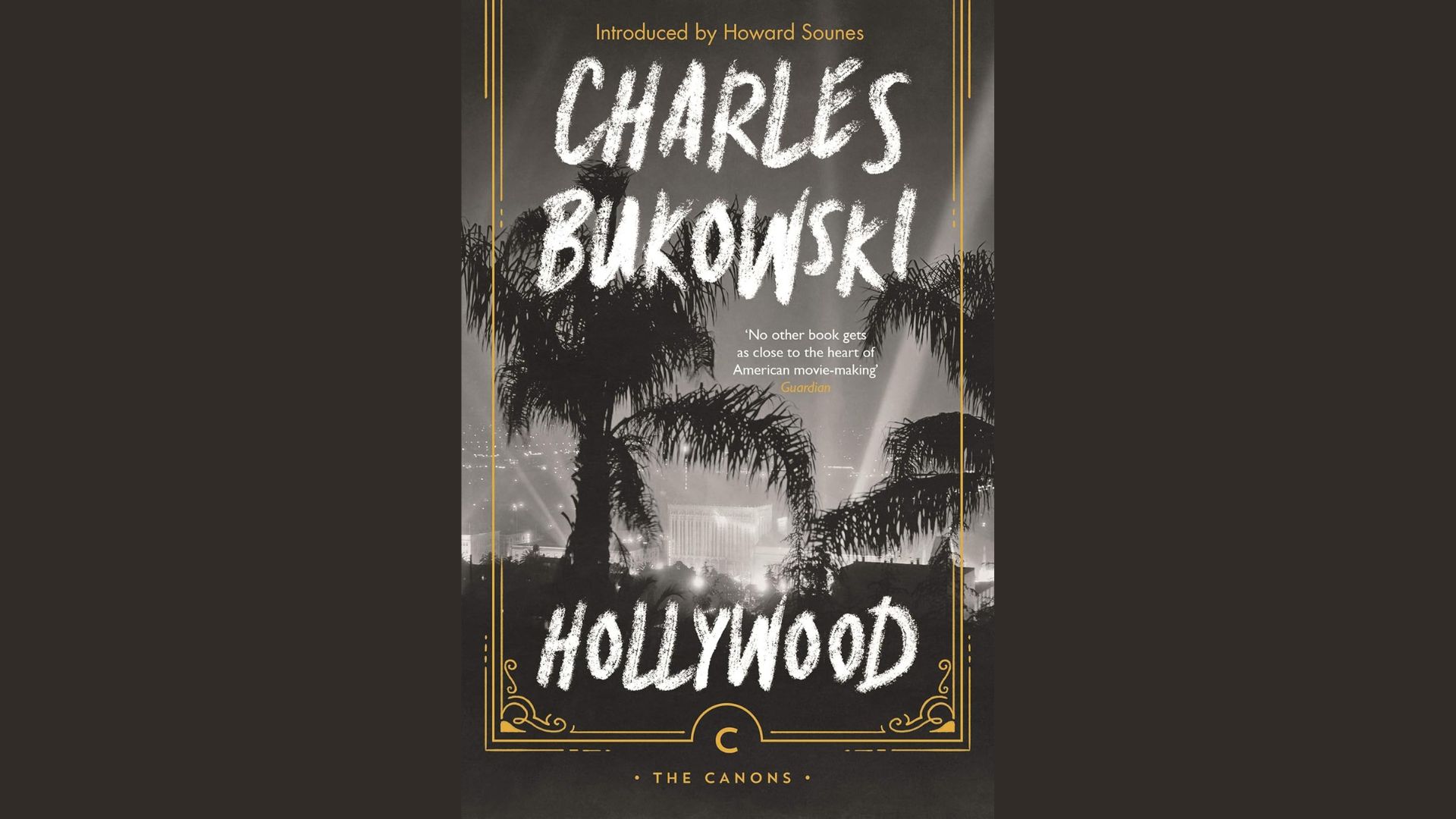
Perhaps that is why I found my most recent re-read of Charles Bukowski’s Hollywood so exhilarating; the novel offers us a glimpse of a past Hollywood, a Hollywood that took risks, embraced adventure (and misadventure), a Hollywood that was still somewhat concerned with making art…provided it was capable of producing a modest profit. More than that, Bukowski’s fifth novel provides the reader with a vision of a truly unhinged Hollywood; a hive of deranged wheeler-dealers, madmen and auteurs, all scrapping and scrambling to get their hands on a movie deal. A movie deal that seems to flicker in and out of existence like Schrodinger’s Cat in the middle of an identity crisis. When reflecting on the insanity that appears integral to the workings of Tinseltown, Bukowski–through his alter-ego Henry Chinaski–proclaims that: “my past life hardly seemed as strange or wild or as mad as what was happening now.”
All of Bukowski’s novels have a strong autobiographical element, which helped to bolster the writer’s reputation as poetic bum; a scribbler of the streets; a reclusive pessimist who managed to elevate the misadventures of a loser and a boozer into something that (viewed from the right angle, at the right moment) could be quite beautiful. That isn’t to say that Bukowski’s body of work should be read as pure autobiography, far from it; his first novel, Post Office, opens with the line: “This is presented as a work of fiction and dedicated to nobody.” Of course, with Bukowski, it is difficult to know whether we can take this entirely at face value. Bukowski, for all the once you mop up the beer stains and sweep away the discarded underwear, is a surprisingly playful and introspective writer.
Indeed, in many ways, Hollywood is his most playful novel. In his introduction to the 2019 Canons edition, the British journalist and biographer Howard Sounes described the book as a “fictionalised journal,” and claimed that the novel could be categorised as a roman a clef; thinly disguising real events and people under fictional names, in Hollywood’s case with the intention of satirising the “extravagant personalities” and “bizarre behaviour” of the celebrities that Bukowski was mixing with at this point in his life. This, however, is merely one layer to the literary game that Bukowski is playing with us. The novel was inspired by Bukowski’s own experiences of writing the screenplay Barfly, and the subsequent arduous process of adapting this script into a movie, which itself is a semi-autobiographical account of Bukowski’s early life. So, we have a fictional novel based on true events about the writing of a screenplay based on true events, all filtered through the lips of an ageing Chinaski, reflecting on the wildness of his youth.
In this sense, Hollywood can be read as a deconstruction of the traditional roman a clef, or autobiographical novel. Chinaski’s half-admiring, half-rueful musings on his aimless and drunken (though savage and unpredictable) youth mirrors Bukowski’s own difficulty in reflecting or revisiting old writing. Towards the end of the novel, when Chinaski attends the screening of his movie, he begins by taking “a gulp of beer in honour of the alcoholics of the world.”
As the film begins, Chinaski describes himself flashing back “as they do in movies” to “that morning in the bar when I was young, when I was feeling neither good nor bad, just rather numb…” before narrating his experience of watching his younger self “being beaten up in the alley by the bartender…” Again, we see Bukowski at his most playful here; he is describing his alter-ego describing his alter-ego being beaten up…an infinite regress of barflies being beaten by bartenders, a moment that is painful and surreal in equal measure. At this moment, Chinaski recalls how he “took a punch very well which allowed me to absorb much punishment…And by fighting two or three times a week I was getting better at it. Or the bartender was getting worse.” One line later, Chinaski returns to the present, reminding the reader that this was “over four decades before. Now I was sitting in a Hollywood screening room.”
The contrast is striking. Chinaski, now in his late sixties, is captivated by the portrayal of his younger self, half-admiring and half-bemused, but fully aware that he has grown into a very different writer (and man). It’s a strange moment. Not exactly what one would describe as a sad moment, but not what many would traditionally describe as an uplifting passage. If I had to call it anything, I suppose I would call it an acknowledgement, an acknowledgement of the one-way passage of time. This might sound like a rather banal interpretation and, no doubt, it is not the only possible interpretation, but Bukowski always was notably adept at capturing the banal and transforming it into a kind-of (admittedly brutal) beauty.
Hollywood is a deeply satirical and absurdist masterpiece that elevates to maddening process of writing and producing a film into a tragicomic series of misadventures; weaving deftly between abrasive interviews with the press, terrifying business negotiations and reflections on the struggles of adapting to a radically different form of writing. Bukowski was a poet first, and a novelist second. Barfly was his only attempt at writing an original screenplay. In the novel, Chinaski is resistant to the idea of writing a screenplay from the very beginning, and when the movie is finally released, Chinaski’s final thoughts on the experience is typically Bukowskian it its bathetic, almost wary appraisal of one afternoon showing: “Well, I had seen a lot of worse movies, especially in the thirties.” The novel then concludes with Chinaski declaring that he will “write a novel about writing the screenplay and making the movie,” before finally (and unceremoniously) telling the reader “this is it.” No flourish, no melodrama; just an old, asocial alcoholic settling down to write. Bukowski’s sigh of relief is almost audible in the final lines of the novel.
Words by Rhys Clarke
Want more Books content from The Indiependent? Click here
Support The Indiependent
We’re trying to raise £200 a month to help cover our operational costs. This includes our ‘Writer of the Month’ awards, where we recognise the amazing work produced by our contributor team. If you’ve enjoyed reading our site, we’d really appreciate it if you could donate to The Indiependent. Whether you can give £1 or £10, you’d be making a huge difference to our small team.