
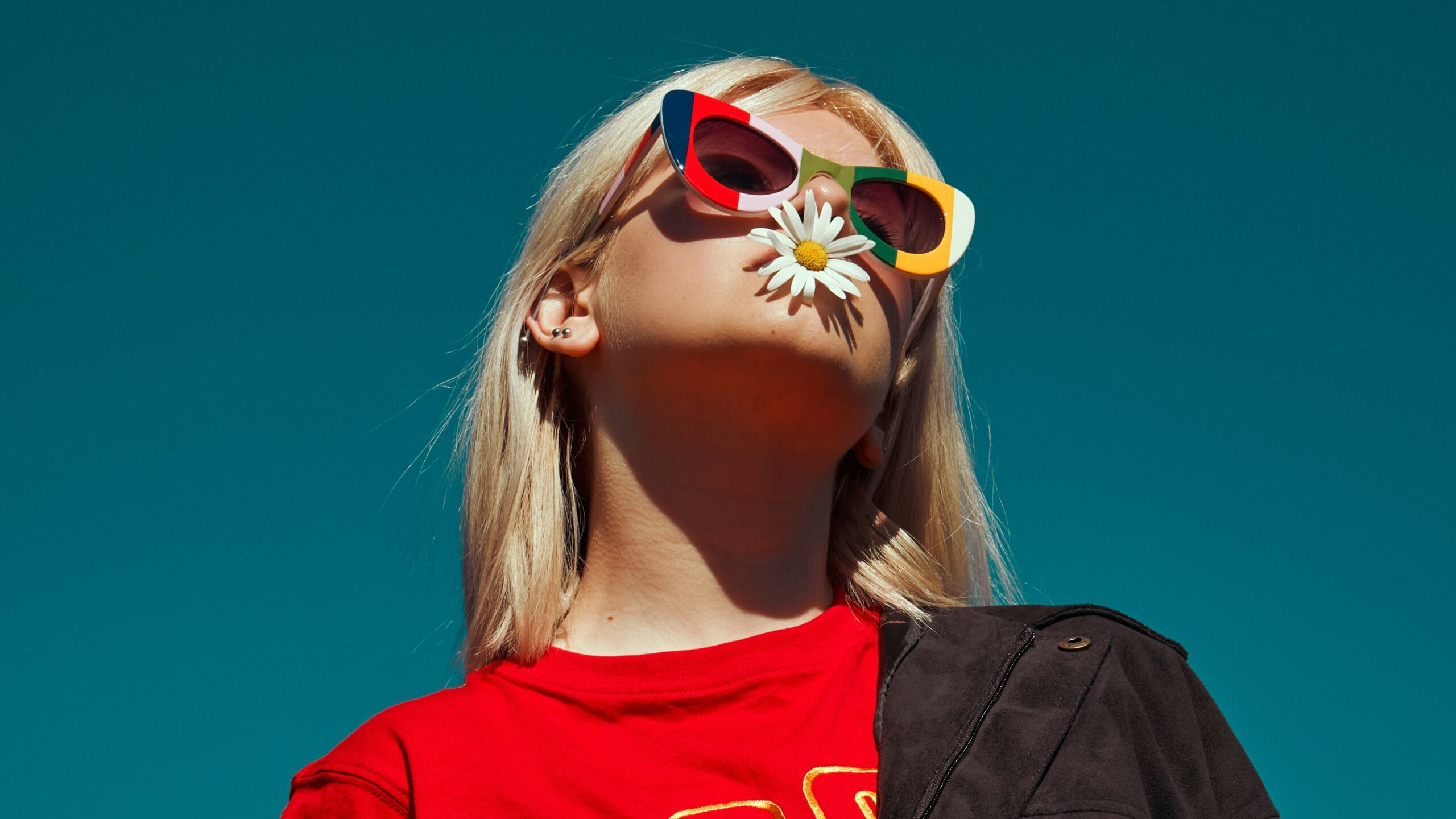
Fighting for authenticity in an age where most of the population has access to social media is a rather daunting task. With fashion cycles getting shorter and TikTok’s popularity fuelling various fashion trends, it is not surprising that every individual you encounter on your screen looks remarkably similar to you.
The 2020s have been host to rapid trend cycles. With the adoption of buzzwords such as ‘core’, ‘era’, and ‘…..girl summer’, an array of aesthetics got their moment in the spotlight. Throughout the last two summers, you may find yourself particularly bombarded with all things polka dots, bright fluorescent garments, Labubus, and Sonny Angels.
It appears that the fashion industry has discarded its subdued and neutral aesthetic to embrace high visibility. As ID Magazine poses, the Girls Are Wearing Neon in an elevated and new way. In a random (but encouraged) turn of events, Addison Rae joins Charli xcx on stage at Coachella in a fluorescent pink, polka-dotted one-piece, and Marc Jacobs floods his Instagram with selfies of him and his beloved Labubus, identifiable by their unsettling smiles.
Fashion influencers no longer appear to embrace a muted tone of femininity but rather a more erratic and freeing one, reminiscent of their childhood. In particular, the rise in ‘trinket’ buying and ‘sweet treat culture’ offers insight into Gen Z’s attitude towards adulthood – or more specifically, their rejection of it.
In the years preceding the COVID-19 lockdown, many Gen Zs looked back on their full-force adoption of ‘Y2K’ aesthetics and questioned their motives. Why, with all this spare time, did we reminisce on the early 2000s, a time when we were barely sentient, let alone old enough to adorn these garments?
Well, because of exactly that.
Our anxieties meant we looked back on the 2000s with rose-tinted glasses, disregarding progress within modern-day feminism and glamorising the misogynistic beauty pressures abhorrently placed on women in this era. The early 2000s predated most of Gen Z’s consciousness, and the little we do remember is inundated with maternal comfort and colourful familiarity instead.
A 2024 study shows that during the pandemic, individuals resorted to the familiarity of nostalgia to tackle the instability and uncertainty of this time. During times of social unrest, we often look for safety in escapism.
As some wistfully reinstate the early 2000s into their wardrobes, others don their MAGA hats as Right-wing parties in the West have recently attracted a somewhat surprising demographic; the once ‘woke’ Generation Z.
According to The Atlantic, the most recent US election sparked inquiry after a predicted win for Kamala Harris was instead replaced by an overwhelming victory for the now two-time President Donald Trump. The polls reiterated rising anxieties that the youth may be swaying more to the right, with young, white men making up one of Donald Trump’s most supportive cohorts.
Older, less formally educated individuals no longer speak for the right-wing cohort. Instead, we see remnants of the generation once predicted to save us from regressive policies becoming the predominant voice of the far-right. Why? Well, for young men existing in a society plagued by political, social, and economic instability, hypermasculinity provides a way for them to cope with particular anxieties.
As discussed in the Phillipian, hypermasculinity has three distinct hallmarks: the perception that ‘violence is manly’, the glorification and sensationalisation of danger, and the complete disrespect of women or femininity. Trump reinforces each criterion, with his staggering number of criminal convictions, his anti-immigration policies, and his particularly misogynistic and patriarchal view of women. Trump’s position of power has therefore led to a rise in White nationalism and heightened restrictions on female bodily autonomy.
The US is not isolated in this political shift. In the past few weeks alone, the far-right in the UK has demonstrated its growing influence. A YouGov survey has revealed that the right-wing Reform UK party would almost surely win a general election if it were held tomorrow. This represents a drastic shift from the dogfight between Labour and the Conservatives that has dominated previous UK elections.
Current right-wing rhetoric circulating in the UK focuses on a determination to ‘protect our women and children’, reflecting the roots of far-right ideology that victimises and subordinates women as a reinforcement of patriarchy and misogyny. The far-right use incidents of violence against women to interrogate the race, religion, and socio-economic status of migrant men, using women as political pawns/scapegoats to justify their bigotry, rather than focusing on fixing the patriarchal institutions that reinforce violence against women in the UK.
The rise of the far-right becomes particularly hair-raising when we assess the reality in which far-right ideology is encouraged by highly intelligent and wealthy individuals. If we continue to reproduce common stereotypes of the far-right as simply the unintelligent working class, we risk becoming ignorant of their power.
Far-right radicalisation tactics come in many forms and fashion is not exempt from these. At the end of the day, the far-right know precisely what they are doing, and they tie it up in a pretty but predominantly basic bow.
Through understanding identity politics in fashion, one could assume that the far-right also goes to the extreme with their fashion. We have seen this within subcultures such as Mod fashion and Skinheads being (often unfairly) associated with right-wing politics. However, due to the introduction of more left-leaning and egalitarian policies over the past few decades, such as LGBTQIA+ and ethnic minority rights, far-right individuals in the West have had to keep their ideology quiet, and that means keeping their dress sense muted as well.
Natalie Olah’s book Bad Taste describes the phenomenon of ‘Normcore,’ which emerged following the 2008 financial crisis. Adorning bland and neutral clothes became the norm in a society desperate for conformity and a sense of security. Normcore deliberately rejects self-expression and, along with it, any form of colour and, therefore, is the perfect strategy for far-right actors to worm their way into all corners of society.
Sociological research explores how far-right actors use strategies such as ‘mainstreaming’ to embed their ideology into the public sphere, appropriating widely recognised symbols and clothing to dilute their aesthetic to the point it becomes difficult to decode the ideology one may hold. Fascism and far-right ideology intend to look appealing, and with current fashion trends having an edge of ugliness to them, it allows ‘normie’ fashion to appear far more digestible. Making far-right ideology, too, far more digestible.
This may seem like a stretch. However, the term ‘Tradwife’ is theorised to have been ‘mainstreamed’ by particular fashion trends such as ‘Cottage Core’ and already appears to be shaping young women’s views on ‘idealised’ womanhood. Behind the soft visuals of pastel colours and flowy dresses, there are particularly harmful messages regarding not only patriarchal domination but also race, power, and exclusion. Tradwife content often focuses on typical 1950s aesthetics, a time when both women and non-white individuals had little to no rights. Despite recognition of how far feminism has progressed in dismantling oppressive systems, for many, the fight may appear too difficult against the ever-growing far-right. Therefore, a life of submissive, domestic bliss may seem more attainable to the modern-day woman.
Identity politics allows for those unwilling to submit to gain a collective identity through a more ugly, eccentric, and liberalising fashion. Expressing any form of authenticity is a fight against this submission and a fight against the far-right. One can only hope that the more we recognise identity politics in fashion, the more we can promote de-radicalisation.
Words by Molly Morrison
Support The Indiependent
We’re trying to raise £200 a month to help cover our operational costs. This includes our ‘Writer of the Month’ awards, where we recognise the amazing work produced by our contributor team. If you’ve enjoyed reading our site, we’d really appreciate it if you could donate to The Indiependent. Whether you can give £1 or £10, you’d be making a huge difference to our small team.