
“Life’s Too Short to Create an Industry You Don’t Enjoy” – In Conversation with Indie Sapphic Author Ruby Roe on Building Her Queer Empire, TikTok Virality, and Upcoming Releases
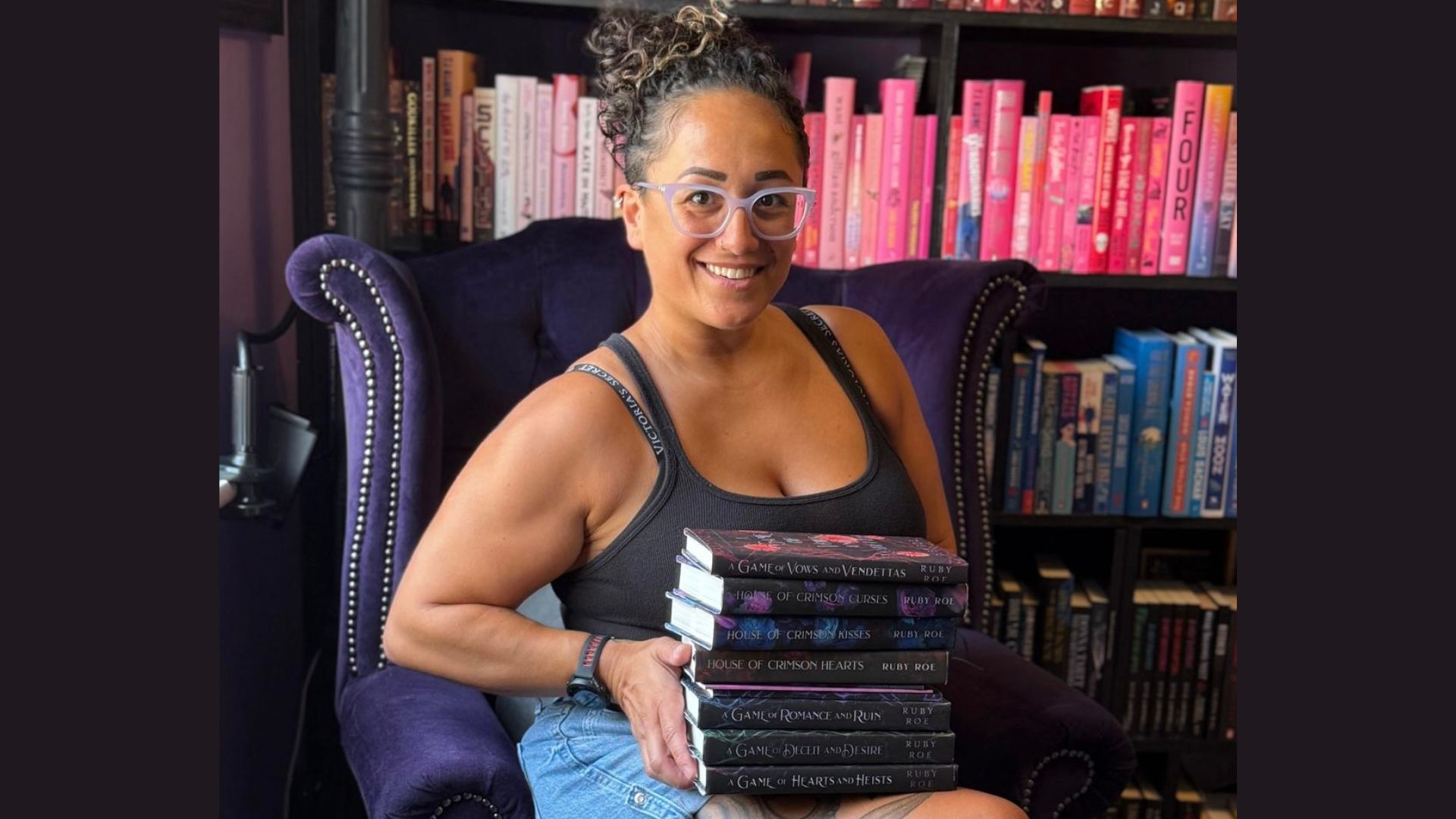
With a dedicated, growing readership, and a string of viral TikTok moments behind her, indie author Ruby Roe has created her own distinctive space in the world of not only romantasy, but sapphic romance. With determination to build her career around independence, she has rejected the conventional path of traditional publishing and has made it an imperative goal to focus on queer representation with complete creative control.
Since her breakout success on TikTok in late 2023, she has gone from modest self-publishing beginnings to running her own warehouse with a dedicated team, five-figure monthly book sales. Yet for Roe, the numbers are only part of the story. Her work reflects both a desire to reimagine the business behind publishing and a passionate determination to centre queer voices in genres that have continually overlooked them.
In conversation with The Indiependent, Roe reflects on the origins of her pen name, the realities of self-publishing, the role of TikTok in her success, and what comes next for her growing empire of sapphic ‘roemantic’ fiction.
The Indiependent: What inspired you to become an independent author and why did you choose to write sapphic fiction?
Ruby Roe: My journey started with writing young adult fiction because that is what I had read a lot of initially. I thought that’s what you had to write to be an author. So I got involved in NaNoWriMo, I wrote a book and it was terrible. Then I thought, what do I do now? So I dived into learning everything I could about the publishing industry. That was around 2013, 2014.
So just around the invention of Kindle. There was tons of information about newly self-publishing authors. Up until that point, I thought I wanted to be traditionally published, as I didn’t really know any different. I listened to podcasts that discussed self-publishing, which helped me understand how much more control you had, and how much more income you could make. I really loved the idea of being in control of the artistic art direction such as having creative control of the covers. Being part of all of that process sounded really fun to me. I think you have to really enjoy business as much as the creative side of it, and I do, so that just appealed to me.
When I read Queen Takes Rose by Katee Robert, that was my first adult, spicy sapphic book, and it changed everything for me.
I was like, oh my God, what is this? Where has this been all my life? Then of course, I realised there were hardly any other books like that. A lot of contemporary romance for sapphic audiences, but hardly any fantasy, and where there was fantasy, it was young adult. That was really the catalyst that then made me go, okay, if I’m going to take a massive risk and make things even tighter financially in order to write something else and give it good go, then I’m going to make sure it’s what I want to write. So that is how I ended up making that decision.
The Indiependent: You write under the pen name Ruby Roe. What inspired you to choose that name and does it represent something special for you?
Ruby Roe: My stepdad encouraged me and told me to just write spice, just write what sells. I was like, I’ll write spice, if I can use your surname Roe.
So yes, Roe comes from my stepdad. Ruby Roe was formed because I like alliteration. It flows well and I also thought it sounded like a spicy name. When Ruby was created, I was very nervous about being publicly open with it, which is why I wanted a pen name. I thought I’d publish in secret and start completely from scratch. Then when I finished the editing and sent off A Game of Hearts and Heists to the editor, I was like, oh no, I want to scream about this. And then I just came out and told everybody about it.
The Indiependent: What was the defining moment where you wanted to just publish independently? Would you ever consider traditional publishing?
Ruby Roe: I don’t think there was a defining moment. It was just the realisation that I could earn a lot more independently publishing than I could from a traditional publisher. You have to do more work in order to get every single sale, but if every sale is worth more, then I was willing to do that work.
I think it was just slowly realising that I actually don’t want to give up the rights to this. I don’t want to give up ownership. I was told when I was in the corporate day job that my personality was a risk to my reputation. So I wanted to succeed off my own back, however it’s not that you don’t succeed if you go down the traditional publishing route, I’m not saying that, but I wanted that feeling of having done every single step of the journey on my own. It was a personal choice for me and my own journey.
I definitely think there is a time and place for traditional publishing, and I think there’s a time and place for indie publishing.
I feel that your choice is dependent on personality, who you are and what you enjoy. Life’s too short to create an industry for yourself that you don’t enjoy, but there are benefits to being traditionally published. However, I do think you have to have a certain willingness to let go, a willingness to be patient – and I am neither patient nor willing to let go.
The Indiependent:
Can you talk us through the process of publishing independently?
Ruby Roe: The model that I use is very different now. I use a traditional publishing model. So most indie authors use what we call print on demand. Once you’ve finished editing your manuscript, you send it to the editor, they do their work, and then you get it back and start formatting it. That basically means putting it in the right template for a printer. There’s loads of software that you can use depending on whether you’ve got a Mac or a PC that will create an EPUB file.
Now, for most indie authors, they will upload those files to the distributors. You can do it on Barnes & Noble, Amazon and on IngramSpark, then those files sit there. You can upload paperback files and cover files as well. Then when a reader buys the book, such as on Amazon, Amazon will then send an instruction to either its own in-house printer or commission another one to print one copy and send it to the reader.
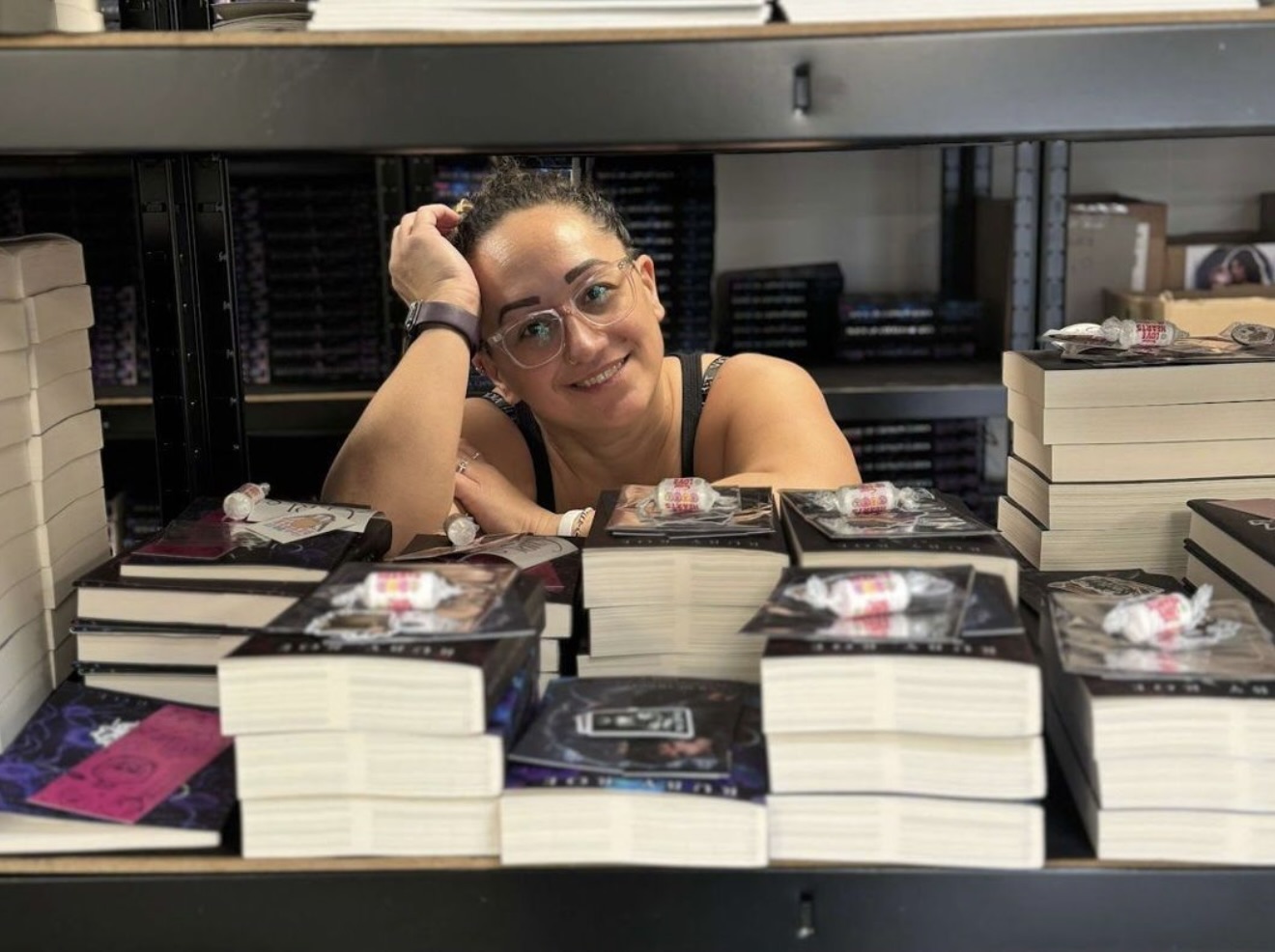
That’s what 99% of indie authors do. I no longer solely do that. I do use this still, but my biggest business model is print runs. So traditional publishers do a print run where they give the files to the printer and they’ll print for example 10,000 copies of one book that they then distribute the book to stores. However, I’m using a bit of a hybrid model where I will upload to both Amazon and Kobo so that people can still buy my books there. But then we do a small print run. So the one that we’re doing for my upcoming book Architecti, we’re printing 1,200 paperbacks and400 hardbacks. I then sign everything. After this, we ship them out to readers. So when people buy on my website, they can get signed copies. Whilst we do use both models, the bigger model for me is now my website and our warehouse.
The Indiependent: What led you to the more traditional route?
Ruby Roe: I do both Amazon print on demand systems and short runs. The reason that I do this is, basically it comes down to control again.
So I was getting a lot of requests for signed books and I didn’t really have an easy method of doing that with print on demand. On my website, we used to connect with a printer that would act like Amazon.
But I got to the point where I was making five figures a month on the website. And I was like, oh, hold on a minute, we’ve now got enough capital in the business we could do a print run. When you do a print run, you basically halve the cost of each book, which means you’re then going to earn more profit, but also you have more liquid cash in the business to do more, which means we could print, we could buy artwork, we could have stickers commissioned. I had the time to sign every book. We had the ability to give additional gifts essentially to the readers.
For example we’re just in the process of creating merchandise such as Roe-mantics hoodies. So it’s little things like that, but when you run a print on demand website, you can’t do any of these things. You can’t customise what you send to readers.
You can’t do things like come back and you’ll get 5% off your next order. So I suppose it was a desire to give back more to the readers, do more, and create more of a connection and relationship than just buy my next book. How about you have a whole experience, be involved with Ruby and create a community feel. So that was why I did it.
The Indiependent: What is involved in making it work? And what have you learnt from the process?
Ruby Roe: Building a team. I have five people working with me. What makes the process work is constant stock monitoring, both of book levels and materials, boxes, packaging stuff. We built the warehouse ourselves. It’s a culmination of things from how to be efficient, packaging, how to protect the books, when do I go in and film. It’s also learning things like, how much stock do you order? What happens if you get a viral video, then what? You’re right out of stock. When do you put things on pre-order? How many things can you have on pre-order? Also just logistically fitting it all into a warehouse.
The majority of my team’s job is actually just reining me in and saying, no, you can’t do this now. You have to do this later. The biggest thing for me is having learned to let go, because if I don’t let go of all the operational stuff I can’t write the next book.
That has been the biggest lesson with Architecti because that was the closest I’ve ever been to not having a book ready and having to push the pre-order. So yeah, that has been the biggest lesson.
It’s just learning to let go, and actually my job is just to write the next book.
I’m lucky that my team is brilliant as well. They are absolutely incredible at what they do. They’re very good at telling me that I need to go back and finish the book and I love them for that.
The Indiependent: What skills or resources do you think are essential for someone wanting to self-publish?
Ruby Roe:
If you want to be a self published author, I think that you need to have a love of marketing, and a love of business. It has to be an equal love of both. Because 50% of your job is marketing.
The Indiependent: How did you start using TikTok and TikTok shop to promote and sell your books?
Ruby Roe: I was at a conference in Las Vegas, and I met a chap called Adam Beswick. Adam was a big, prolific TikToker, and he was like, you need to create and utilise TikTok.
I remember I started posting properly on November the 19th, 2023. Then by December the 8th, 2023, I went viral. That was the day that literally changed my life. Instead of earning a couple of grand in a month, I earned six grand in that December. By April 2024, I earned 17 grand in a month. I have not missed a day of posting since. I post three times a day. Religiously. Unless I’m absolutely exhausted and then I might only do it twice a day.
But I post come rain or shine.
In January 2025, I started another TikTok account, which is a business account, so that I’m a part of the TikTok shop. If I’m honest, the TikTok shop is a bit of a nightmare. I’m not really a huge fan of it. I would say maybe 10 to 15% of my website direct sales come from TikTok. Everything else comes directly from my website.
TikTok Shop has been very difficult. It doesn’t integrate very well with our shipping systems, but we’re trying our best. The issue with TikTok is that orders become more frequent when you’re running a sale, which is great, but you need to make money and my books cannot constantly be on sale. Overall TikTok is amazing. I don’t want to do it a disservice. TikTok has changed my life.
I use it to promote my book constantly because one of the benefits of TikTok is that it often serves new audiences. It doesn’t go to your existing followers, which is great, as it’s free advertising all day long.
The Indiependent: Do you think that you’ll continue using the TikTok shop or do you think you’ll strictly use your website?
Ruby Roe:
I will keep going, probably until I get banned off of the platform, or they remove my products.
The Indiependent:
So what led you to publish dyslexic editions that are accessible to your dyslexic readers?
Ruby Roe: My wife’s dyslexic. I have watched her struggle to read and I saw that this font was an option in our formatting software, and thought we’ve already got the covers, we can use this font, it is just a small tweak. So I thought, why not give it a go and see if it’s something that helps?
It’s been an interesting one because 50% of people are like, this is amazing.Thanks for doing this.
This is fantastic for accessibility. Whereas, the other 50% of people have complained that I haven’t changed the page colour or that they don’t like that font and it’s not useful and they want a different font in it. It’s been really interesting because we tried it as an experiment to see if it would be useful.
And we have sold over 200 dyslexic editions of my books.
Unfortunately, long term it’s probably not enough for us to do a print run so they will always say print on demand for now. But yeah, the main reason I did it was because I wanted my wife to be able to read the books. On a larger scale, I feel that why shouldn’t we be doing it? I’m in a privileged enough position that I have the ability to create them.
So I wanted to.
For me, this whole journey is about how I can give back more. Sapphic readers have given me this business and this career. So I will always be grateful to them. It’s really important to me, and I have a lot of neurodivergent readers. I also have a lot of readers who are dyslexic, and readers who prefer audio. So for me my goal is to find ways to cater to my readers.
The Indiependent: How does selling through TikTok shop compare to other platforms you’ve used?
Ruby Roe: TikTok tends to drive a lot of people to my website. My main TikTok account pushes audiences to access my website and to Amazon. Instagram is also great at driving people to my website. Through these social media sites I can see the direct result of us posting. For example, when I post about pre-orders available, within an hour we’ll be having readers pre-ordering both on Amazon and the website.
I mean, most indie authors sell the most on Amazon. That was me until I set up my website and then decided to direct everybody to my website instead. I no longer give my Amazon links out, and just post my website link which has been super beneficial. I think it is down to the indie author to decide where to direct their readers. If you’d tell people to go to Amazon or the TikTok shop, that’s what they would prioritise.
The Indiependent:
How did you respond to the removal of your books for being “too vulgar” and what impact did it have on your work and distribution?
Ruby Roe: Well, I’m lucky that the TikTok shop is a small segment of my income.
So the impact wasn’t huge. You can be clever and upload them again as a new product if you want. But our systems are so integrated on the website.
It would mean uploading a new product onto the website as well and changing it all. Which means you can still buy the books on the TikTok shop, but you have to add them individually.
I posted a video commenting on my disapproval of that unfair removal of views that circulated a tonne of views and sales. So thank you to my audience for having my back. I love you guys. Situations such as these make you realise, are you going to quit because you’re facing an obstacle or will this obstacle push you to work harder and keep going? So as a result of this we kept the products on there as individuals and we just kept going. When people ask me on TikTok, why can’t I find the bundle? I let them know that they can buy them individually from the TikTok shop or as a bundle on my website.
The Indiependent: Do you feel that queer authors are more vulnerable to censorship online? And do you feel that TikTok ultimately is a safe space for Sapphic writers?
Ruby Roe: Well, it’s been really interesting because my TikTok profile is great, the audience is so kind. I don’t get much hate on my Ruby Roe author account, which is a feature account. However, I do get a lot of hate on my business account connected to the TikTok shop. I think it depends which corner of TikTok you’re in.
I think you always have to be vigilant, no matter what. It’s really unfortunate and I hate saying that, but it’s true.
Sapphic fiction in general is still stigmatised and still seen as lesser than, I write because I love writing and I’m passionate about storytelling. But there is a piece of me that is also passionate about equaling the playing field. I can’t name a single Sapphic romance book that’s been number one in the Amazon store. We’ve had Sapphic books get into the top 100, but nobody’s got to number one. Our genre is just not viewed equally. This has also become a mission directive of mine to remove the stigma and show readers at large that Sapphic romance is just as good as other LGBTQ+ romances, and should be valued just as much as heterosexual romances. I’m sure it’s the same for POC authors, and other authors from diverse backgrounds. We’re all fighting that same fight, so yes I do think Sapphic authors are stigmatised.
The Indiependent: Can you give us a sneak peek of your upcoming release Architecti and how it differs from your previous work?
Ruby Roe: It’s ‘Buffy the Vampire Slayer’ without the Vampires, meets ‘Lucifer’ the TV show, but set at Wednesday Adams’ Nevermore College. It will have a savage cliffhanger because all my books do but I’m a quick writer, so nobody will have to wait that long.
The Indiependent: You said that you’re releasing two books this year. Is it linked to Architecti?
Ruby Roe: No, Vows and Vendettas is another Girl Games book. This one is a crossover between the Kingdom of Immortal Lovers series and Girl Games. I wrote this book for the fans. So this is set at a wedding with characters from both series.
Why? Everybody wanted the wedding. So when I ran a Kickstarter for Girl Games special editions, I was like, right, fine, I’ll just write a wedding.
Thinking that I’d write a 3,000 word short story, 50,000 words later I’ve written an entire novel in two weeks. It just poured out of me. This is my candy crack book. That’s kind of what I see it as because it has the readers’ favourite characters.
The Indiependent: Is Architecti set in the same universe?
Ruby Roe:
Architecti is set in the same universe. There is one brief crossover, but nothing major. Architecti had a lot of changes made towards its structure. Initially some of the Girl Games characters were there, as well as characters from my Kingdom of Immortal Lovers series but I had to cut it all because it wasn’t working. I will try again in book two, but yes it is theoretically in the same universe.
The Indiependent: Is there anything different about Architecti compared to what you’ve written before?
Ruby Roe: It is only a duology instead of a trilogy so that’s different. However, it’s very much a Ruby book. I will always write accessible fantasies that are fast burn spice with slow burn emotion. Architecti is very much that. It is a different setting. I wouldn’t say it’s true Dark Academia because Dark Academia has a formula and structure that I don’t necessarily follow. The setting is different to what I’ve written before as it’s on a campus. The timeline is different, usually most of my books are over the course of like a week or a month. This novel is over the course of a year.
However, my Ruby Roe books are very much a clear brand and I won’t deviate from that. If I was going to, for example, write historical fiction, it would be under a different pen name. Would I write other stuff? I don’t know.
Maybe. Careers are very long. Right now I’m having way too much fun with Ruby.
The Indiependent: What advice would you give to an aspiring queer author, hoping to succeed in self-publishing?
Ruby Roe: I would say to read what is selling well, and to understand the patterns in those books. For example, what is it that readers are drawn to? Go and read reviews. Read five star reviews and read one star reviews. The five-star and four-star reviews will tell you what readers love and this is where you will see the patterns. So factors that are mentioned multiple times. Likewise, in the one-star of reviews, because that would tell you what they’ve done well and what they missed. Be careful with the one-star reviews because it might be that it was just the wrong reader, the wrong genre. So that’s the first thing that I would say, make sure that they are reading, in their genre, and reading what is selling. Read books that are in the top 100.
Then study marketing. This is the biggest thing that I can tell you is do your market research at the beginning of the process. Do not start writing a book unless you know how you’re going to sell it. I say that only to people who want to live off of their books. If you want to write a book and you don’t really care if it sells, don’t worry about this. However,
if you want a career as a writer, you need to know how you’re going to sell that book. I don’t start writing unless I know how to market the book.
Interview edited for clarity and concision
Words by Sonia Radha Panunzi
Want more Books content from The Indiependent? Click here
Support The Indiependent
We’re trying to raise £200 a month to help cover our operational costs. This includes our ‘Writer of the Month’ awards, where we recognise the amazing work produced by our contributor team. If you’ve enjoyed reading our site, we’d really appreciate it if you could donate to The Indiependent. Whether you can give £1 or £10, you’d be making a huge difference to our small team.